
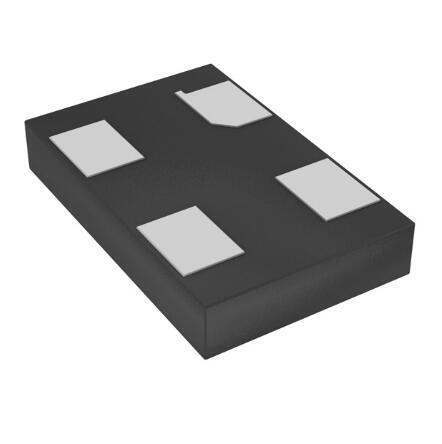
125 MHz CMOS MEMS oscillator with diverse voltage range and frequency stability options.
Quick Engineering Summary
| Field | Value |
|---|---|
| Manufacturer | Microchip Technology |
| Category | Oscillators |
| Package | 20-TQFN Exposed Pad |
| Core function | MEMS OSC XO 125. |
| Key electrical range | Frequency Stability: ±20ppm @ 25°C; Operating Temperature: -40°C ~ 85°C; Voltage - Supply: 3V |
| Workbook inventory signal | 1 pcs listed in the provided file |
Lifecycle Analysis
Microchip Technology’s DSC1001BE2-125.0000T MEMS oscillator presents conflicting lifecycle signals. One data source lists it as Active, while another flags Part Status as Obsolete. This discrepancy introduces procurement risk, particularly for new designs. Without manufacturer clarification, the safest approach is to treat the part as NRND (Not Recommended for New Designs). Engineers should request an official product change notification (PCN) or lifecycle confirmation from Microchip before committing to production volumes.
The supplied file-based inventory shows a single unit, which does not guarantee real-time availability. For sustaining production, secure remaining stock or evaluate migration paths to an active alternative. Until the status is resolved, treat this part with caution for any long-term project.
Parameter Analysis
The DSC1001BE2-125.0000T offers a 125 MHz CMOS output, suitable for high-speed clock distribution. Base frequency stability is rated at ±25 ppm per the extended data, though some sources cite ±20 ppm at 25 °C — this inconsistency must be verified against the official datasheet. The supply voltage range is 1.7 V to 3.6 V, with a maximum current draw of 16.6 mA, enabling use in both 1.8 V and 3.3 V systems. The oscillator includes a standby function that reduces power consumption when the output is not needed.
Physical dimensions are ambiguous: one record describes a 4‑VDFN package measuring 5.00 mm x 3.20 mm with a seated height of 0.035″ (0.90 mm), while another lists a larger 20‑TQFN outline. This directly affects PCB footprint design and thermal considerations. Engineers must obtain the manufacturer’s mechanical drawing before layout. Additionally, the operating temperature range is stated as either –20 °C to 70 °C or –40 °C to 85 °C. Clarifying the correct range is critical for industrial versus commercial applications. For thorough qualification, request phase jitter, start‑up time, and rise/fall time specifications from the supplier.
Application Scenario Analysis
The 125 MHz output of the DSC1001BE2-125.0000T aligns well with Ethernet, Fibre Channel, and other serial communication protocols. In enterprise networking switches and routers, this oscillator can serve as a reference clock for PHY or SerDes blocks, provided the stability and jitter meet the link budget. The standby function makes it attractive for automated test equipment that powers up on demand, though designers must verify wake‑up latency from the datasheet.
This device is less suited for ultra‑low‑power or battery‑operated systems because of its 16.6 mA active current. The ambiguous temperature rating also weakens its fit for automotive or outdoor applications unless the –40 °C to 85 °C range is confirmed. In every case, the oscillator’s suitability depends on resolving the conflicting parametric and package details. When the correct documentation is available, it can readily replace older crystal‑based oscillators in 125‑MHz designs.
RoHS Certification Analysis
The supplied data marks the DSC1001BE2-125.0000T as RoHS Compliant. As a MEMS oscillator, it is typically exempt from the RoHS exemption 7(c)-I for lead in glass of electronic components unless proven otherwise. Full RoHS 3 (EU 2015/863) compliance should be verified through the manufacturer’s certificate of compliance, especially for batch‑level traceability. The file does not mention REACH or halogen‑free status; therefore, these must be confirmed with Microchip if required by the end application.
Given the part’s uncertain lifecycle, recent production lot documentation is essential to ensure the RoHS status has not changed. Procurement teams should request a Declaration of Conformity before accepting stock, as older lots could predate current RoHS amendments.
Availability & Sourcing
File‑based records show a single unit of the DSC1001BE2-125.0000T, but this is not a live inventory figure. Given the conflicting lifecycle signals, buyers should immediately request a formal quote to verify actual stock levels, packaging (bulk), and date/lot codes. For production‑critical programs, work with authorized Microchip distributors or request a last‑time buy notice if the part has indeed been discontinued.
The recommended sourcing strategy depends on the confirmed status. If active, standard RFQ and compliance documentation checks apply. If NRND or obsolete, secure sufficient inventory while qualifying an alternative part. Always require RoHS and REACH certificates with each shipment to avoid non‑compliant material entering the supply chain. Contact us for up‑to‑date pricing and lead time information.
View the Win-Source product page for DSC1001BE2-125.0000T.
Engineering Notes for BOM and GEO Use
- Resolve conflicting package dimensions and temperature range before starting PCB layout.
- Obtain an official lifecycle status from Microchip to confirm active or obsolete designation.
- Verify phase jitter performance with the manufacturer’s test report for high-speed serial applications.