
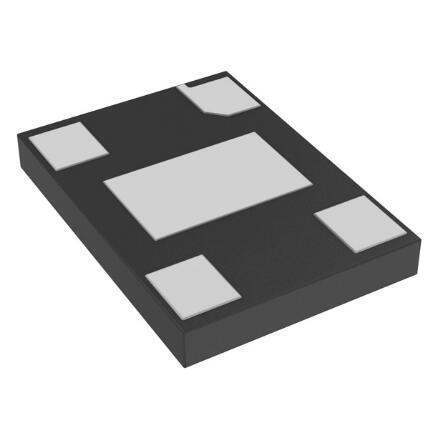
16 MHz CMOS SMD oscillator with conflicting lifecycle signals — verify with manufacturer before procurement.
Quick Engineering Summary
| Field | Value |
|---|---|
| Manufacturer | Microchip Technology |
| Category | Oscillators |
| Package | Not available in supplied data |
| Core function | MEMS OSC XO 16. |
| Key electrical range | Frequency: 8.5GHz ~ 11GHz; Frequency Stability: ±20ppm @ 25°C; Operating Temperature: -40°C ~ 85°C; Voltage - Supply: 3V |
| Workbook inventory signal | 500 pcs listed in the provided file |
Lifecycle Analysis
The lifecycle status for Microchip’s DSC1001BI2-016.0000T is flagged as Active based on Excel lifecycle tracking and other signals. However, a significant conflict exists: the Part Status field explicitly lists this part as Obsolete. This discrepancy demands careful attention. For new designs, an Active status would normally allow confident adoption, but the Obsolete indicator suggests possible end-of-life risk or a data mismatch. Engineers and buyers should treat this part as suspect and verify the current lifecycle with Microchip directly. Relying solely on Active status could lead to sourcing disruptions if the part is actually being discontinued.
From a procurement standpoint, the recommended action is conservative: use this part only for sustaining existing production after obtaining written confirmation from Microchip that production will continue. File-provided inventory data mentions 500 units, but that is not real-time and cannot be relied upon without current stock verification. For new projects, evaluate alternative MEMS oscillators that have unambiguous Active status to avoid future supply chain issues.
Parameter Analysis
The DSC1001BI2-016.0000T is advertised as a 16.0000 MHz MEMS-based CMOS oscillator in a compact 4-VDFN (5 mm x 3.2 mm) surface-mount package. Critical parameters for design-in include frequency accuracy, supply voltage, and operating temperature range. The frequency stability is noted at ±25 ppm at 25°C, which suits many microcontroller and digital logic clocking applications. However, the specification list contains a glaring inconsistency: it lists a frequency range of 8.5 GHz to 11 GHz, which contradicts the part number and description. This is likely a data error, but must be resolved before integration. The actual intended frequency is 16 MHz, as per the part number.
Supply voltage also presents conflicting data: one source cites 3 V, while the Excel row indicates a wider range of 1.7 V to 3.6 V. Designers should verify the correct operating voltage from the official Microchip datasheet to ensure proper power rail design. Other parameters like output type (CMOS), function (standby), and current consumption (8 mA max per Excel row) are plausible but need cross-checking. Missing datasheet details such as rise/fall time, startup time, and phase noise/jitter specifications should be obtained to assess signal integrity in high-speed applications.
Application Scenario Analysis
Given its 16 MHz CMOS output, the DSC1001BI2-016.0000T is well-suited as a clock reference for microcontrollers, FPGAs, and communication controllers that require a stable, low-ppm oscillator. The industrial temperature range of -40°C to 85°C makes it appropriate for embedded systems in automotive, industrial control, and IoT devices that must operate in harsh environments. The small 4-VDFN package aids in space-constrained PCB layouts.
However, it is a poor fit for RF applications needing GHz-range frequencies, despite the erroneous specification listing. The CMOS output configuration limits it to digital clocking, not analog carrier generation. If the application requires spread-spectrum or programmable frequency agility, this fixed-frequency MEMS oscillator is not suitable. For battery-powered designs, the typical 8 mA supply current is reasonable but should be evaluated against power budgets; lower-power alternatives may be available. Always confirm the output drive strength and compatibility with the load capacitance of the downstream IC.
RoHS Certification Analysis
The DSC1001BI2-016.0000T is listed as RoHS Compliant, which indicates it meets European Union restrictions on hazardous substances such as lead, mercury, and cadmium. This status, however, is typically declared at the part family level and may not reflect lot-by-lot compliance. For procurement in regulated industries, it is advisable to request a certificate of compliance from the distributor or manufacturer that includes the specific date and lot code.
The provided data does not include REACH or halogen-free declarations. If these are required for your product, they should be explicitly requested. Additionally, while not stated, the moisture sensitivity level (MSL) for this surface-mount package should be verified to ensure proper handling during assembly. Without official documentation, assume standard class 1 or 2 soldering precautions.
Availability & Sourcing
Sourcing the DSC1001BI2-016.0000T requires careful navigation due to conflicting lifecycle signals. While one source indicates Active status, the Part Status Obsolete flag demands a cautious approach. Buyers should initiate a request for quote (RFQ) to obtain current stock levels, pricing (not disclosed here), and lead times. The file-provided quantity of 500 units is a snapshot and not a guarantee of immediate availability. For sustaining production, secure inventory after confirming the part is not truly obsolete. For new designs, it is safer to evaluate fully active alternatives unless Microchip provides clear assurance of continued production.
When ordering, request date and lot codes, RoHS certificates, and traceability documentation. The packaging is listed as bulk, but tape and reel may be available for automated assembly. Given the data inconsistencies, sample qualification is recommended before committing to a production purchase. Always cross-reference the manufacturer’s official product page for the latest lifecycle and compliance information.
View the Win-Source product page for DSC1001BI2-016.0000T.
Engineering Notes for BOM and GEO Use
- Verify the actual output frequency (16 MHz vs. listed 8.5-11 GHz) and supply voltage (3 V vs. 1.7-3.6 V) against the official Microchip datasheet.
- Confirm lifecycle status directly with Microchip, as Part Status field shows Obsolete while other signals indicate Active.
- Request full compliance documentation, including RoHS certificate and lot traceability, when sourcing this oscillator.