
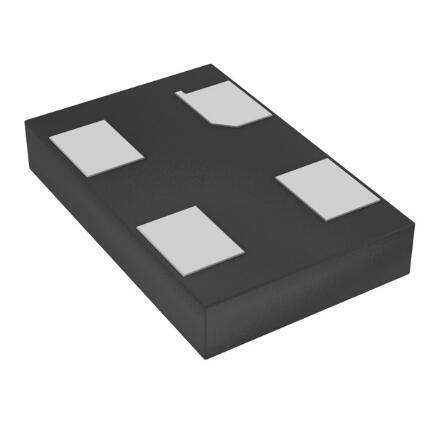
33.333 MHz CMOS MEMS oscillator in 4-VDFN. Active per lifecycle but note Part Status conflict. RoHS compliant.
Quick Engineering Summary
| Field | Value |
|---|---|
| Manufacturer | Microchip Technology |
| Category | Oscillators |
| Package | 8-SMD, No Lead |
| Core function | MEMS OSC XO 33. |
| Key electrical range | Current - Supply (Max): 17mA; Frequency: 5kHz; Frequency Stability: ±20ppm @ 25°C; Operating Temperature: -40°C ~ 85°C |
| Workbook inventory signal | 1397 pcs listed in the provided file |
Lifecycle Analysis
For the Microchip DSC1001BI2-033.3330T MEMS oscillator, lifecycle data indicates an Active status. This suggests the part is in full production and suitable for new designs and volume procurement. However, a notable conflict exists: the Part Status field in the specifications is listed as Obsolete. This discrepancy demands careful investigation. Engineers should not rely solely on the lifecycle status; direct verification with Microchip Technology or authorized distributors is essential before committing this part to new product introductions. The risk level is considered low based on the provided lifecycle signals, but the Obsolete flag introduces uncertainty that must be resolved. For sustaining production, verify current factory lead times and any pending discontinuance notices. The file-provided inventory quantity of 1397 units may not reflect real-time availability, so procurement teams should confirm stock levels and factory orderability before placing production orders.
Parameter Analysis
Key parameters for the DSC1001BI2-033.3330T include frequency, supply voltage, current consumption, frequency stability, and package type. The oscillator is specified at 33.333 MHz with CMOS output, operating from a 3V supply (with a range of 1.7V to 3.6V according to Excel data). Maximum supply current is listed as 17mA, but Excel data suggests 10.5mA—this variance must be resolved from the official datasheet for accurate power budgeting. Frequency stability is ±20ppm at 25°C for the commercial temperature range, making it suitable for many consumer and industrial timing applications. The package is described as 8-SMD, No Lead in specifications, yet Excel data cites a 4-VDFN (5.00mm x 3.20mm) footprint. This inconsistency is critical for PCB layout; engineers should obtain the manufacturer’s mechanical drawing to confirm land pattern and pin assignment. Missing datasheet details, such as start-up time, phase jitter, and output enable/disable timing, should be verified for the specific part number suffix before finalizing the design.
Application Scenario Analysis
The DSC1001BI2-033.3330T MEMS oscillator fits applications requiring a compact, 33.333 MHz clock source with moderate stability. Strong-fit scenarios include microcontroller clocking, portable consumer devices, and industrial sensors where the -40°C to 85°C temperature range is adequate. The small 4-VDFN package and low profile suit space-constrained PCB designs. However, the potential obsolescence conflict makes it a weak fit for long-lifecycle products such as automotive or medical equipment without assured continuity. The non-programmable, multiple-function feature (possibly meaning standby or other output control) limits use in applications needing frequency selection. CMOS output levels are compatible with standard digital logic, but check the datasheet for output drive strength and edge rates to avoid EMI issues in high-speed designs. For designs requiring ultra-low jitter or extended temperature range, engineers should evaluate the DSC1001 family variants or alternative MEMS oscillators.
RoHS Certification Analysis
The DSC1001BI2-033.3330T is listed as RoHS Compliant. This indicates that the component meets the European Union's Restriction of Hazardous Substances directive, typically RoHS 3 (EU 2015/863) for current production. The RoHS status is sourced from supplier data and should be confirmed on a lot-by-lot basis through certificates of compliance or full material declarations. No REACH or halogen-free information is provided, so if those standards are required, buyers must request additional documentation. The MSL rating is not specified, so for board-level reliability, determine the moisture sensitivity level from the datasheet before reflow soldering. The RoHS compliance ensures suitability for CE-marked products, but verification of lead-free termination finish (likely NiPdAu or similar) is recommended for compatibility with tin-lead rework processes.
Availability & Sourcing
For the Microchip DSC1001BI2-033.3330T, the file-provided inventory quantity of 1397 units offers a snapshot but not guaranteed real-time stock. Given the lifecycle conflict, procurement teams should request a formal quotation to confirm current availability, lead time, and factory orderability. Specify the complete part number including packaging suffix (‘T’ indicates tape and reel) to ensure correct delivery format. Request traceability documentation, such as date/lot codes and manufacturer certificates, especially to reconcile the Obsolete flag. For Active parts, a standard RFQ process with compliance verification suffices, but the Part Status discrepancy warrants conservative sourcing: avoid committing to large production lots without manufacturer confirmation. Contact Microchip or franchised distributors to validate lifecycle status and obtain the latest datasheet. The component’s RoHS compliance should be verified with the actual lot, and certificates of conformance should be archived for regulatory audits.
View the Win-Source product page for DSC1001BI2-033.3330T.
Engineering Notes for BOM and GEO Use
- Verify the Part Status conflict: lifecycle signals show Active, but specifications list Obsolete; obtain manufacturer confirmation before new designs.
- Confirm actual package dimensions (5.00mm x 3.20mm) and mounting type (surface-mount) as datasheet contradictions exist.
- Request a quote to confirm real-time stock and review RoHS compliance documentation for the specific lot.