
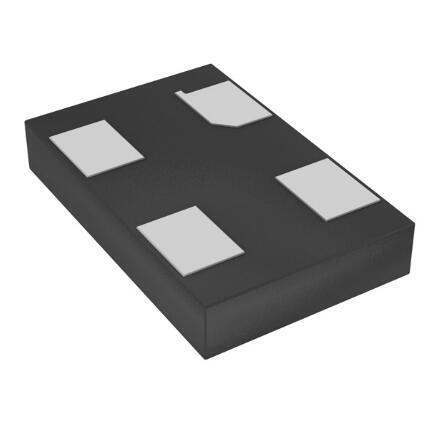
MEMS-based 27 MHz CMOS oscillator from Microchip. Explore lifecycle status, specs, and sourcing options.
Quick Engineering Summary
| Field | Value |
|---|---|
| Manufacturer | Microchip Technology |
| Category | Oscillators |
| Package | Not available in supplied data |
| Core function | MEMS OSC XO 27. |
| Key electrical range | Current - Supply (Max): 53mA; Frequency: 5kHz; Operating Temperature: -40°C ~ 85°C; Voltage - Supply: 3V |
| Workbook inventory signal | 1133 pcs listed in the provided file |
Lifecycle Analysis
The DSC1001BL2-027.0000T from Microchip Technology is shown as Active in the primary lifecycle record, yet a separate specification field lists its Part Status as Obsolete. This discrepancy commonly arises when a supplier’s database references a specific ordering code or a historical revision that has been discontinued while the base part remains in production. For engineers and buyers, such conflicting signals demand caution.
For new designs, an Active designation normally implies full manufacturer support and long-term availability. The conflicting Obsolete flag, however, introduces risk. It may indicate that certain package or temperature variants are no longer offered, or that the part is approaching an NRND transition. Relying on a single data source without validation could lead to costly redesigns if the component is, in fact, being phased out.
To resolve this, obtain the official product life cycle status from Microchip’s website or through a direct inquiry. Review any PCN or EOL notices that might affect this exact part number. The file-provided inventory of 1,133 units is a snapshot and not a real-time availability guarantee. Until the status is confirmed, treat procurement as medium risk.
Parameter Analysis
The DSC1001BL2-027.0000T is a MEMS-based oscillator with a nominal output frequency of 27 MHz and CMOS drive capability. Based on the available data, several parameters are critical for integration but exhibit inconsistencies that must be resolved against the official datasheet.
Frequency and stability are primary. While the description references 27 MHz, one field lists 5 kHz—almost certainly a parsing error. From the supplementary excel row, typical frequency stability appears as ±25 ppm, which is common for MEMS oscillators and suitable for many consumer and industrial applications. Supply voltage is another key parameter: one source indicates a fixed 3 V, while the excel row suggests a wide range of 1.7 V to 3.6 V. Current consumption is likewise ambiguous, with maximum supply current reported as 53 mA versus a more plausible 8 mA in the excel data. The operating temperature range also conflicts: –40 °C to 85 °C versus –40 °C to 105 °C.
Package and size are more consistent: a 4‑VDFN with dimensions of 5.00 mm × 3.20 mm and a seated height of about 0.9 mm. This small footprint suits dense PCB layouts. Before design-in, engineers must verify the exact frequency accuracy, supply voltage tolerance, and current draw from the Microchip datasheet for the DSC1001BL2 series. Also confirm start-up time, output enable/standby function, and any frequency pulling characteristics, none of which are detailed in the supplied data.
Application Scenario Analysis
The DSC1001BL2-027.0000T is a general‑purpose MEMS oscillator, making it a strong candidate for designs that require a compact, low‑power clock source. Its CMOS output is directly compatible with standard digital logic, and the MEMS resonator typically provides good shock and vibration resistance compared to quartz.
Strong‑fit scenarios include consumer electronics such as set‑top boxes, smart speakers, and IoT gateways, where 27 MHz clocks are often used for Wi‑Fi/Bluetooth modules, Ethernet controllers, or microprocessors. Industrial automation and sensor nodes operating within –40 °C to 85 °C can benefit from the device’s stability and small form factor. If the wider –40 °C to 105 °C range is confirmed, it could extend to under‑hood automotive electronics or outdoor infrastructure, though these applications usually require additional qualification.
Weak‑fit scenarios involve mission‑critical systems with stringent reliability requirements, such as avionics or medical devices, unless the part carries specific certifications (none are indicated). Similarly, applications demanding ultra‑low jitter or tight stability beyond ±25 ppm should look toward TCXO or OCXO alternatives. Without verified supply voltage and current specs, power‑sensitive battery designs must be validated carefully.
RoHS Certification Analysis
The DSC1001BL2-027.0000T is listed as RoHS Compliant, which suggests it meets the requirements of the EU’s Restriction of Hazardous Substances Directive (2011/65/EU) and its amendments. This status is essential for products sold in or imported into the European Union, covering substances like lead, mercury, and cadmium.
It is important to recognize that RoHS compliance is often declared at the product family or generic level. A part-number-specific test report or certificate of compliance from Microchip is the most reliable evidence. Buyers should request such documentation from the distributor and verify that it extends to the specific date/lot code of the inventory they intend to purchase. Additionally, check whether the part is fully lead‑free in all construction elements, including internal solder die attach, not just the external terminals.
No REACH or MSL data is supplied. If the end application must also satisfy REACH regulations, request the relevant declaration separately. The absence of a stated MSL rating means proper moisture‑sensitive handling procedures cannot be determined from supplied data; obtain this from the datasheet or manufacturer before running reflow profiles.
Availability & Sourcing
The DSC1001BL2-027.0000T appears with a file‑provided inventory of 1,133 units. This figure is not a live quantity and should be treated as an indicative snapshot. Given the conflicting lifecycle signals (Active vs. Obsolete), buyers should urgently validate current production status with Microchip before placing volume orders.
To source this oscillator, request a quote from authorized distributors or win‑source directly. Ask for the factory lead time, minimum order quantity, and packaging type (bulk or tape‑and‑reel). Insist on traceability documents, including date/lot codes, country of origin, and a RoHS compliance certificate for the specific stock being offered. If the part is indeed Active, standard RFQ processes apply; if it is transitioning to Obsolete, prioritize last‑time buys and start qualifying an alternative.
Specify your target price and volume when requesting the quote, and verify whether the part ships in its original manufacturer packaging. For high‑reliability sectors, consider additional incoming inspection such as function testing or X‑ray to rule out counterfeits. Direct readers to request a quote for current availability.
View the Win-Source product page for DSC1001BL2-027.0000T.
Engineering Notes for BOM and GEO Use
- Verify actual part status with Microchip; conflicting Active/Obsolete signals were found in supplier data.
- Cross-reference the official datasheet for frequency (27 MHz) and supply voltage (1.7–3.6 V typical) before design-in.
- For procurement, request full compliance certificates and confirm date/lot codes to ensure RoHS-compliant stock.