
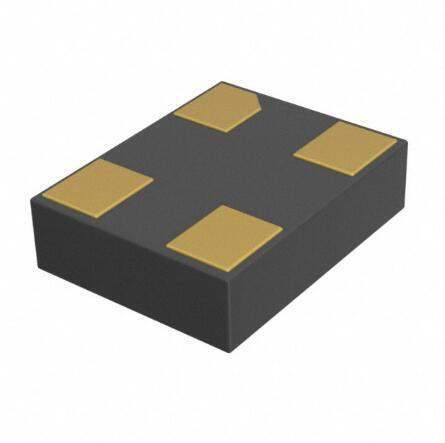
Engineer’s sourcing resource for DSC1001CE1-037.1250 from Microchip Technology. Verify lifecycle and parameters.
Quick Engineering Summary
| Field | Value |
|---|---|
| Manufacturer | Microchip Technology |
| Category | Oscillators |
| Package | 8-SMD, No Lead |
| Core function | MEMS OSC XO 37. |
| Key electrical range | Current - Supply (Max): 17mA; Frequency: 5kHz; Frequency Stability: ±10ppm; Operating Temperature: -40°C ~ 85°C |
| Workbook inventory signal | 1 pcs listed in the provided file |
Lifecycle Analysis
The DSC1001CE1-037.1250 MEMS oscillator from Microchip Technology carries a conflicting lifecycle status. While the raw lifecycle signal is Unknown, the part status in the specification table is marked Obsolete. This discrepancy demands conservative procurement action. Obsolete components are no longer recommended for new designs (NRND) and typically have no ongoing production from the manufacturer.
For existing products, immediate steps should include verifying available inventory, securing last‑time‑buy quantities if still offered, and initiating redesign efforts. The risk level for procurement is high because supply is limited and unauthorized or counterfeit sources may appear. Engineers and buyers must obtain a formal product change notification (PCN) or end‑of‑life (EOL) notice from Microchip to confirm the exact lifecycle stage.
Without manufacturer‑confirmed lifecycle data, using this part in critical or long‑lifecycle applications is not advisable. Any stock found should be validated for authenticity, date code, and traceability.
Parameter Analysis
Key parameters extracted for the DSC1001CE1-037.1250 include a supply voltage of 3V, maximum supply current of 17mA, and frequency stability of ±10ppm. These are typical values for a MEMS‑based oscillator and suggest a device suited for precision timing applications. However, multiple inconsistencies exist in the supplied data. The specified frequency is listed as 5kHz, which contradicts the part number and description both indicating 37.1250 MHz. The output is labeled as Ethernet, an unusual assignment for an oscillator, and the package dimensions (0.250″ Dia x 1.250″ L) do not align with the 8‑SMD no‑lead package style.
For design qualification, engineers must verify the actual frequency, output logic standard (likely CMOS per the description), and correct mounting dimensions directly from the official Microchip datasheet. The 17mA supply current should be considered for power budgeting, and the ±10ppm stability suits many consumer and industrial clocking requirements. Thermal derating is not needed for the specified −40°C to +85°C operating range, but layout guidelines for high‑frequency oscillators (like proper ground planes and decoupling) should be reviewed.
Until the datasheet is consulted, the provided specifications cannot be relied upon for board‑level integration.
Application Scenario Analysis
The DSC1001CE1-037.1250 is a single‑output MEMS oscillator designed as a clock source. If the nominal frequency is indeed 37.1250 MHz, strong‑fit applications include Ethernet or Gigabit Ethernet PHY clocking, where that frequency is a common reference. The CMOS output (if confirmed) makes it suitable for driving standard digital logic loads in networking switches, routers, or embedded systems.
Weak‑fit scenarios include high‑volume new designs, due to the part’s obsolete status and uncertain availability. Automotive or safety‑critical systems should avoid this part unless full traceability and qualification can be assured. Industrial control and legacy telecommunications equipment may still use this oscillator for maintenance, but procurement teams must secure enough stock for the product’s remaining life.
Because of the parameter discrepancies, any application must begin with a thorough datasheet review. Without verified specs, the oscillator may not meet required timing budgets or environmental tolerances.
RoHS Certification Analysis
The DSC1001CE1-037.1250 is declared RoHS Compliant by the supplier. This indicates that the component meets the restriction of hazardous substances as defined by the European Union directive, but the specific version (e.g., RoHS 2 or RoHS 3) is not reported. For compliance‑driven industries, such as medical or aerospace, relying solely on this declaration is insufficient.
Procurement should request the full RoHS certificate of compliance (CoC) from the distributor or manufacturer, and confirm that the compliance covers the specific production lot. While the part is obsolete, remaining stock may still have valid RoHS documentation, but date‑code‑based audits are recommended. No exemptions are noted in the available data, and no REACH or conflict‑mineral declarations are supplied, so these must be obtained separately if required.
RoHS compliance alone does not confirm lead‑free termination; if a lead‑free process is required, verify solder finish details from the datasheet or manufacturer.
Availability & Sourcing
The DSC1001CE1-037.1250 is an obsolete part, and the file‑provided inventory quantity is 1 unit. This figure is not a real‑time availability and must be confirmed through a request for quote (RFQ). Because the lifecycle signals conflict, it is critical to verify remaining factory stock or authorized distributor inventory directly with Microchip Technology or their channel partners.
Any RFQ should include requests for date and lot codes, full traceability documentation, and compliance certificates. For obsolete parts, the risk of counterfeit or reclaimed devices is elevated; therefore, procurement should source only from trusted, authorized sources. If no remaining stock can be located, design teams should evaluate pin‑compatible alternatives or plan a board revision.
This part is not suitable for volume production without a secured, verified inventory. Organizations with a long‑term maintenance obligation for legacy systems should consider last‑time‑buy or lifetime‑buy negotiations while any stock remains.
View the Win-Source product page for DSC1001CE1-037.1250.
Engineering Notes for BOM and GEO Use
- Verify actual frequency—part number indicates 37.1250 MHz, but spec table shows 5 kHz; confirm against datasheet before design‑in.
- Part status is Obsolete; validate lifecycle with Microchip and consider last‑time‑buy or alternate sources for production continuity.
- Discrepancies in output type (listed as Ethernet) and packaging (Bulk vs. SMD) require clarification to ensure correct integration.