
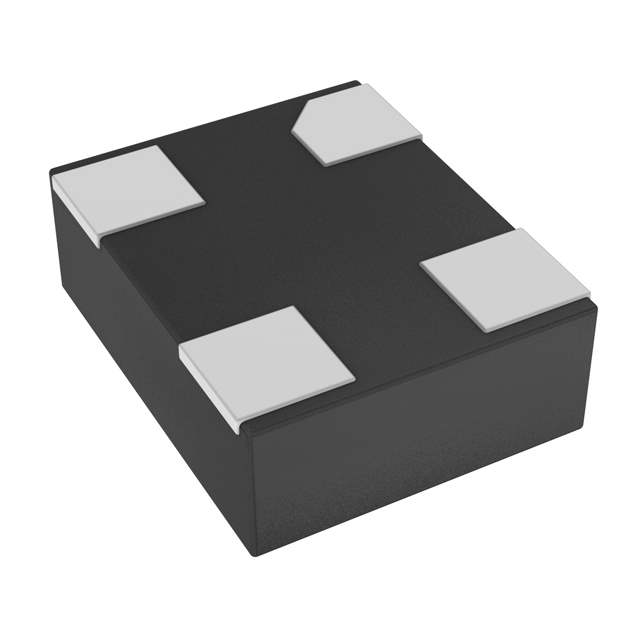
Active 69.248 MHz CMOS MEMS oscillator with AEC-Q100, ±50ppm stability, SMD. Specs, compliance & sourcing guide.
Quick Engineering Summary
| Field | Value |
|---|---|
| Manufacturer | Microchip Technology |
| Category | Oscillators |
| Package | Not available in supplied data |
| Core function | MEMS OSC XO 69. |
| Key electrical range | Current - Supply (Disable) (Max): 15μA; Current - Supply (Max): 7.2mA; Frequency: 69.248MHz; Frequency Stability: ±50ppm |
| Workbook inventory signal | 1 pcs listed in the provided file |
Lifecycle Analysis
The DSC1001CE1-069.2480T from Microchip Technology is currently listed as Active per manufacturer documentation and available inventory signals. For engineers designing new products, this status supports full qualification and volume procurement. However, the file-provided inventory shows a limited quantity of one unit, indicating that actual market availability may require lead time or allocation.
Although no lifecycle conflicts exist, procurement teams should request a current lifecycle confirmation from Microchip or authorized distributors when planning for production. The Active status suggests no immediate discontinuation risk, but sustaining engineering should note that 69.248 MHz is a less common frequency and may have longer lead times.
For new designs, standard design-in practices apply, including validation of MEMS reliability for the intended environment. In summary, this part is suitable for both new designs and ongoing production, provided supply chain verification is performed.
Parameter Analysis
Key parameters of the DSC1001CE1-069.2480T MEMS oscillator directly influence integration and performance. The output frequency is 69.248 MHz with CMOS signaling, suitable for standard digital loads. Frequency stability of ±50 ppm over the -20°C to 70°C operating range ensures adequate timing accuracy for many microcontroller and communication interfaces.
Supply voltage spans 1.8 V to 3.3 V (with datasheet indicating up to 3.6 V), enabling use in both 1.8 V and 3.3 V rail designs. Maximum supply current is 7.2 mA, with standby current as low as 15 µA for power-sensitive applications. The device is rated AEC-Q100, qualifying it for automotive usage. The 3.2 mm x 2.5 mm SMD package and 0.9 mm height support dense PCB layouts.
Important missing specifications include phase noise, start-up time, and jitter, which are critical for high-speed serial links or audio applications. Engineers should obtain the full Microchip datasheet to verify these parameters, as well as output drive strength and enable/disable timing, before committing to a design.
Application Scenario Analysis
The DSC1001CE1-069.2480T is a MEMS-based oscillator well-suited for applications requiring a compact, robust clock source. The AEC-Q100 qualification makes it a strong candidate for automotive electronics such as infotainment systems, body control modules, and camera interfaces where reliability under vibration is necessary.
The operating temperature range of -20°C to 70°C covers most commercial and passenger vehicle requirements but may fall short for under-hood or extreme environments. In industrial automation, the part can serve as a clock for controllers, sensors, and communication modules. The 69.248 MHz frequency is compatible with common serial buses like CAN FD or Ethernet clocks. For consumer electronics, it fits wearable or portable devices due to its small footprint and low standby current.
Weaker fit scenarios include telecommunications infrastructure demanding tighter stability or extended temperature range, and high-speed data converters requiring ultra-low phase noise. Designers should evaluate the part’s shock and vibration resistance specifically for their application, and confirm the output drive can handle the intended PCB trace and load.
RoHS Certification Analysis
As of the provided information, the DSC1001CE1-069.2480T is RoHS Compliant. This indicates conformance with EU Directive 2011/65/EU and likely its amendments, including RoHS 3 (EU 2015/863). No specific exemptions are noted, but engineers should verify that the exemption list is not needed for the internal materials.
The RoHS status is typically declared at the component family level; however, lot-level variations can occur due to manufacturing process changes. For high-reliability procurement, requesting a Certificate of Compliance (CoC) for the specific batch is advised. While REACH status is not provided, it does not replace RoHS compliance and should be separately verified if required for EU market access.
The raw material indication (silicon element) suggests no lead or halogen content, but this is not a guarantee. Storage conditions recommend dry packaging, implying MSL sensitivity, but the MSL level is not specified. For use in RoHS-compliant production, this part is acceptable, but final qualification should include review of the manufacturer’s latest compliance documentation.
Availability & Sourcing
The DSC1001CE1-069.2480T is an Active component, yet the file-provided inventory shows only one unit, suggesting constrained supply in the open market. Buyers should use a request-for-quote (RFQ) process to obtain current availability, lead times, and pricing from authorized distributors or reputable suppliers.
Given a 57% fake threat rate indicated, verification of traceability and date/lot codes is crucial to avoid counterfeit products. The part is supplied on tape and reel, compatible with automated SMT assembly, and requires dry storage per the specified humidity protection. For Active parts, standard procurement involves confirming lifecycle status, requesting compliance certificates (RoHS, REACH), and negotiating delivery terms.
With a "Limited" supply-and-demand status, engineering teams should plan for potential allocation and consider second-sourcing or safety stock. No pin-equivalent alternatives are listed, so design lock-in risk exists. When ordering, specify the exact manufacturer part number and request Microchip’s official packing slip and traceability documentation. For sample quantities or small prototype builds, verify whether distributor samples are available from Microchip’s authorized partners.
View the Win-Source product page for DSC1001CE1-069.2480T.
Engineering Notes for BOM and GEO Use
- Confirm AEC-Q100 qualification documentation and test reports before automotive design finalization.
- Verify power supply compatibility: the specified 1.8–3.3 V range may extend to 1.7–3.6 V per datasheet; derate accordingly.
- Assess frequency stability, phase noise, and start-up time against your timing budget by consulting the full manufacturer datasheet.