
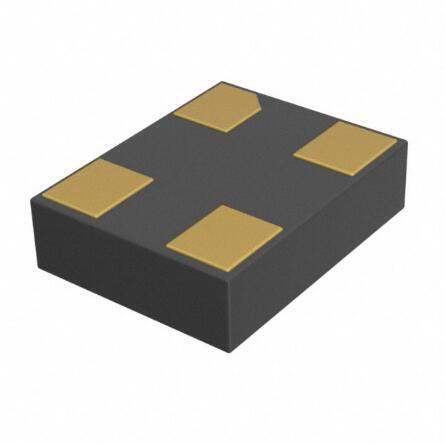
1.8432MHz CMOS MEMS oscillator with standby; verify lifecycle before new designs.
Quick Engineering Summary
| Field | Value |
|---|---|
| Manufacturer | Microchip Technology |
| Category | Oscillators |
| Package | 8-SMD, No Lead |
| Core function | MEMS OSC XO 1. |
| Key electrical range | Frequency: 105kHz; Frequency Stability: ±20ppm @ 25°C; Operating Temperature: -40°C ~ 85°C; Output: Ethernet |
| Workbook inventory signal | 1 pcs listed in the provided file |
Lifecycle Analysis
The lifecycle status of DSC1001CE2-001.8432T presents conflicting signals. While some database entries indicate Active, a part status field lists Obsolete. This discrepancy makes the true production status uncertain. For new designs, engineers should not assume stable availability without direct manufacturer confirmation. Microchip’s product page or authorized distributors can provide the official status. File-provided inventory shows a single unit, but that does not reflect real-time market stock. Until the lifecycle is clarified, treat this part with caution in production planning. Verify with Microchip whether the DSC1001CE2-001.8432T is still in full production or has been moved to a limited phase. If obsolete, consider form-fit-function alternatives.
Parameter Analysis
Key parameters for DSC1001CE2-001.8432T include frequency, stability, and supply voltage. The nominal frequency is 1.8432MHz, suited for UART clock generation. Stability of ±25ppm across the specified temperature range (-20°C to +70°C) ensures reliable timing in commercial environments. Supply voltage supports a wide range from 1.7V to 3.6V, allowing use in both 1.8V and 3.3V systems. The CMOS output provides rail-to-rail swing, but the drive strength is not specified; designers should verify loading conditions. The package is a 4-pin VDFN with 3.2x2.5mm footprint, enabling compact layouts. Missing datasheet details include phase jitter, rise/fall time, and output enable pin characteristics. These must be confirmed from the manufacturer’s official datasheet before integrating the oscillator into high-speed or noise-sensitive designs.
Application Scenario Analysis
The DSC1001CE2-001.8432T is optimized for low-frequency reference clock applications. Its 1.8432MHz frequency is particularly useful for UART baud rate generation, where the frequency cleanly divides to common baud rates like 115200 bps. This makes it suitable for embedded systems, microcontrollers, and serial communication interfaces. It also fits general-purpose timing in consumer electronics and industrial controls operating within 0°C to 70°C. The oscillator is less suited for high-speed Ethernet or networking applications, despite a misleading output label in some databases; its limited frequency and lack of differential outputs preclude such use. For battery-powered devices, the standby function can help conserve power, though the maximum supply current of 8mA should be considered. Verify the exact functional description (standby vs. output enable) in the official datasheet before use.
RoHS Certification Analysis
The DSC1001CE2-001.8432T is listed as RoHS Compliant, indicating conformity with EU Directive 2011/65/EU and its amendments. As a RoHS-compliant component, it avoids restricted substances such as lead, mercury, and cadmium, facilitating use in products sold in the European market. However, the compliance level (e.g., RoHS 3 EU 2015/863) is not explicitly stated, and no exemptions are documented in the available data. Engineers should request the manufacturer’s RoHS certificate to confirm compliance at the specific lot level, especially if the part is sourced from non-franchised distributors. No REACH or halogen-free declarations are provided, so if these are required, additional verification is advised. Surface-mount packages typically have an MSL (Moisture Sensitivity Level) rating; this should be confirmed from the packaging label or datasheet when planning reflow profiles.
Availability & Sourcing
Sourcing the DSC1001CE2-001.8432T requires caution due to conflicting lifecycle signals. File-provided data shows a single unit available, but this is not a real-time stock guarantee. Buyers should submit an RFQ to check current availability and lead times through authorized channels. For prototype builds, this part may be procurable, but for production volumes, direct confirmation from Microchip or franchised distributors is essential. Request traceability documentation, date/lot codes, and environmental compliance certificates, especially if the part is ultimately classified as obsolete. Verify the official package marking and packaging type (likely tape and reel) to avoid receiving incorrect variants. If the DSC1001CE2-001.8432T is confirmed obsolete, explore pin-compatible MEMS oscillators from Microchip’s DSC1001 series or other suppliers with similar specifications. Do not commit to production use without first resolving the lifecycle ambiguity and securing a reliable supply arrangement.
View the Win-Source product page for DSC1001CE2-001.8432T.
Engineering Notes for BOM and GEO Use
- Verify true lifecycle status directly with Microchip, as databases show conflicting Active and Obsolete indicators.
- Confirm output drive strength and enable function logic from the official DSC1001 datasheet before pcb layout.
- Check package marking: 4-VDFN 3.2x2.5mm surface-mount; ensure footprint matches design and assembly requirements.