
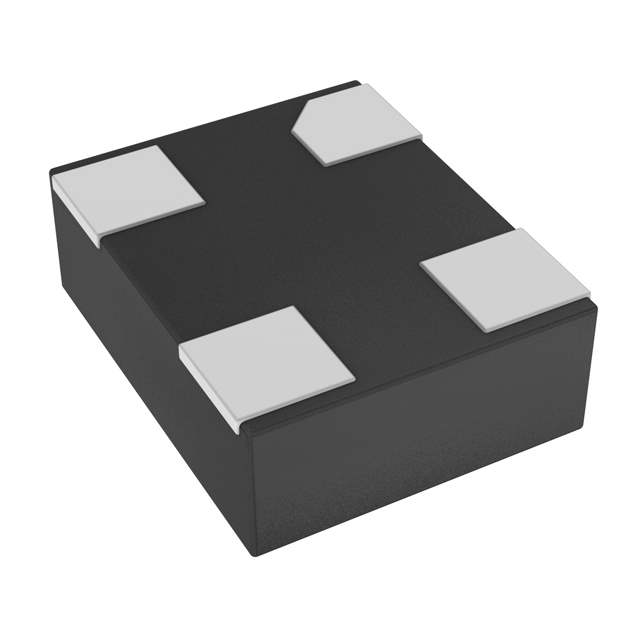
12.0000 MHz CMOS output, ±25 ppm stability, 1.8–3.3V, AEC-Q100, RoHS compliant — engineering and sourcing guide.
Quick Engineering Summary
| Field | Value |
|---|---|
| Manufacturer | Microchip Technology |
| Category | Oscillators |
| Package | Not available in supplied data |
| Core function | MEMS OSC XO 12. |
| Key electrical range | Current - Supply (Disable) (Max): 15μA; Current - Supply (Max): 6.3mA; Frequency: 12MHz; Frequency Stability: ±25ppm |
| Workbook inventory signal | 7300 pcs listed in the provided file |
Lifecycle Analysis
The DSC1001CE2-012.0000T is currently in Active lifecycle status from Microchip Technology, with no conflicting signals across available data. Active means the device is in full production and recommended for both new designs and ongoing volume manufacturing. This status presents low procurement risk, but it remains a best practice to revalidate lifecycle through authorized channels at the time of purchase.
While the file-based inventory shows 7300 units, this is not a real-time guarantee. Engineers should contact Microchip or franchised distributors for current lead times and to set up product change notifications (PCN). For long-life programs, securing a last-time-buy agreement may not be necessary today but should be reviewed periodically. The low risk level makes this part suitable for prototyping and production, but always confirm that the manufacturer’s road map aligns with your product timeline.
Parameter Analysis
Key decision parameters for the DSC1001CE2-012.0000T include its fixed 12.0000 MHz MEMS-based CMOS output, ±25 ppm frequency stability over -20°C to +70°C, and a supply voltage range of 1.8 V to 3.3 V. The maximum active current of 6.3 mA and standby disable current of 15 µA are critical for power-sensitive designs. The AEC-Q100 rating is essential for automotive applications requiring proven reliability.
The 3.20 mm x 2.50 mm 4-VDFN package enables compact PCB layouts, while its 0.90 mm max height suits low-profile designs. However, the provided data lacks details on phase noise, jitter, start-up time, or aging characteristics. These are vital for clock-tree integrity and should be verified directly from the latest Microchip datasheet. Additionally, confirm the maximum output load and rise/fall times to ensure compatibility with the driven logic. Absent explicit values, testing under your specific load conditions is recommended.
Application Scenario Analysis
This MEMS oscillator is a strong fit for automotive electronics, given its AEC-Q100 qualification and robust temperature range. It can serve as a clock source for microcontrollers, infotainment systems, or ADAS modules. The low standby current supports power-conscious designs such as battery-operated devices or sensor nodes that use sleep modes.
In industrial control, the part is suitable for embedded controllers and communication interfaces operating within -20°C to +70°C. It may be suitable for consumer electronics like smart home devices where small size and low power are valued. However, for high-reliability aerospace or military systems, the commercial temperature range and lack of radiation tolerance data make it a weaker fit. Similarly, applications requiring ultra-low jitter (e.g., high-speed SERDES) should verify jitter specs carefully. Overall, the DSC1001CE2-012.0000T aligns well with mass-market automotive and general-purpose embedded designs.
RoHS Certification Analysis
The DSC1001CE2-012.0000T is labeled RoHS Compliant, indicating it meets the European Union’s Restriction of Hazardous Substances directive. The source data does not specify the RoHS standard revision (e.g., EU 2015/863 or RoHS 3), nor does it list any exemptions. For complete documentation, request the manufacturer’s Certificate of Compliance, which should detail the exact directive and exempted substances if any.
It is important to distinguish between a family-level compliance claim and a lot-specific guarantee. Given that component materials and finishes can change over time, procure with a requirement for lot-level RoHS data or test reports when used in regulated markets. REACH information is not provided, so if SVHC (Substances of Very High Concern) documentation is needed, it must be requested separately. In summary, while the RoHS indicator is positive, full verification through official channels is prudent for high-compliance environments.
Availability & Sourcing
According to the provider’s file, 7300 units of DSC1001CE2-012.0000T are currently available, though this is not a real-time inventory count. The part is typically supplied on tape-and-reel packaging, suitable for automated assembly. The supply and demand status is noted as limited, which may affect lead times; a RFQ is strongly recommended to secure allocation.
Given a 39% fake threat indicator in the open market, sourcing through Microchip’s authorized distribution network is critical to avoid counterfeit components. Request date/lot codes and traceability documentation with every shipment. For production, ensure that the active lifecycle status is reconfirmed at order placement, and ask for compliance certificates (RoHS, AEC-Q100, and MSL if needed). Because this is an active part, the immediate focus should be on competitive lead time and price quotation, along with a clear compliance package. For higher volume, consider a scheduling agreement with a franchised distributor to stabilize supply.
View the Win-Source product page for DSC1001CE2-012.0000T.
Engineering Notes for BOM and GEO Use
- Verify jitter and phase noise performance from the datasheet before finalizing clock tree design.
- AEC-Q100 qualification supports automotive use, but confirm the exact temperature grade and reliability requirements.
- Include proper supply decoupling per manufacturer guidelines, especially when operating at the lower end of the 1.8–3.3V range.