
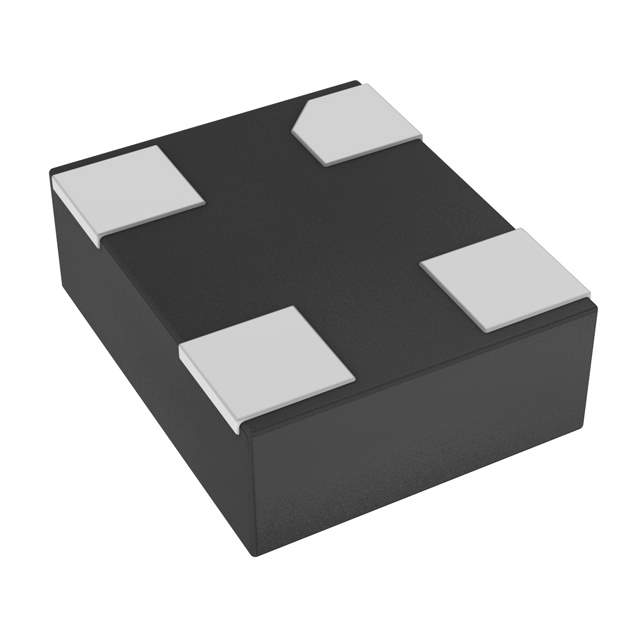
Microchip active 24.576 MHz CMOS MEMS oscillator for industrial and automotive applications
Quick Engineering Summary
| Field | Value |
|---|---|
| Manufacturer | Microchip Technology |
| Category | Oscillators |
| Package | 4-SMD, No Lead |
| Core function | MEMS OSC XO 24. |
| Key electrical range | Current - Supply (Disable) (Maximum): 15μA; Frequency: 24.576MHz; Frequency Stability: ±25ppm; Maximum Supply Current: 6.3mA |
| Workbook inventory signal | 1 pcs listed in the provided file |
Lifecycle Analysis
The DSC1001CE2-024.5760T from Microchip is officially listed as Active, which normally indicates full production, suitability for new designs, and ongoing manufacturer support. However, a supplied specification field records an Estimated EOL Date of 2023. This date conflicts with the Active designation and may indicate outdated market data, a completed product change notification, or a data entry error. For engineers and buyers, this mismatch demands conservative procurement behavior. Until direct confirmation is obtained from Microchip or an authorized distributor, treat this part as not guaranteed for long-term availability. The file-provided inventory shows a single unit, further suggesting that open-market stock may be constrained. For new designs, validate lifecycle status and supply commitments through official channels before relying on this component.
Parameter Analysis
The DSC1001CE2-024.5760T offers a fixed 24.576 MHz CMOS output, a frequency widely used in audio sampling, Ethernet, and USB subsystems. Its ±25 ppm frequency stability over -20°C to 70°C provides sufficient margin for many consumer and industrial applications, but close examination of the datasheet is advised for total stability including aging and load effects. Supply voltage is specified as 1.8 V to 3.3 V, though some sources suggest an extended range up to 3.6 V; engineers should verify this to avoid overvoltage stress. The 6.3 mA maximum active current and 15 µA standby current are competitive for battery-powered or power-sensitive designs. The 3.2 mm x 2.5 mm 4-SMD package with 0.9 mm height is standard for space-constrained boards. Key missing parameters to locate in the official datasheet include phase jitter, start-up time, rise/fall times, and aging characteristics, as these directly affect high-speed interface timing and long-term reliability. The AEC-Q100 rating indicates basic automotive qualification, but design teams should confirm which specific tests were passed before committing to vehicle applications.
Application Scenario Analysis
The DSC1001CE2-024.5760T is a strong candidate for space- and power-constrained designs that require a stable clock source. Its MEMS construction provides inherent vibration and shock resistance, making it suitable for handheld instruments, wearable devices, and industrial IoT endpoints. The standby function, drawing only 15 µA maximum, allows extended battery life in duty-cycled systems like sensor nodes or portable medical monitors. The 24.576 MHz frequency is directly compatible with common audio codec master clocks and Ethernet physical-layer interfaces, simplifying BOM integration. Weaker fits include high-temperature environments beyond the 70°C maximum, where an industrial- or automotive-grade version with a wider temperature range would be necessary. Applications demanding tight phase noise, such as high-speed serial data converters or telecom infrastructure, may need a crystal-based oscillator with superior noise performance. Additionally, designs targeting the full -40°C to +125°C automotive range should verify that the AEC-Q100 rating covers the required grades. The limited supply signal from the source file also suggests that high-volume consumer or mass-market products should invest in careful supply-chain planning.
RoHS Certification Analysis
The DSC1001CE2-024.5760T is marked RoHS Compliant and Halogen Free Compliant, satisfying typical OEM environmental requirements. However, no explicit standard reference (e.g., 2015/863) appears in the supplied data. For full compliance documentation, request the manufacturer's EU RoHS Certificate of Conformity to verify the specific exemption status and test methods. Lot-level compliance should be confirmed at the time of order, especially for high-reliability markets where banned substance limits are audited. REACH status is not provided; if required, verify with Microchip or your distributor.
Availability & Sourcing
The supplied inventory data shows a single unit on hand; this snapshot is not guaranteed real-time and should not be used for procurement decisions. Buyers should request a current quote through authorized Microchip distributors to obtain live pricing, lead time, and full traceability documentation. The reel packaging indicates standard tape-and-reel for automated assembly, but verify the specific reel size and quantity per reel when ordering. Due to the conflicting EOL date, request confirmation of production lifecycle directly from Microchip or an authorized channel, and secure a last-time-buy notice if the part is actually transitioning. For engineering prototypes, low stock may be acceptable, but volume production plans should include a validated alternate source or a formal supply agreement. Ensure that any procured parts are accompanied by lot-specific RoHS and halogen-free certificates.
View the Win-Source product page for DSC1001CE2-024.5760T.
Engineering Notes for BOM and GEO Use
- Validate the oscillator’s lifecycle directly with Microchip due to conflicting EOL dates before committing to production.
- Match the 1.8 V to 3.3 V supply range and 6.3 mA active current to your power tree and verify standby current for battery-powered designs.
- Request lot‑specific RoHS and halogen‑free certificates and enforce date/lot traceability for any purchase to mitigate open‑market risks.