
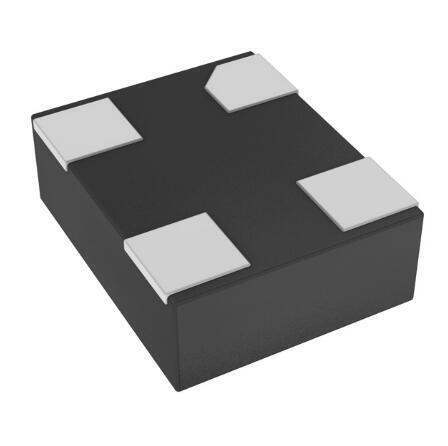
Conflicting lifecycle signals require direct verification. RoHS compliant, 24 MHz MEMS oscillator. Request a quote for availability.
Quick Engineering Summary
| Field | Value |
|---|---|
| Manufacturer | Microchip Technology |
| Category | Oscillators |
| Package | 8-SMD, No Lead |
| Core function | MEMS OSC XO 24. |
| Key electrical range | Current - Supply (Max): 17mA; Operating Temperature: -40°C ~ 85°C; Voltage - Supply: 3V |
| Workbook inventory signal | 4500 pcs listed in the provided file |
Lifecycle Analysis
The DSC1001CI1-024.0000 from Microchip Technology presents conflicting lifecycle signals. The provided lifecycle analysis identifies the part as Active with low risk, and the Excel source indicates it is in-selling, but the specification list marks Part Status as Obsolete. This contradiction creates uncertainty for design and procurement decisions.
For new designs, it is critical to resolve this conflict by obtaining an official lifecycle statement from Microchip. Relying on the Active signal without verification could lead to supply discontinuation surprises. For sustaining production, check current inventory sources and evaluate potential last-time-buy risks. The file-provided stock quantity of 4,500 units is a reference point, not a guarantee of real-time availability. Until the manufacturer confirms active production, treat this part as lifecycle-unknown and proceed with caution.
Parameter Analysis
The DSC1001CI1-024.0000 is a 24 MHz MEMS oscillator with CMOS output. The nominal supply voltage is listed as 3V in the base specifications, but the Excel parameters indicate a wider operating range of 1.7V to 3.6V. This discrepancy must be resolved against the official datasheet to ensure proper power supply design and margin. The maximum supply current is stated as 17mA in the specs but 8mA in the Excel data; this may reflect different operating conditions, so verification is essential for thermal and power budgeting.
Package information is also inconsistent: the standard specs show an 8-SMD, No Lead case with implausible dimensions (6.35mm x 31.75mm), while the Excel data correctly identifies a 4-VDFN package measuring 3.20mm x 2.50mm. The Excel value matches the typical package for this part series and should be used for PCB layout, but confirm with the manufacturer. Other key parameters from the Excel data include a frequency stability of ±50ppm and an industrial temperature range of -40°C to 85°C. Missing items, such as start-up time, phase jitter, and rise/fall times, should be verified from the datasheet when timing margins are tight.
Application Scenario Analysis
As a standard 24 MHz CMOS MEMS oscillator, the DSC1001CI1-024.0000 is suitable for providing a clock source in a wide variety of digital systems. Strong-fit applications include microcontroller-based designs, consumer electronics, and general industrial controllers where a stable reference clock is needed. The industrial temperature range and moderate frequency stability make it appropriate for non-critical timing functions such as UART, SPI, or basic processor clocking.
However, this part is not well-suited for applications demanding very low jitter or ultra-high stability, as no jitter specifications are provided and the stability is only ±50ppm. For high-speed communication interfaces or precision measurement, a more tightly specified oscillator may be required. Additionally, if the actual supply voltage range is confirmed as 1.7V–3.6V, it could fit battery-powered designs, but the maximum current draw must be clarified to estimate battery life.
RoHS Certification Analysis
The DSC1001CI1-024.0000 is listed as RoHS Compliant in the supplied data. This indicates that the part meets the restrictions on hazardous substances such as lead, mercury, and cadmium as required by environmental regulations. While the specific directive version is not stated, compliance typically aligns with EU RoHS (e.g., Directive 2015/863). There are no exemptions noted for this part.
For procurement, it is important to obtain a manufacturer’s certificate of compliance or a formal declaration for the specific lot, because RoHS status can vary between production batches. If the part is indeed obsolete, verifying that existing stock was manufactured under RoHS-compliant processes will be necessary to maintain product compliance in end-customer markets.
Availability & Sourcing
Given the conflicting lifecycle data, sourcing the DSC1001CI1-024.0000 requires extra diligence. The file-provided inventory shows 4,500 units, but this is not a real-time stock level; actual availability must be confirmed with the supplier. Request a quote to get current pricing and lead times. Do not rely on stock numbers without confirmation, especially since the part may be obsolete.
Packaging inconsistencies also exist: the specifications note Bulk, while the Excel data indicates tape packaging. Clarify packaging type and quantity per reel when ordering to match your assembly process. If the part is confirmed Active, proceed with standard ordering and ensure compliance documentation. If it is found to be Obsolete, evaluate alternate sources or contact Microchip for authorized end-of-life notifications. In all cases, verify date codes, lot traceability, and RoHS certificates with each shipment to mitigate supply chain risks.
View the Win-Source product page for DSC1001CI1-024.0000.
Engineering Notes for BOM and GEO Use
- Validate part lifecycle with Microchip; conflicting Obsolete and Active indicators exist in provided data.
- Confirm critical parameters in official datasheet: supply voltage range, current consumption, and frequency stability.
- For procurement, ensure compliance documentation (RoHS, lot codes) accompanies each shipment.