
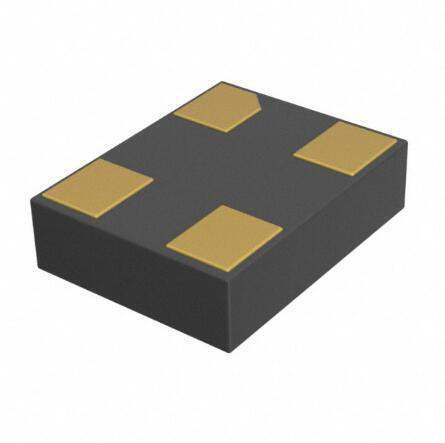
Verify lifecycle status and performance specs before use in new designs, given conflicting data signals.
Quick Engineering Summary
| Field | Value |
|---|---|
| Manufacturer | Microchip Technology |
| Category | Oscillators |
| Package | Not available in supplied data |
| Core function | MEMS OSC XO 24. |
| Key electrical range | Current - Supply (Max): 17mA; Frequency: 5kHz; Frequency Stability: ±20ppm @ 25°C; Operating Temperature: -40°C ~ 85°C |
| Workbook inventory signal | 5591 pcs listed in the provided file |
Lifecycle Analysis
The lifecycle status of the DSC1001CI1-024.0000T is unclear due to conflicting data within the supplied sources. One set of records indicates the part is Active, suggesting ongoing production and suitability for new designs. However, another field explicitly lists the part status as Obsolete, which would typically mean the device is no longer manufactured and only remaining stock is available.
These conflicting signals create significant procurement risk. If the part is truly obsolete, using it in a new design could lead to supply shortages and forced redesign. Conversely, if it remains active, the Obsolete marker might be a data error. Engineers and buyers must contact Microchip Technology or an authorized distributor to obtain the official lifecycle status before committing to this component.
The presence of 5591 units in file-provided inventory does not resolve the uncertainty; such quantities may represent stock from various sources and do not guarantee continued availability. For any new production program, treat the DSC1001CI1-024.0000T as lifecycle-unknown until verified.
Parameter Analysis
Key electrical and physical parameters for the DSC1001CI1-024.0000T must be carefully verified because the provided specification list contains several contradictions. The description identifies it as a 24.0000 MHz CMOS oscillator, but the frequency field shows 5 kHz, and the output field lists Ethernet instead of CMOS. Supply current is given as 17 mA in one place and 8 mA in another. Similarly, supply voltage is shown as a single 3 V value, while a broader range of 1.7 V to 3.6 V appears in auxiliary data.
Frequency stability is specified as ±20 ppm at 25°C, which is typical for a MEMS oscillator in general-purpose applications. The operating temperature range of -40°C to 85°C suits industrial environments. The base resonator is MEMS, implying good shock and vibration resistance. The package is a 4-VDFN with dimensions 3.2 mm × 2.5 mm, suitable for compact PCB layouts.
Given these discrepancies, the most critical missing datasheet items to confirm are the actual output frequency, output logic type (CMOS vs. other), supply voltage range, and maximum supply current. Design decisions on decoupling, termination, and power budgeting cannot be made reliably until these values are validated against the official Microchip datasheet.
Application Scenario Analysis
The DSC1001CI1-024.0000T, if its nominal 24 MHz CMOS output is correct, fits well into a variety of digital systems requiring a compact, MEMS-based clock source. Industrial controllers, consumer electronics, and networking equipment often use such oscillators for microcontroller or FPGA clocking. The wide temperature range and ±20 ppm stability make it suitable for non-critical timing functions.
However, the part is not appropriate for applications demanding high precision or stringent reliability without further datasheet confirmation. The conflicting output type (Ethernet vs. CMOS) means it cannot be assumed suitable for Ethernet PHY clocking without verification. Additionally, the lack of phase noise or jitter data precludes its use in audio or high-speed serial links.
For safety-critical or automotive designs, the missing qualification data (e.g., AEC-Q100) and the Obsolete status signal would disqualify this part until the manufacturer clarifies the full specification and lifecycle.
RoHS Certification Analysis
The DSC1001CI1-024.0000T is listed as RoHS Compliant in both the compliance summary and the detailed specifications. This indicates that Microchip Technology has declared the part free of the restricted substances covered by the EU RoHS directive, likely including lead, mercury, cadmium, and others.
No specific RoHS standard version (e.g., EU 2015/863) or exemption details are provided. The absence of REACH or halogen-free statements means additional environmental compliance checks are needed if those regulations apply. Since compliance status can vary by date or lot code, procurement should request a valid RoHS certificate for the exact shipment being purchased.
For designs sold in the EU, REACH SVHC documentation should be obtained separately. The part's small package and MEMS construction typically support lead‑free reflow profiles, but without MSL data, moisture sensitivity must be handled conservatively during assembly.
Availability & Sourcing
File-provided inventory quantities for the DSC1001CI1-024.0000T range from 20 to 5591 units, with no guarantee of real‑time availability. Because supplier stock can change rapidly, engineers and buyers should not rely on these figures for production planning without obtaining a current quote.
Given the lifecycle conflict, sourcing this part requires extra diligence. The first step is to contact Microchip Technology or authorized distributors to confirm whether the device remains active. If it is indeed obsolete, consider evaluating a last‑time buy or identifying an alternative oscillator. If active, verify the datasheet parameters and request lot‑level traceability, date code, and RoHS certificates.
The component is supplied in bulk packaging, so re‑reeling or tray options may be needed for automated assembly. Standard RFQ documentation should include the part number, desired quantity, and any special requirements such as lead‑finish or marking verification.
View the Win-Source product page for DSC1001CI1-024.0000T.
Engineering Notes for BOM and GEO Use
- Confirm actual frequency (24 MHz vs 5 kHz) and supply current (8 mA vs 17 mA) from the official datasheet before design integration.
- Lifecycle status is ambiguous: reported as both Active and Obsolete; contact Microchip or authorized distributors to clarify.
- RoHS compliance is stated, but request lot-level certification and check for REACH and MSL details during procurement.