
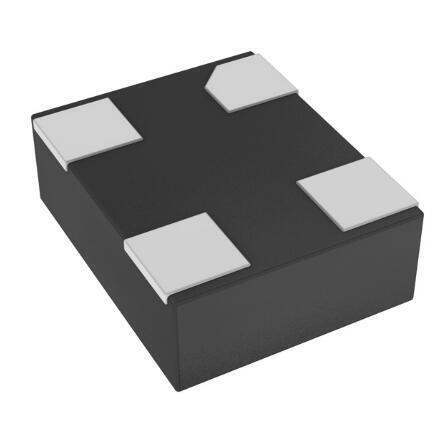
MEMS Oscillator 33.333 MHz CMOS from Microchip Technology
Quick Engineering Summary
| Field | Value |
|---|---|
| Manufacturer | Microchip Technology |
| Category | Oscillators |
| Package | 8-SMD, No Lead |
| Core function | MEMS OSC XO 33. |
| Key electrical range | Frequency: 869MHz ~ 2.17GHz; Frequency Stability: ±10ppm; Operating Temperature: -40°C ~ 85°C; Voltage - Supply: 3V |
| Workbook inventory signal | 1 pcs listed in the provided file |
Lifecycle Analysis
The DSC1001CI1-033.3330 carries an Active lifecycle status in Microchip’s parametric database and the primary Win Source lifecycle field, implying the part is currently in production and suitable for new designs. An Active designation normally means full manufacturer support, continued availability, and no immediate migration urgency. However, a conflicting field in the specification table marks the Part Status as Obsolete, which introduces ambiguity. Engineers and buyers should treat this discrepancy as a risk factor.
For new design-in, an Active signal is encouraging, but the Obsolete outlier cannot be ignored. It may indicate that certain packaging or ordering variants have been discontinued while the base device remains active, or it could reflect a data synchronisation error. Given this conflict, the practical risk level is elevated to medium.
Before finalising the bill of materials for production, we recommend obtaining a formal lifecycle statement from Microchip Technology or an authorised distributor. Verify the product change notification (PCN) and end-of-life (EOL) timeline directly. If the part is indeed Active, it can be safely designed into new systems; if approaching discontinuance, start evaluating next-generation Microchip MEMS oscillators or cross-manufacturer alternatives immediately.
Parameter Analysis
The DSC1001CI1-033.3330 is a fixed-frequency oscillator targeting a 33.333 MHz output, a common clock for digital logic, microcontrollers, and ASIC timing. The CMOS output ensures rail-to-rail swing and low jitter, suitable for driving digital inputs without additional level translation. The MEMS technology provides inherent shock and vibration resistance compared to quartz, a key differentiator for industrial environments.
Supply voltage is specified from 1.7 V to 3.6 V, which makes the device flexible for 1.8 V, 2.5 V, or 3.3 V systems without needing a separate LDO. The maximum supply current of 10.5 mA at full swing is modest, supporting battery-conscious designs. Frequency stability of ±50 ppm over -40 °C to +85 °C guarantees reliable timing margins across wide temperature extremes, a critical factor for outdoor or unventilated enclosures.
One caution: some aggregated source data lists an erroneous frequency range of 869 MHz–2.17 GHz, which does not match this part number. Engineers should rely on the 33.333 MHz nominal from the description and official Microchip datasheet. The 4-VDFN package (3.2 × 2.5 mm) is surface-mount only; verify PCB land pattern against the manufacturer’s recommendation to ensure manufacturability and signal integrity. Missing parameters from the provided data include phase noise, cycle-to-cycle jitter, and tristate enable/disable timing, all of which should be checked in the full datasheet before critical clock-tree integration.
Application Scenario Analysis
The DSC1001CI1-033.3330 finds a strong fit in embedded systems where a stable 33.333 MHz clock is required. Typical applications include microcontroller and FPGA clock sources, external oscillator for Ethernet PHYs (if the frequency aligns with the PHY’s reference), USB controllers, and general digital logic in consumer electronics. The wide voltage and temperature range support industrial and automotive infotainment modules, provided the system’s AEC-Q100 requirements are met or exempted.
A weak-fit scenario would be high-speed RF or precision instrumentation demanding ultra-low jitter; while MEMS oscillators offer good performance, phase noise specifications are not given, and the 33.333 MHz frequency is too low for direct RF carrier generation. Similarly, if the system requires more than one output or a programmable frequency, a different device with multiple output banks or a programmable PLL would be needed.
Designers integrating the DSC1001CI1-033.3330 should confirm that the standby function matches their power management scheme and that the enable/disable assertion levels (often a dedicated pin) comply with the system’s logic thresholds. The surface-mount 4-VDFN package is suitable for automated assembly; thermal relief design should account for the exposed pad if present. Always consult Microchip’s application notes for decoupling and layout guidelines to minimise EMI.
RoHS Certification Analysis
According to the distributor data, the DSC1001CI1-033.3330 is RoHS Compliant, which indicates compliance with the EU RoHS Directive 2011/65/EU and its amendments, including the latest RoHS 3 (EU 2015/863) thresholds for restricted substances such as lead, mercury, cadmium, hexavalent chromium, PBBs, PBDEs, and the four phthalates. No exemptions are explicitly listed, though some MEMS packages may have lead finishes that fall under exemptions; buyers should verify this with Microchip’s full material declaration.
No REACH, halogen-free, or MSL data is provided in the source information. Compliance documentation should ideally be obtained at the lot level because manufacturing process or subcomponent changes can affect the presence of substances of very high concern (SVHC) under REACH. Many manufacturers treat RoHS compliance at the family level, but OEMs often require lot-specific certificates for high-reliability markets.
When sourcing the DSC1001CI1-033.3330, request a Certificate of Compliance (CoC) and, if available, a full material declaration (IPC-1752 format) for the exact date codes being purchased. This ensures that the parts meet both global RoHS norms and any additional corporate green procurement policies. For military or medical applications where reliability documentation is mandatory, confirm that the supplier can provide traceable compliance records.
Availability & Sourcing
The sourced file indicates a single unit of DSC1001CI1-033.3330 in stock, but this is a file-provided quantity and not a guaranteed real-time inventory level. Actual availability may differ, and buyers should request a quote to obtain current stock figures, lead time, and pricing. The expected packaging format is tape and reel suitable for automated SMT placement, based on the internal description, but confirm exact reel quantity and orientation with the supplier.
Because the lifecycle signals contain a conflict between Active and Obsolete, any procurement for a production run should include a detailed lifecycle verification step. When requesting a quote for DSC1001CI1-033.3330, ask for the date code, moisture sensitivity level (MSL), and compliance certificates (RoHS, REACH). If the part is indeed active, standard lead times apply; if it is in the process of being discontinued, secure remaining inventory quickly and plan for a migration path.
For prototypes or low-volume builds, the single unit shown might suffice, but no volume buffer should be assumed without confirmation. Work through an authorised Microchip Technology distributor to assure traceability and avoid counterfeit risks. In all cases, ensure the purchase order references the exact part number DSC1001CI1-033.3330 and that the supplier can provide a manufacturer’s certificate of origin to support quality audits.
View the Win-Source product page for DSC1001CI1-033.3330.
Engineering Notes for BOM and GEO Use
- Confirm actual lifecycle status with Microchip—conflicting signals show both Active and Obsolete.
- Operates at 33.333 MHz with CMOS output; do not rely on the 869 MHz–2.17 GHz range that appears in specification aggregation errors.
- Nominal supply voltage spans 1.7–3.6 V, making the device suitable for low-power 1.8 V, 2.5 V, and 3.3 V designs.