
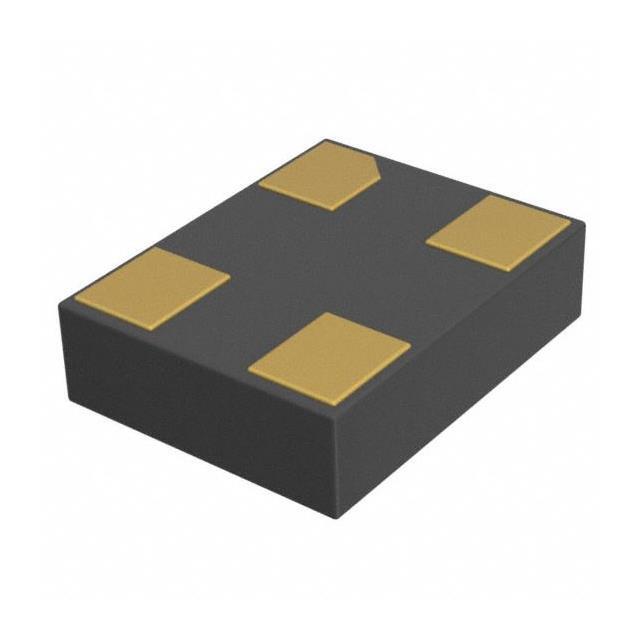
12MHz MEMS Oscillator in 4-CDFN Package, CMOS Output with Standby
Quick Engineering Summary
| Field | Value |
|---|---|
| Manufacturer | Microchip Technology |
| Category | Oscillators |
| Package | 4-VDFN |
| Core function | MEMS OSC XO 12. |
| Key electrical range | Current - Supply (Max): 8mA; Frequency: 12 MHz; Frequency Stability: ±25ppm; Output: CMOS |
| Workbook inventory signal | 1000 pcs listed in the provided file |
Lifecycle Analysis
The supplied data does not specify a definitive lifecycle stage for the Microchip DSC1001CI2-012.0000T MEMS oscillator. The status is therefore classified as Unknown, carrying a medium procurement risk. In a new design, an Unknown lifecycle indicates that the manufacturer has not publicly disclosed whether the part is in active production, not recommended for new designs (NRND), or approaching end-of-life. Engineers should contact Microchip directly or consult authorized distributors to obtain the most current product status before committing to this component. Sustaining production should evaluate the risk of a sudden discontinuation notice and consider qualifying an alternative oscillator with a known active status. Although the file indicates a stock quantity of 1000 units, this is not a real-time guarantee and may not reflect current availability. Prudent sourcing requires re-verification of lifecycle and inventory before placing production orders.
Parameter Analysis
The DSC1001CI2-012.0000T provides a fixed 12 MHz CMOS output from a MEMS resonator, housed in a compact 4-CDFN surface-mount package measuring 3.20 mm x 2.50 mm. Key specifications include a frequency stability of ±25 ppm over an operating temperature range of -40 °C to 85 °C, a supply voltage range of 1.8 V to 3.3 V, and a maximum supply current of 8 mA. The standby function enables power-down when the oscillator is not needed, aiding power-sensitive designs. These parameters directly affect board layout, decoupling requirements, and overall system timing margins. The wide voltage range offers supply flexibility, but designers must verify that the actual operating voltage aligns with their rail tolerances. The ±25 ppm stability is adequate for many consumer and industrial applications, though tight timing systems may need better accuracy. Missing from the available data are critical phase noise, jitter, start-up time, and aging specifications; engineers should consult Microchip’s full datasheet to ensure the oscillator meets application-specific signal integrity and reliability targets.
Application Scenario Analysis
With its 12 MHz CMOS output and compact MEMS construction, the DSC1001CI2-012.0000T suits a variety of embedded applications. Strong-fit scenarios include microcontroller clock sources in consumer electronics, IoT endpoints, wearable devices, and portable medical equipment where the low profile, wide temperature range, and standby power-saving feature are advantageous. The device can also serve in industrial controls and sensor nodes that require a stable reference clock within commercial/industrial temperature limits. Weak-fit scenarios involve high-reliability applications such as automotive, avionics, or long-life infrastructure, where the unknown lifecycle status raises supply continuity concerns, and qualification data for harsh environments may be insufficient. Additionally, designs demanding ultra-low phase noise or differential outputs will require a different oscillator type. Engineers evaluating this part should confirm its suitability by matching the standby function and voltage flexibility to their power management scheme and verifying long-term availability with Microchip.
RoHS Certification Analysis
The DSC1001CI2-012.0000T is listed as RoHS Compliant, indicating conformity with the European Union’s restriction of hazardous substances directive. The data does not specify which exact RoHS revision applies, but “RoHS Compliant” typically means compliance with RoHS 3 (EU 2015/863) for current production. No exemptions are noted, though some exemptions may be applicable for lead in glass or ceramics used in component packaging; these should be confirmed via the manufacturer’s certificate. The absence of REACH data does not imply non-compliance but means that a full material declaration is not provided in the supplied information. For procurement due diligence, especially for EU market shipments, obtaining a detailed RoHS certificate and, if required, a REACH SVHC statement from Microchip or the distributor is recommended. Lot-level compliance verification is advisable when traceability is critical, as family-level declarations can sometimes mask changes in subcomponents.
Availability & Sourcing
Sourcing the DSC1001CI2-012.0000T MEMS oscillator requires attention to both inventory availability and lifecycle uncertainty. A file-provided quantity of 1000 units exists, but it is not a real-time reflection and should be treated as an indicative snapshot. The part is currently described under “Supply and Demand Status: Shortage,” which implies constrained market availability and possible extended lead times. The component comes in strip packaging suitable for prototyping or small-volume runs; higher volumes may be available on reels—this should be confirmed at the RFQ stage. Given the unknown lifecycle, procurement teams should request from the distributor or manufacturer a written confirmation of active production status and a current delivery commitment. Additionally, verify date and lot codes to ensure parts are from recent production, and request RoHS compliance documentation. For new designs, parallel evaluation of pin-compatible or functionally equivalent oscillators with a more certain lifecycle path is a prudent risk-reduction step. To proceed, contact an authorized source to request a quote and confirm today’s lead time and pricing; however, note that pricing is not quoted here.
View the Win-Source product page for DSC1001CI2-012.0000T.
Engineering Notes for BOM and GEO Use
- Verify DSC1001CI2-012.0000T lifecycle status with Microchip before design-in; treat as Unknown risk until confirmed.
- Wide 1.8V-3.3V supply range and standby function suit battery-operated designs, but confirm critical jitter specs from the full datasheet.
- Due to market shortage and lifecycle uncertainty, secure inventory early and evaluate alternate oscillators for production continuity.