
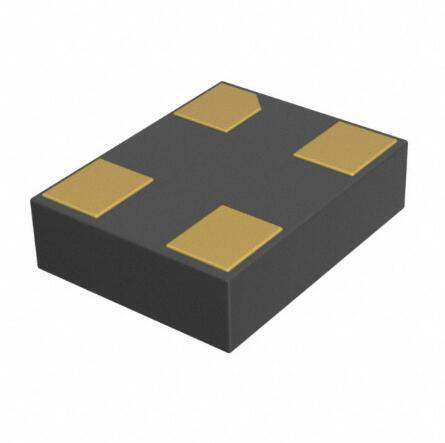
33.33 MHz MEMS Oscillator Sourcing Guide with Lifecycle Verification
Quick Engineering Summary
| Field | Value |
|---|---|
| Manufacturer | Microchip Technology |
| Category | Oscillators |
| Package | 4-SMD (200 mil BeO) |
| Core function | MEMS OSC XO 33. |
| Key electrical range | Frequency: 5kHz; Frequency Stability: ±20ppm @ 25°C; Operating Temperature: -40°C ~ 85°C |
| Workbook inventory signal | 820 pcs listed in the provided file |
Lifecycle Analysis
The DSC1001CI2-033.3300 is flagged as Active in the manufacturer's lifecycle signal, suggesting ongoing production and suitability for new designs. However, a conflicting Part Status spec lists the component as Obsolete. This inconsistency demands immediate verification. Engineers should contact Microchip Technology directly to confirm the true production status before relying on this oscillator in new product development.
For sustaining production, treat the part with caution: any inventory should be secured while monitoring official end-of-life notices. The file-provided workbook quantity of 820 pieces is a snapshot and may not reflect real-time stock; it should not be interpreted as guaranteed availability. Until the conflict is resolved, a conservative procurement approach is recommended, and alternative sources or pin-compatible options should be evaluated as a contingency.
Parameter Analysis
Key parameters for the DSC1001CI2-033.3300 include its 33.33 MHz frequency with CMOS output, ±25 ppm frequency stability, and wide -40°C to +85°C operating range. The supply voltage spans 1.7V to 3.6V, supporting both low-power and standard logic levels, with a maximum current draw of 10.5 mA. The 4-VDFN package measures just 3.2 mm by 2.5 mm, with a low profile of 0.035 inches (0.9 mm) maximum height, enabling dense PCB layouts.
These specs match typical MEMS oscillator characteristics as indicated by the product description, though secondary data sources list a crystal resonator and 5 kHz frequency—a clear error that must be corrected against the official Microchip datasheet. Critical missing parameters include phase noise and jitter performance, start-up time, aging rate, and output drive strength. Designers should request the full datasheet to verify these values and to ensure the part meets system-level timing requirements before committing to design.
Application Scenario Analysis
The DSC1001CI2-033.3300 is well-suited for compact, power-sensitive applications that demand a stable 33.33 MHz clock source, such as embedded microcontrollers, industrial sensors, IoT edge devices, and portable electronics. Its small 3.2x2.5mm footprint and low current consumption make it attractive for space-constrained boards, while the industrial temperature range supports outdoor and automotive-adjacent environments.
However, this oscillator may not be optimal for applications requiring ultra-low phase noise or high vibration/shock tolerance; quartz-based designs sometimes outperform MEMS in those areas. The nonprogrammable, standby-enabled function suggests it targets cost-effective designs where fixed-frequency, power-down capability is needed but in-circuit reprogramming is not required. Verify the exact standby current and enable/disable timing if used in power-cycled systems.
RoHS Certification Analysis
The supplied RoHS status for DSC1001CI2-033.3300 is RoHS Compliant, indicating conformance to EU hazardous substance restrictions. No specific directive version is cited—typically, this implies compliance with EU RoHS 3 (2015/863) if the part is actively manufactured, but older stock may meet earlier standards. REACH compliance is not reported, so buyers should request a separate REACH statement if needed.
Since RoHS status can be lot-dependent, it is essential to obtain a certificate of compliance (CoC) for the specific date/lot code when procuring. No exemptions are noted; however, for full assurance, request material declarations, especially if the 4-VDFN package uses specialized mold compounds or lead finishes.
Availability & Sourcing
Sourcing the DSC1001CI2-033.3300 requires caution due to conflicting lifecycle signals. While some records indicate Active production, others list Part Status as Obsolete, creating uncertainty for procurement planning. The file-provided inventory quantity of 820 pieces is not a real-time guarantee; actual stock should be verified through an RFQ.
When ordering, request full traceability documentation, including manufacturer date code, lot code, and RoHS compliance certificates. Check packaging format: standard bulk vs. tape-and-reel, as this impacts assembly line compatibility. Because lifecycle status is ambiguous, we recommend that buyers secure enough inventory to cover immediate production needs while simultaneously evaluating a migration path to an alternative part if discontinuation is imminent. To proceed, request a quote and explicitly confirm the part's active production status and lead time with Microchip Technology or authorized distributors.
View the Win-Source product page for DSC1001CI2-033.3300.
Engineering Notes for BOM and GEO Use
- Cross-check frequency and resonator type against the official Microchip datasheet; secondary data lists conflicting 5 kHz and crystal vs. 33.33 MHz MEMS.
- Treat Part Status 'Obsolete' flag as a caution; verify with Microchip whether the DSC1001CI2-033.3300 remains in active production.
- Request full RoHS compliance documentation and lot-level date code traceability when sourcing to ensure authenticity and certification.