
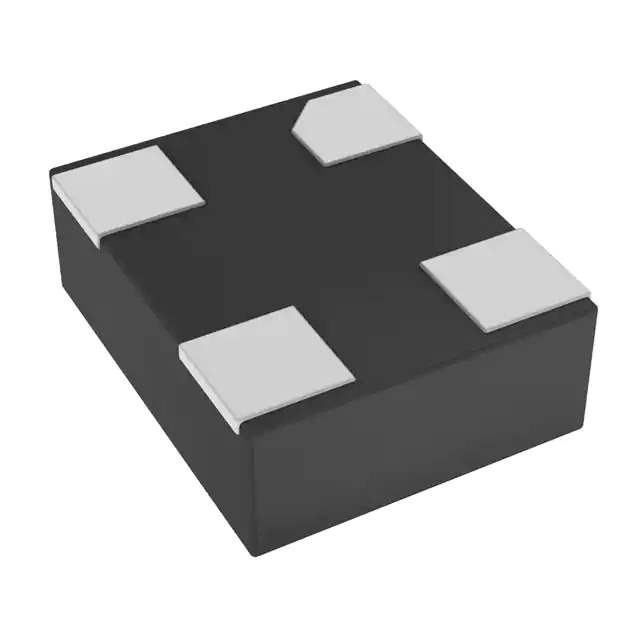
Specs, lifecycle, and procurement guidance for Microchip's DSC1001CI2-074.2500T MEMS oscillator.
Quick Engineering Summary
| Field | Value |
|---|---|
| Manufacturer | Microchip Technology |
| Category | Oscillators |
| Package | Tape & Reel |
| Core function | MEMS OSC XO 74. |
| Key electrical range | Current - Supply (Disable) (Max): 15µA; Current - Supply (Max): 8.7mA; Frequency: 74.25 MHz; Frequency Stability: ±25ppm |
| Workbook inventory signal | 1 pcs listed in the provided file |
Lifecycle Analysis
The DSC1001CI2-074.2500T from Microchip Technology is currently classified as Active. This status is confirmed by multiple lifecycle indicators, including the manufacturer's product status, with no conflicting signals. Active status means the part is in full production, supported by the manufacturer, and generally recommended for both new designs and ongoing production. Engineers and buyers can incorporate this oscillator into new projects with confidence, as long as they verify supply continuity through authorized channels.
However, lifecycle classifications can change without notice, especially in the semiconductor market. It is prudent to periodically revalidate the status with Microchip or your franchised distributor, particularly before finalizing a bill of materials for long-lifecycle products. The file-provided workbook inventory shows a quantity of 1, which is not a real-time indicator of global stock. For production planning, always request current lead times and availability directly from the supply chain.
For applications requiring long-term availability, such as industrial or automotive systems, the Active status is favorable. Still, consider alternative sources or pin-compatible replacements only if officially documented by Microchip; this guide does not propose any substitutes without explicit manufacturer data.
Parameter Analysis
The most decision-relevant parameters for the DSC1001CI2-074.2500T center on its frequency, stability, and output characteristics. The fixed 74.25 MHz CMOS output is suitable for clocking digital circuits, with a tight ±25 ppm total frequency stability over the full -40°C to 85°C operating range. This stability includes initial tolerance, temperature, and aging effects, providing reliable timing for communication interfaces and microcontrollers. The wide supply voltage range of 1.8 V to 3.3 V offers design flexibility, while the AEC-Q100 qualification broadens its applicability to automotive environments.
Power consumption is another critical factor: a maximum supply current of 8.7 mA (active) and a mere 15 µA in standby mode allow power-conscious designs to gate the clock when not needed. The surface-mount 3.2 mm x 2.5 mm package with a low 0.90 mm seated height fits compact PCB layouts. However, several parameters are not explicitly listed in the provided data and must be verified from the official datasheet before integration. These include phase jitter (often critical for high-speed serial links), rise/fall time, duty cycle tolerance, and start-up time. Additionally, the frequency stability condition (e.g., whether it includes supply voltage variation or load change) should be confirmed.
The MSL 1 rating indicates no special moisture sensitivity constraints, simplifying storage and assembly. The MEMS resonator technology inherently provides robust vibration and shock resistance compared to quartz, though this is an inferred advantage—consult Microchip's application notes for quantified reliability data. Always cross-check the datasheet for detailed electrical specifications to ensure the oscillator meets your specific timing budget.
Application Scenario Analysis
Given its AEC-Q100 qualification and industrial temperature range, the DSC1001CI2-074.2500T is a strong fit for automotive electronics such as infotainment, ADAS sensor processing, and body control modules where reliable clocking at 74.25 MHz is required. The wide voltage input and standby function also suit battery-powered portable devices, enabling power savings during sleep modes. Industrial control systems, IoT gateways, and communication infrastructure equipment can leverage its stable MEMS-based clock source for consistent performance under harsh conditions.
In contrast, applications demanding ultra-low jitter (e.g., high-speed SERDES, precision data converters, or RF sampling clocks) may find this oscillator less suitable unless the datasheet confirms acceptable phase noise figures. The specified ±25 ppm stability is typical for many consumer and industrial uses, but not tight enough for precision timing applications that require sub-10 ppm or temperature-compensated references. Similarly, systems that need a programmable frequency or multiple outputs would not be served by this fixed-function oscillator.
Designers should note that the CMOS output is single-ended and may require careful termination for signal integrity over long traces. For mission-critical applications, consider verifying the part’s reliability data, including shock and vibration specifications beyond AEC-Q100, directly with Microchip. The absence of an enable/disable timing specification in the provided data means you should check the datasheet for details on standby recovery time.
RoHS Certification Analysis
The DSC1001CI2-074.2500T is marked as RoHS Compliant, which typically means it meets the requirements of EU Directive 2015/863 (RoHS 3) restricting hazardous substances such as lead, mercury, cadmium, and others. The additional REACH Unaffected status indicates that, to the manufacturer’s knowledge, the part does not contain substances of very high concern (SVHCs) above the threshold. Together, these certifications support use in markets with strict environmental regulations.
It is important to understand that RoHS compliance is usually declared at the component level, but manufacturing lots can vary. For high-volume production, especially in regulated industries, request the full material declaration or certificate of compliance from your distributor for the specific date code or lot received. The MSL Level 1 property reassures that the oscillator does not require dry packing or special handling during reflow, which simplifies logistics and storage.
The provided data does not list any specific RoHS exemptions for this part, but some oscillators may use lead in glass or ceramic exempted under Annex III. If this matters for your end-product certification, verify directly with Microchip’s official documents. REACH unaffected is not a substitute for RoHS; both should be confirmed independently when compliance packages are required by your quality system.
Availability & Sourcing
As an Active part, the DSC1001CI2-074.2500T is normally available through Microchip’s authorized distributors. The standard packaging is tape and reel with 1,000 units per reel, facilitating automated assembly. The file-provided workbook indicates a minimal quantity of 1 unit at the time of data collection, but this snapshot does not represent real-time inventory. To obtain accurate stock levels, pricing (not provided here), and lead times, issue a request for quote (RFQ) through official channels.
When sourcing, especially for AEC-Q100 qualified components, prioritize traceability. Request full lot and date code information, as well as certificates of conformance or PPAP documentation if needed for automotive systems. Verify that the parts come directly from Microchip or a franchised source to mitigate the risk of counterfeit devices—open market reports suggest a notable fake threat for this category.
Given the Active lifecycle, no end-of-life concerns exist, but you should still verify the latest PCN (product change notification) status with the manufacturer to avoid unexpected changes in form, fit, or function. For design-in, obtain samples or small prototype quantities first to validate performance. For production ramp-up, negotiate lead times and consider buffer stock if the supply environment is constrained. A direct quote will provide the most current availability picture without relying on static database entries.
View the Win-Source product page for DSC1001CI2-074.2500T.
Engineering Notes for BOM and GEO Use
- Verify supply voltage range: datasheet states 1.8 V to 3.3 V, but some listings suggest 1.7 V to 3.6 V; cross-check the official Microchip datasheet for your design.
- AEC-Q100 qualification demands full production traceability and may require PPAP documentation for automotive programs—confirm with your distributor.
- The standby function reduces power draw to 15 µA max, making it suitable for battery-powered applications where the clock can be gated.