
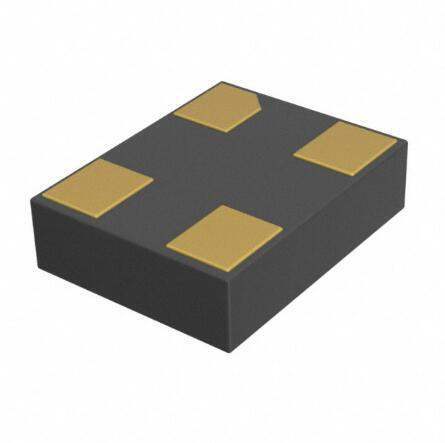
24.0000 MHz CMOS MEMS Oscillator from Microchip Technology
Quick Engineering Summary
| Field | Value |
|---|---|
| Manufacturer | Microchip Technology |
| Category | Oscillators |
| Package | 4-SMD, No Lead |
| Core function | MEMS OSC XO 24. |
| Key electrical range | Current - Supply (Max): 17mA; Operating Temperature: -40°C ~ 85°C |
| Workbook inventory signal | 13667 pcs listed in the provided file |
Lifecycle Analysis
For the DSC1001CI5-024.0000T, the provided lifecycle data presents a conflict. While several fields label the part as Active, the Part Status is explicitly listed as Obsolete. This discrepancy demands caution: an Obsolete status indicates the manufacturer may have discontinued the device, making it unsuitable for new designs. Until Microchip Technology confirms the actual production status, the safest procurement posture is to treat this part as discontinued. Any remaining inventory should be viewed as last-time-buy stock, appropriate only for sustaining existing systems. Engineers and buyers should require a formal lifecycle notification from the manufacturer before relying on this oscillator in new production. The file-reported inventory of 13,667 units is not a guarantee of real-time availability, and lot-level verification is essential if procuring for critical repairs.
Parameter Analysis
The DSC1001CI5-024.0000T is a MEMS-based CMOS oscillator generating a 24.0000 MHz output. Key parameters from the available data include a supply current of 17 mA maximum (though supplementary records indicate an 8 mA maximum at some conditions), an operating temperature range of –40 °C to +85 °C, and a 4‑SMD no‑lead package. A significant inconsistency appears in the mechanical dimensions: the main specification lists a 0.250″ diameter × 1.250″ long cylindrical form, which conflicts with the surface‑mount 4‑VDFN (3.2×2.5 mm) noted elsewhere. For PCB layout and thermal planning, the designer must resolve this discrepancy before committing to a footprint. Also missing from the supplied data are jitter performance, frequency stability over temperature (a ±10 ppm value is referenced in associated records), start‑up time, and output drive strength. Procurement teams should request the full Microchip datasheet to confirm these values, as the part’s suitability for high‑speed or noise‑sensitive designs cannot be assessed without them.
Application Scenario Analysis
With its 24 MHz CMOS output, the DSC1001CI5-024.0000T is well suited for general‑purpose clock generation in consumer electronics, IoT devices, and microcontroller‑based systems where standard industrial temperature range and moderate accuracy are sufficient. The MEMS construction offers inherent shock and vibration resistance, which can be advantageous in portable equipment or light industrial settings. However, the device’s weak‑fit scenarios include applications demanding extended automotive temperature grades, ultra‑low jitter for high‑speed SerDes, or military‑grade reliability documentation. The conflict between reported package styles further limits its practicality in designs with tight mechanical constraints. Unless the datasheet resolves the package ambiguity, the oscillator should be considered only for low‑risk breadboarding or legacy maintenance where the exact physical part can be physically verified. For any new high‑volume design, buyers should evaluate alternative 24 MHz oscillators with unambiguous specifications and active lifecycle status.
RoHS Certification Analysis
The DSC1001CI5-024.0000T is declared RoHS Compliant. Based on typical Microchip manufacturing flows, this implies conformity with the EU RoHS Directive 2011/65/EU and its amendment (EU) 2015/863, indicating restricted substances such as lead, mercury, and cadmium are below threshold limits. No information on REACH, halogen‑free status, or moisture sensitivity level (MSL) is supplied. Consequently, while RoHS compliance appears satisfied, full material declaration documentation should be obtained from Microchip or authorized distributors to confirm lot‑level compliance for any volume procurement. This is especially important if the parts are sourced from non‑franchised channels, where batch‑specific certificates may be required to meet import or end‑customer requirements. Without additional compliance data, assume standard floor‑life handling and request the MSL rating if reflow soldering is planned.
Availability & Sourcing
Given the Obsolete Part Status signal, sourcing the DSC1001CI5-024.0000T requires special care. A file‑provided quantity of 13,667 units exists, but real‑time stock must be confirmed through a request‑for‑quote (RFQ) process. Buyers should verify the actual date and lot codes to ensure the parts are not from an old, deteriorated batch. Packaging is reported as Bulk, which may be acceptable for prototype or repair volumes, but tape‑and‑reel availability should be checked for automated assembly. Because lifecycle is uncertain, securing inventory now for maintenance is prudent, but any extended storage must follow manufacturer‑recommended conditions. Always request a certificate of conformance and RoHS documentation alongside the RFQ. For new production, a direct pin‑compatible migration to an active Microchip oscillator should be evaluated immediately.
View the Win-Source product page for DSC1001CI5-024.0000T.
Engineering Notes for BOM and GEO Use
- Verify lifecycle status directly with Microchip before using this part in production.
- Resolve package dimension discrepancy before PCB layout—likely 4‑VDFN (3.2×2.5mm) not the listed cylindrical form.
- Treat supply current spec as ambiguous; confirm actual draw in your operating voltage range from the official datasheet.