
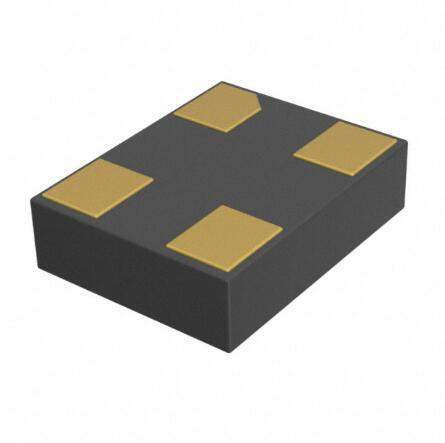
8 MHz MEMS oscillator, CMOS output, SMD package, RoHS compliant. Status: Obsolete – verify before use.
Quick Engineering Summary
| Field | Value |
|---|---|
| Manufacturer | Microchip Technology |
| Category | Oscillators |
| Package | Not available in supplied data |
| Core function | MEMS OSC XO 8. |
| Key electrical range | Current - Supply (Disable) (Max): 4mA; Operating Temperature: -40°C ~ 85°C; Voltage - Supply: 3V |
| Workbook inventory signal | 1 pcs listed in the provided file |
Lifecycle Analysis
The DSC1001CL1-008.0000T oscillator is marked as Obsolete according to the part status information provided. This designation means the manufacturer, Microchip Technology, has likely discontinued production, and the part is no longer recommended for new designs. No official lifecycle change notification or last-time-buy schedule is available in the source data, so the exact date of discontinuance and remaining authorized inventory are unknown. Buyers should treat this as a high-risk component for any application.
Engineers and procurement teams should immediately verify the lifecycle status directly with Microchip or an authorized distributor before committing to a purchase. Even if small quantities appear in open market inventory, those stocks may be limited to a single unit or a few pieces, as indicated by the workbook quantity of one. Relying on such scarce supplies for production is not viable without a guaranteed source.
For existing designs that still depend on this part, a migration to a current-series oscillator from Microchip or an alternative supplier should be initiated. If maintaining legacy equipment, secure sufficient long-term stock and ensure date-code traceability and authenticity. Every sourcing action for an obsolete part should include a request for documentation confirming that the components are genuine, have been stored properly, and comply with the required environmental standards.
Parameter Analysis
The DSC1001CL1-008.0000T is specified as an 8.0000 MHz CMOS output oscillator with a 3 V supply voltage. The maximum supply current in the disabled state is 4 mA, which is a relevant figure for power budgeting in battery-operated or low-power designs. The operating temperature range from -40 °C to 85 °C indicates it can serve in industrial and outdoor applications, though more demanding automotive or military ranges are not covered.
Critical parameters that drive suitability for high‑speed digital circuits are absent from the supplied data. No frequency stability, phase noise, start‑up time, rise/fall time, or duty cycle specifications are listed. These values determine the oscillator’s fitness for clock generation in microcontrollers, FPGAs, or communication interfaces. Additionally, the physical description presents contradictory notes: the category shows a base resonator of Crystal, but the product description explicitly states MEMS oscillator. Engineers must obtain the official datasheet to resolve this and to verify the actual resonator type, which affects shock and vibration tolerance, reliability, and temperature stability.
Dimensional data should also be double‑checked. The listed size of 0.250" Dia x 1.250" L (6.35 mm x 31.75 mm) and a maximum seated height of 0.228" (5.80 mm) suggest a cylindrical package, which is unusual for a modern SMD oscillator. The mounting type is noted as Fixed, not the expected Surface Mount. These discrepancies may indicate data entry errors, so a mechanical drawing from the manufacturer is required before PCB layout to avoid footprint mismatches.
Application Scenario Analysis
Given its 8.0000 MHz CMOS output, the DSC1001CL1-008.0000T was likely designed for general‑purpose clock generation in microcontroller systems, communication modules, and industrial controls. The -40 °C to 85 °C range makes it suitable for equipment exposed to moderate temperature swings, such as embedded controllers, field instruments, and consumer appliances. The 3 V supply aligns with many legacy CMOS and TTL logic families.
However, the lack of frequency stability data severely limits its applicability in precision timing applications. Without knowledge of ppm tolerance over temperature, aging, and supply variation, the part cannot be confidently used for Ethernet PHYs, USB interfaces, or wireless basebands where tight jitter requirements exist. For applications that demand only a simple clock source with loose timing margins, such as a basic microcontroller or LED driver, it may still function if the actual stability is adequate.
Because the part is obsolete, it is no longer recommended for new designs. The one remaining unit in the workbook inventory suggests it might be used for prototype repair, lab debugging, or a very small-scale production run of legacy equipment. Any deployment beyond that would be risky. Engineers should consider modern MEMS or quartz oscillators from Microchip’s current portfolio, like the DSC60xx or DSC61xx series, which offer smaller footprints, better specifications, and active production status.
RoHS Certification Analysis
The DSC1001CL1-008.0000T is reported as RoHS Compliant, meaning it meets the substance restrictions set by the European Union’s Directive 2011/65/EU and its amendments, including the RoHS 3 (EU 2015/863) framework. This compliance likely covers the six original hazardous substances plus the four additional phthalates. However, the source data does not provide a detailed certificate or specify the conformity assessment route.
For obsolete components like this one, the RoHS status may only apply to original date codes manufactured before the part was discontinued. If the part was not re-qualified after subsequent revisions to the directive, older lots might still be compliant but lack documentation for the latest requirements. Buyers should request a current RoHS certificate and, if needed, a full material declaration for the exact lot they intend to purchase. The absence of information on REACH, halogen‑free compliance, and moisture sensitivity level (MSL) means further diligence is required for full environmental qualification.
Exemptions are not listed, so any use of lead in internal solder or other materials that might be allowed under RoHS exemptions cannot be assumed or ruled out. For high‑reliability sectors such as aerospace, medical, or military, a case‑by‑case verification of the supplier’s compliance documentation is essential before using this part in any end product.
Availability & Sourcing
As an obsolete part, the DSC1001CL1-008.0000T is no longer in active production by Microchip Technology. The workbook data shows a single unit available, but this is a file-record quantity and not a guarantee of real‑time stock. Open market inventories may hold small numbers, yet authenticity, date‑code freshness, and proper storage cannot be assured without thorough verification. Buyers must tread carefully, especially for production or critical spares.
The recommended sourcing workflow for an obsolete oscillator includes requesting a quote that specifies the exact part number, target quantity, and required compliance documentation. A reputable distributor or broker should be able to confirm the date and lot codes before shipment and provide photographs or test reports to validate authenticity. Since this is a high‑risk lifecycle stage, every order should be accompanied by a written statement from the supplier regarding the component’s condition (new, unused, original packaging) and environmental compliance.
Do not assume availability based on this single data point. Contact authorized Microchip distributors first to see if any residual authorized stock remains. If not, evaluate aftermarket sources with extreme caution. Given the obsolete status, the primary recommendation is to avoid using this part in new designs. For maintenance of existing systems, secure the needed quantity while simultaneously engineering a replacement oscillator solution. Request a quote today to check current availability, verify lifecycle status, and obtain the necessary traceability and RoHS certificates.
View the Win-Source product page for DSC1001CL1-008.0000T.
Engineering Notes for BOM and GEO Use
- Confirm actual resonator technology (MEMS vs. crystal) and output characteristics directly with Microchip’s datasheet, as supplied data contains conflicting notes.
- Do not design in this part for new projects; secure remaining stock only for sustaining existing systems and plan a migration path.
- Request full traceability and RoHS certificates for each lot, as obsolete components may have irregular or mixed-date-code inventory.