
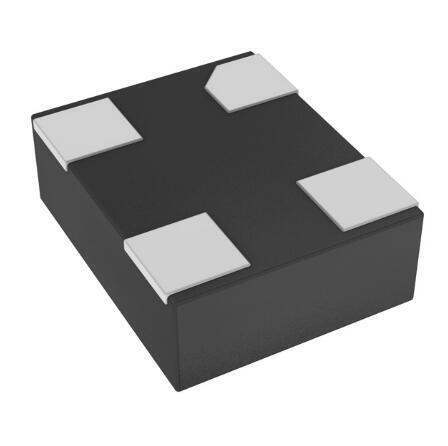
Microchip Technology MEMS oscillator – obsolete, RoHS compliant, verify datasheet and availability
Quick Engineering Summary
| Field | Value |
|---|---|
| Manufacturer | Microchip Technology |
| Category | Oscillators |
| Package | Not available in supplied data |
| Core function | MEMS OSC XO 30. |
| Key electrical range | Current - Supply (Max): 53mA; Frequency: 5kHz; Frequency Stability: ±20ppm @ 25°C; Operating Temperature: -40°C ~ 85°C |
| Workbook inventory signal | 1 pcs listed in the provided file |
Lifecycle Analysis
The DSC1001CL1-030.0000T from Microchip Technology is categorized as an oscillator, yet its lifecycle status is ambiguous in the supplied data. The Part Status field explicitly marks the device as 'Obsolete', but the lifecycle status header reads 'Unknown'. Engineers and buyers should treat this part as discontinued and not suitable for new designs. No formal EOL notification or last-time-buy date is provided, so any procurement should be validated directly with Microchip.
For sustaining programs that already use this MEMS oscillator, the high risk level means that redesign or last-time-buy planning is urgent. File inventory indicates only a single unit is recorded, which cannot be considered guaranteed real-time availability. This scarcity reinforces the need to lock down an alternate source or pin-compatible replacement if production must continue. Without a manufacturer lifecycle confirmation, the safest path is to assume the DSC1001CL1-030.0000T is no longer actively manufactured.
When quoting for obsolete oscillator parts, always request a manufacturer certificate of conformance, date/lot code verification, and traceability documentation. Even if small quantities appear available, the lack of active lifecycle signals makes this component a procurement risk for any volume production.
Parameter Analysis
The most critical parameter for the DSC1001CL1-030.0000T is its output frequency. Although the part number and description indicate a 30.0000 MHz MEMS oscillator, the specifications table lists a frequency of 5 kHz. This discrepancy is likely a data-entry error in the provided source; however, it must be resolved by consulting Microchip’s official datasheet before any design or procurement decision. For a typical MEMS oscillator like the DSC1001CL1-030.0000T, a 30 MHz CMOS output is expected.
Other parameters to verify include the supply voltage of 3 V with a maximum supply current of 53 mA, which is typical for such a high‑speed oscillator. The frequency stability is stated as ±20 ppm at 25 °C, and the operating temperature range of -40 °C to 85 °C suits many industrial applications. The mounting type is described as 'Fixed', but physical packaging and land pattern details are not specified — an SMD footprint should be confirmed. The absence of output enable/disable function, startup time, phase jitter, and duty cycle specifications means a thorough datasheet review is mandatory before integration.
For qualification, engineers should also check the 'Ratings' field value 'Y3', which may reference a specific reliability or aging classification. Without explicit datasheet parameters, thermal margins, decoupling requirements, and PCB layout guidance cannot be finalized. The specification gaps are especially problematic for an obsolete part, as any redesign must match the original electrical and mechanical characteristics.
Application Scenario Analysis
The DSC1001CL1-030.0000T is a MEMS‑based CMOS output oscillator, typically used to provide a stable clock reference for microcontrollers, FPGAs, and communication interfaces in embedded systems. Its industrial temperature range makes it suitable for factory automation, IoT gateways, and automotive accessories (excluding safety-critical applications that require AEC‑Q100 qualification). The ±20 ppm stability supports many standard digital designs that do not demand ultra‑low jitter.
However, if the frequency mismatch suggests that the actual device is 5 kHz, the application space would narrow dramatically — such a low frequency could be used only in extremely low‑power real‑time clock or watchdog timer circuits, not in high‑speed data paths. Given the part number’s 30 MHz notation, this is almost certainly a data artifact. Even so, this uncertainty makes the DSC1001CL1-030.0000T a weak fit for any new design without datasheet confirmation.
For existing designs that already use this oscillator, the obsolete status means that sourcing for repair or limited production runs is the only viable scenario. Engineers evaluating second‑source options must match the supply voltage, package dimensions, output topology, and frequency stability. Because the component is discontinued, a full functional and timing verification against the original board requirements is necessary before substituting.
RoHS Certification Analysis
The DSC1001CL1-030.0000T is labeled RoHS Compliant in the provided specifications. This indicates that the component was manufactured according to the European Union’s Restriction of Hazardous Substances directive, with lead and other restricted substances below the threshold limits. The exact RoHS revision (e.g., EU 2015/863) is not specified, so for products shipping to the EU, it is advisable to request a compliance certificate from Microchip Technology or the distributor.
Because the part is obsolete, RoHS compliance certificates may be batch‑specific. Buyers should not assume that all available inventory meets current RoHS standards; date codes and lot‑level documentation are critical. No REACH, halogen‑free, or MSL (moisture sensitivity level) data were provided, so those must also be confirmed if needed for the end application. Even though the supplier lists the oscillator as RoHS Compliant, the age of the stock and the lack of a current manufacturer declaration introduce a compliance verification requirement before purchase.
For high‑reliability sectors, additional environmental compliance (e.g., China RoHS, California Proposition 65) might be necessary, and none of that data is present. Sourcing teams should integrate RoHS documentation review into the RFQ process for DSC1001CL1-030.0000T and ensure that any stock delivered matches the compliance level required for the final assembly.
Availability & Sourcing
Sourcing the Microchip Technology DSC1001CL1-030.0000T MEMS oscillator presents significant challenges due to its obsolete status. The file‑based inventory shows a quantity of 1 unit, which should be treated as a non‑guaranteed snapshot. Real‑time stock must be confirmed by submitting a request for quote (RFQ) through authorized channels. Because the part is discontinued, any available inventory may consist of residual stock with limited traceability.
When quoting, specify the requirement for date/lot code, RoHS compliance certificates, and full manufacturer documentation. For high‑risk components like the DSC1001CL1-030.0000T, procurement should include third‑party testing if the source is not a franchised distributor. Obsolete oscillators are particularly susceptible to counterfeit, dry pack integrity loss, and solderability degradation. Request that stock is delivered in original packaging with MSL labeling where applicable, even though MSL data is not provided in the source.
For new production, this part is not recommended. For maintenance and repairs of existing systems, secure inventory now and begin evaluating pin‑compatible alternatives that match the 3 V supply, 30 MHz CMOS output (after frequency verification), and ±20 ppm stability. The transition to an active replacement part should be validated against the end system’s clock budget and jitter tolerance. Until then, treat every procurement lot of DSC1001CL1-030.0000T as a one‑time purchase subject to full engineering verification.
View the Win-Source product page for DSC1001CL1-030.0000T.
Engineering Notes for BOM and GEO Use
- Treat DSC1001CL1-030.0000T as discontinued: cross-check Microchip’s formal EOL notice before relying on file inventory.
- Frequency specification is contradictory: part number indicates 30 MHz, but a spec entry shows 5 kHz. Validate with official datasheet.
- Request RoHS and lot traceability documentation when sourcing obsolete MEMS oscillators to confirm batch-level compliance.