
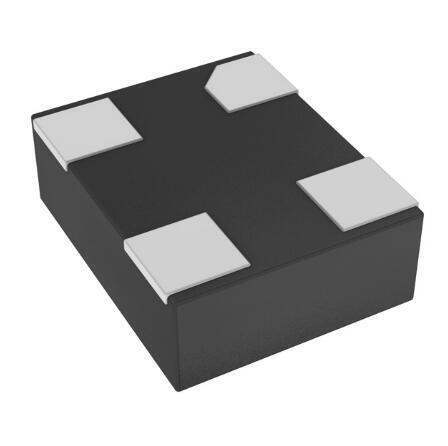
Verify lifecycle and source carefully for this obsolete‑seeming 24 MHz CMOS oscillator
Quick Engineering Summary
| Field | Value |
|---|---|
| Manufacturer | Microchip Technology |
| Category | Oscillators |
| Package | 4-SMD, No Lead |
| Core function | MEMS OSC XO 24. |
| Key electrical range | Current - Supply (Max): 17mA; Frequency: 5kHz; Operating Temperature: -40°C ~ 85°C; Voltage - Supply: 3V |
| Workbook inventory signal | 1 pcs listed in the provided file |
Lifecycle Analysis
The DSC1001CL2-024.0000 presents conflicting lifecycle signals. One source lists the status as Active, while the Part Status field is recorded as Obsolete. This contradiction introduces significant sourcing risk. An obsolete status typically means the manufacturer has ceased production, making the part unavailable through standard distribution channels. The file‑provided inventory of just 1 unit further supports the likelihood that this component is at or near end‑of‑life.
For procurement teams, this inconsistency demands immediate verification with Microchip Technology or an authorized distributor. Treating the part as obsolete is the safest stance until clarity is obtained. Any new design activity should be halted unless the manufacturer confirms ongoing production. For existing systems, assess whether a last‑time‑buy is necessary or if a migration to an alternative oscillator should begin. Relying on unconfirmed Active status could lead to costly redesigns or production stoppages.
Parameter Analysis
Key electrical and physical parameters of the DSC1001CL2-024.0000 must be reconciled from the supplied data. The product description specifies a 24.0000 MHz CMOS output, while a secondary entry incorrectly lists 5 kHz; engineers should default to the 24 MHz value based on the product identifier. Supply voltage is given as 3 V in the specification table, but the Excel‑sourced parameters indicate a range of 1.7 V to 3.6 V—this broader operating range should be validated against the official datasheet to ensure compatibility with your power rail design. Maximum supply current is reported as 17 mA, yet an alternative source cites 8 mA; such differences often stem from varying load or temperature conditions and require clarification for power budgeting.
Package details describe a 4‑SMD, no‑lead footprint (3.2 mm x 2.5 mm), suitable for surface‑mount assembly. Operating temperature is listed as −40 °C to 85 °C, with another reference suggesting up to 105 °C. Frequency stability is noted as ±25 ppm in auxiliary data, which is critical for timing accuracy. Missing from the provided data are phase jitter specifications, start‑up time, and output enable/disable characteristics—all of which should be checked in the manufacturer’s datasheet before integration.
Application Scenario Analysis
As a 24.0000 MHz CMOS MEMS oscillator, the DSC1001CL2-024.0000 targets general‑purpose clock generation in embedded systems, microcontrollers, USB interfaces, and Ethernet PHYs. Its MEMS construction offers robustness against shock and vibration, making it a candidate for industrial and automotive‑adjacent applications, provided the temperature range is confirmed. The fixed‑frequency, non‑programmable nature simplifies design but excludes applications requiring frequency margining or spread‑spectrum modulation.
For low‑power portable devices, the supply current must be verified—if the lower 8 mA figure holds, it is well‑suited for battery‑operated designs; the higher 17 mA would be less ideal. The industrial temperature range (−40 °C to 85 °C) supports outdoor and factory‑floor environments. However, with the obsoleteness flag, this oscillator is no longer recommended for new designs. Existing products that depend on it should initiate a lifecycle review and start evaluating pin‑compatible alternatives from Microchip’s DSC series or other vendors to avoid production disruptions.
RoHS Certification Analysis
The DSC1001CL2-024.0000 is marked as RoHS Compliant in the provided data. This indicates that the component is manufactured without the six restricted substances (lead, mercury, cadmium, hexavalent chromium, PBBs, and PBDEs) and likely complies with EU Directive 2011/65/EU, including its 2015/863 amendment (RoHS 3). The exact standard version is not specified, so buyers should confirm whether the supplier certifies against the latest amendment that adds four phthalates.
No REACH or halogen‑free statements are provided, meaning additional compliance documentation is necessary for markets requiring those certifications. For production, request a full Certificate of Compliance that covers the specific lot. Because the part appears obsolete, older stock may have been manufactured under earlier RoHS exemptions or standards, making lot‑level verification essential. Solderability and peak reflow profiles should also be checked against the RoHS lead‑free requirements to ensure compatibility with modern assembly processes.
Availability & Sourcing
Inventory indicated for the DSC1001CL2-024.0000 is limited to a workbook quantity of 1, and its Part Status is listed as Obsolete. This suggests that the component is no longer in active production and residual stock may be scarce. Buyers should immediately contact Microchip Technology or their franchised distribution network to confirm if any official inventory remains or if a last‑time‑buy window is open.
When sourcing through independent distributors, rigorous authentication is critical. Request documentation including date codes, lot codes, and proof of origin. Third‑party testing for functionality and RoHS compliance is advisable for any off‑market purchases. Considering the low availability, evaluate pin‑compatible alternatives for new or high‑volume production. The Bulk packaging specified is common for low‑quantity orders; for prototyping, ensure proper dry‑pack and moisture sensitivity handling. Always accompany any RFQ with a request for compliance certificates and a current lifecycle statement to avoid last‑minute surprises.
View the Win-Source product page for DSC1001CL2-024.0000.
Engineering Notes for BOM and GEO Use
- Conflicting lifecycle data (Active vs Obsolete) requires manufacturer confirmation before design‑in.
- Verify critical missing specs: frequency stability, supply current range, and phase jitter against the official datasheet.
- Due to potential discontinuation, secure remaining stock and initiate replacement validation for new projects.