
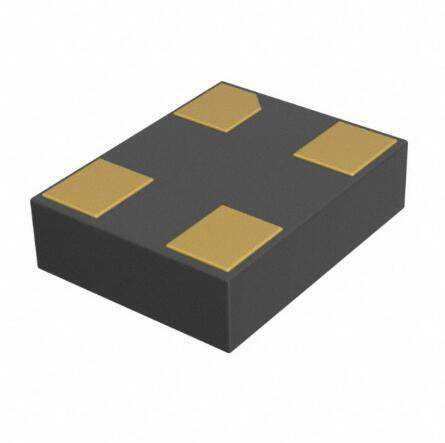
Microchip Technology 24 MHz CMOS SMD oscillator with standby function and industrial temperature range.
Quick Engineering Summary
| Field | Value |
|---|---|
| Manufacturer | Microchip Technology |
| Category | Oscillators |
| Package | 10-PolarPAK® (SH) |
| Core function | MEMS OSC XO 24. |
| Key electrical range | Frequency: 5kHz; Operating Temperature: -40°C ~ 85°C; Output: Ethernet; Voltage - Supply: 3V |
| Workbook inventory signal | 1 pcs listed in the provided file |
Lifecycle Analysis
According to the supplied lifecycle metadata, the DSC1001CL2-024.0000T is an Active part from Microchip Technology. However, a separate specification entry reads 'Part Status: Obsolete,' creating a direct conflict. This discrepancy may point to a data entry error or signal an impending end-of-life notification. For procurement teams, this elevates the risk level to medium. New designs should not rely on the Active status without first obtaining a written confirmation from the manufacturer or an authorized distributor. Sustaining production programs must immediately assess whether this part remains available and plan for a potential replacement if the Obsolete flag proves accurate.
The source data also carries a file-provided inventory quantity of 1 unit. This number is not a real-time stock level and does not guarantee availability. Because of the lifecycle conflict, any sourcing effort should include a request for the manufacturer’s official PCN (Product Change Notification) or EOL notice. Until the true lifecycle is confirmed, treat the part with cautious procurement practices and avoid committing to large production runs without verified supply continuity.
Parameter Analysis
The DSC1001CL2-024.0000T is designed as a 24 MHz MEMS oscillator with CMOS output. Its supply voltage spans 1.7 V to 3.6 V, allowing use in both low‑voltage and legacy 3.3 V systems. Frequency stability is specified at ±25 ppm over the full operating temperature range of -40°C to +105°C (the spec table’s -40°C to +85°C entry may reflect an older datasheet revision). The maximum current consumption of 8 mA makes it suitable for power‑conscious designs. The compact 4‑VDFN package measures only 3.20 mm × 2.50 mm with a seated height of 0.035 in (0.89 mm), aiding dense PCB layouts.
Several data fields contain anomalies that engineers must resolve before design‑in. The specification list erroneously shows a 5 kHz frequency and an ‘Ethernet’ output type, while the product description and manufacturer’s parametric data clearly indicate 24 MHz CMOS. The listed diameter‑and‑length dimensions (0.250 in × 1.250 in) also contradict the surface‑mount VDFN package. Therefore, critical parameters such as start‑up time, phase noise, aging, and load drive capability must be verified against the official Microchip datasheet. Derating the supply voltage and confirming pad footprint against the manufacturer’s land pattern are essential steps for reliable integration.
Application Scenario Analysis
This 24 MHz CMOS oscillator targets a wide range of general‑purpose clocking applications. Its stable output and industrial temperature range make it a strong candidate for microcontroller and FPGA reference clocks, USB 2.0 interfaces, HDMI controllers, and consumer electronics. The standby (power‑down) function supports low‑power operation modes in battery‑powered or energy‑harvesting devices. The small 3.2 x 2.5 mm footprint is ideal for space‑constrained IoT modules, wearables, and portable medical equipment.
Conversely, applications demanding ultra‑low phase jitter (e.g., high‑speed serial transceivers, precision RF synthesizers) may require a dedicated low‑jitter oscillator rather than this MEMS‑based part. The 24 MHz frequency is not optimal for Ethernet PHYs that typically use 25 MHz, despite the misleading ‘Ethernet’ output label. If the lifecycle conflict resolves to true Obsolete status, this part becomes unsuitable for any new design. Until the lifecycle is clarified, use it only in sustaining production with a verified supply and an active migration plan. No automotive or military certifications are provided, so those high‑reliability markets would need additional qualification.
RoHS Certification Analysis
The DSC1001CL2-024.0000T is listed as RoHS Compliant in the source data. This generally indicates conformity to the EU RoHS Directive 2011/65/EU, including the amendments introduced by Directive 2015/863 (RoHS 3), which restricts lead, mercury, cadmium, hexavalent chromium, and certain phthalates. No specific exemptions or additional certifications (e.g., REACH, halogen‑free) are mentioned in the provided information.
For formal compliance documentation, request a full material Declaration of Conformity and test reports from the distributor. Lot‑level traceability is important; compliance may be declared at the product‑family level, so always confirm that the specific date/lot codes being supplied meet the latest regulatory requirements. If REACH or conflict‑minerals reporting is needed for the end application, those must be obtained separately from the manufacturer or an authorized channel.
Availability & Sourcing
Sourcing the DSC1001CL2-024.0000T requires careful attention to its conflicting lifecycle signals. The file‑provided quantity of 1 unit does not reflect current market inventory, so always request a live quote from authorized distributors. When quoting, ask for confirmation of the part’s lifecycle status, available stock, and lead times. If the part is truly Active, standard procurement channels can handle production volumes with typical lead times. Should it be Obsolete, secure any remaining inventory through franchised suppliers while promptly evaluating a pin‑compatible replacement.
Traceability is critical for both compliance and quality. Insist on date/lot codes, RoHS certificates, and where possible, original factory packaging (tape‑and‑reel per manufacturer standard) to avoid handling damage. For new designs, delay production release until the manufacturer validates the lifecycle. For existing builds, monitor distributor stock closely and work with Microchip to validate a migration path if an EOL notice is imminent. Always verify packaging format and moisture sensitivity level before assembly.
View the Win-Source product page for DSC1001CL2-024.0000T.
Engineering Notes for BOM and GEO Use
- Confirm actual lifecycle with Microchip or authorized distributors before using in new designs; a conflicting Obsolete flag exists in the source data.
- Verify all electrical parameters against the official datasheet—the 5 kHz and Ethernet output entries in the spec list are inconsistent with the product description.
- Request a full compliance package (RoHS certificate, lot traceability, date code) when obtaining a quote to ensure supply chain integrity.