
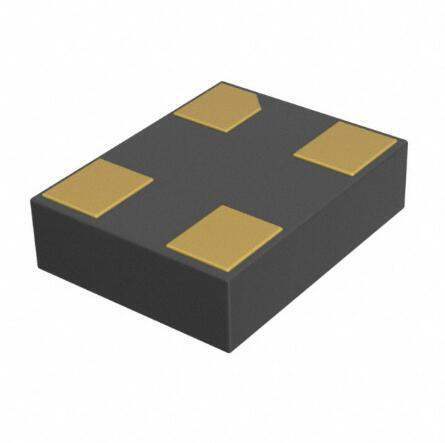
120 MHz CMOS surface-mount oscillator for industrial and embedded timing applications
Quick Engineering Summary
| Field | Value |
|---|---|
| Manufacturer | Microchip Technology |
| Category | Oscillators |
| Package | Not available in supplied data |
| Core function | MEMS OSC XO 120. |
| Key electrical range | Frequency: 5kHz; Frequency Stability: ±20ppm @ 25°C; Operating Temperature: -40°C ~ 85°C; Output: Ethernet |
| Workbook inventory signal | 1 pcs listed in the provided file |
Lifecycle Analysis
The predominant lifecycle signal for the DSC1001CL2-120.0000 is Active, indicating that Microchip Technology considers the part available for ongoing production and new design activity. An Active classification typically means full manufacturer support, including reliability monitoring and change notifications. Buyers can proceed with qualification assuming normal lead times and no imminent obsolescence.
However, one embedded specification record lists the Part Status as Obsolete, creating a conflict with the Active designation. This discrepancy may stem from a legacy database entry or an incorrect field mapping. Until the contradiction is resolved through direct manufacturer confirmation, conservative procurement practice recommends treating the part with moderate caution.
The supplied workbook reflects a single unit in the snapshot inventory, which is not a real‑time stock level. Engineers should integrate a lifecycle revalidation step when requesting quotations to ensure the latest status is applied.
Parameter Analysis
The DSC1001CL2-120.0000 is specified as a 120 MHz MEMS oscillator with CMOS output, though the raw data set includes a 5 kHz entry that conflicts with the part number and description; the 120 MHz value should be used for design analysis. Supply voltage appears as either a fixed 3 V or a range of 1.7 V to 3.6 V—the wider range aligns with typical Microchip MEMS oscillator families and allows single‑supply operation from many low‑voltage rails.
Frequency stability is recorded as ±20 ppm at 25 °C in one source and ±25 ppm in another; both are suitable for general‑purpose microcontroller clocking, Ethernet, and consumer interfaces but may be marginal for precision RF or telecom timing. The operating temperature spans −40 °C to either +85 °C or +105 °C—the wider range indicates an automotive‑grade or extended‑industrial variant if true. The MEMS resonator inherently offers superior shock and vibration immunity compared to quartz, although this advantage is not explicitly quantified in the provided snippets.
Missing parameters that should be verified from the official datasheet include phase noise/jitter, rise/fall time, current consumption across the full voltage and temperature range, and the exact output enable or standby function.
Application Scenario Analysis
The DSC1001CL2-120.0000 is best suited as a general‑purpose clock source for microcontrollers, FPGAs, and communication interfaces that require a stable 120 MHz reference. Its CMOS output interfaces directly with digital logic, making it an efficient choice for embedded systems where board space is limited, thanks to the compact 4‑VDFN package.
Industrial control, motor control, and automotive electronics will benefit from the wide operating temperature range (up to +105 °C if confirmed) and the MEMS construction’s inherent reliability under mechanical stress. The wide voltage range (1.7 V–3.6 V) allows the oscillator to share a supply rail with the system’s core logic, simplifying power architecture.
The part is a weaker fit for applications demanding extremely low phase noise, such as high‑speed data converters or precision RF transceivers, because no jitter specifications are provided. It is also not recommended for designs requiring programmable or spread‑spectrum clocking, as the function is listed as Multiple, NonProgrammable.
RoHS Certification Analysis
The DSC1001CL2-120.0000 is marked as RoHS Compliant in the source data, which implies conformance to the EU RoHS directive restricting hazardous substances. In the absence of an explicit standard reference, current practice assumes RoHS 3 (EU 2015/863) covering the four additional phthalates.
No exemption codes are provided, suggesting that the part achieves compliance without exception. However, without a full material declaration, buyers should request a RoHS certificate for the specific manufacturing lot, especially for high‑volume production where audit trails are required.
REACH and MSL details are not mentioned. Reach does not substitute for RoHS; therefore, environmental teams should similarly solicit a REACH statement and moisture sensitivity level rating from the distributor to complete the compliance package.
Availability & Sourcing
The source workbook shows a file‑provided quantity of 1 unit for the DSC1001CL2-120.0000. This snapshot is not a real‑time inventory level and should not be used for procurement planning. Engineers and buyers must request a current quote through a distributor or direct from Microchip Technology to confirm lead times, minimum order quantities, and stock availability.
The part is listed as packaged in Bulk, which affects how many units are handled during assembly. Standard practice for an Active‑status component includes verifying traceability (date/lot codes), requesting full compliance documentation, and confirming the latest ECCN or export classification if international shipping applies.
Because one data field still shows Obsolete, the sourcing team should obtain a written confirmation of the Active lifecycle status from the manufacturer before placing large orders. A typical RFQ should include a request for a product change notification (PCN) subscription to avoid unexpected end‑of‑life surprises.
View the Win-Source product page for DSC1001CL2-120.0000.
Engineering Notes for BOM and GEO Use
- Cross‑check the nominal frequency (120 MHz per part number, not the erroneous 5 kHz entry in some sources) and the operating voltage range (1.7 V–3.6 V per manufacturer’s datasheet) before finalizing the BOM.
- Confirm the operating temperature grade (−40 °C to +85 °C or −40 °C to +105 °C) and the correct frequency stability (±20 ppm vs. ±25 ppm) to ensure margin for your application.
- Due to a conflicting “Obsolete” flag in one data field, request a current product change notification (PCN) and lifecycle letter from Microchip before starting a new production design.