
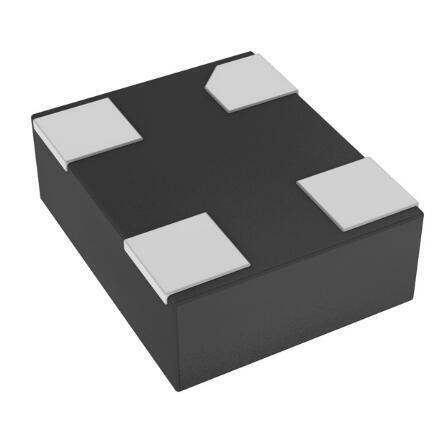
24.5760 MHz CMOS MEMS Oscillator in 4-SMD Package – Obsolete Component with RoHS Compliance
Quick Engineering Summary
| Field | Value |
|---|---|
| Manufacturer | Microchip Technology |
| Category | Oscillators |
| Package | 4-SMD, No Lead |
| Core function | MEMS OSC XO 24. |
| Key electrical range | Current - Supply (Max): 17mA; Frequency Stability: ±20ppm @ 25°C; Operating Temperature: -40°C ~ 85°C; Voltage - Supply: 3V |
| Workbook inventory signal | 1 pcs listed in the provided file |
Lifecycle Analysis
The lifecycle status for the Microchip DSC1001DI1-024.5760 oscillator is assessed as Discontinued. While the source data shows an Unknown high-level lifecycle indicator, the detailed specification field Part Status is explicitly listed as Obsolete. This conflict necessitates a conservative sourcing approach. Obsolete parts are no longer manufactured and may have limited or no future availability. For new designs, this component should not be considered, and engineers must select an active replacement from Microchip’s oscillator portfolio.
For sustaining production, immediate action is required. Procurement should verify the obsolescence directly with Microchip via official product change notifications (PCN) or end-of-life (EOL) notices. If the part is essential, a last-time-buy opportunity may still be available from certain distributors, but quantities are not guaranteed. The single unit noted in the inventory file is a static snapshot and does not represent real-time availability.
Risk classification is high due to the obsolete status and lack of a clear bridge to a replacement. Any reliance on this component carries supply continuity risk, potential counterfeits, and undocumented compliance gaps. Engineering and supply chain teams should prioritize migration to a recommended active device to avoid production disruptions.
Parameter Analysis
The DSC1001DI1-024.5760 is a fixed-frequency MEMS oscillator specified at 24.5760 MHz with CMOS output. Key electrical parameters include a supply voltage of 3 V and a maximum current consumption of 17 mA. These values are typical for low-power clock generation in portable and embedded applications. The frequency stability is ±20 ppm at 25°C, which is adequate for many consumer and industrial uses but should be evaluated against system clock tolerance requirements over the full operating temperature range of -40°C to 85°C.
The device is housed in a 4-SMD, no-lead package, which suits compact PCB layouts and automated assembly. The packaging type is listed as Bulk, indicating loose pieces rather than tape-and-reel, which may affect handling in high-volume production. A notable inconsistency is the Base Resonator value of Crystal, conflicting with the MEMS oscillator description; this warrants direct verification with the manufacturer datasheet.
Missing from the provided data are critical design parameters such as start-up time, phase noise/jitter characteristics, output enable function specifics, and aging rates. Engineers should consult the full Microchip DSC1001 datasheet for timing waveforms, absolute maximum ratings, and recommended termination. Thermal derating and PCB layout guidelines for this 4-SMD package must also be reviewed to ensure reliable operation, especially near the upper temperature limit.
Application Scenario Analysis
The 24.5760 MHz frequency of the DSC1001DI1-024.5760 is a common choice for audio codec and digital audio interface clocking, as it provides exact multiples for standard sample rates such as 48 kHz and 96 kHz. This makes it a strong fit for applications like USB audio interfaces, set-top boxes, and portable media players where a clean, stable clock is required. The CMOS output and 3 V supply align well with many system-on-chip clock inputs.
In industrial control and communication equipment operating within -40°C to 85°C, the wide temperature range supports reliable performance, but the ±20 ppm stability may be marginal for tight timing protocols such as Ethernet or high-speed serial links that demand lower jitter and better frequency accuracy over temperature and aging. For those use cases, selecting a TCXO or a MEMS oscillator with enhanced stability would be preferable.
Given its obsolete status, this part is not recommended for new applications. Existing designs that still use this oscillator may encounter procurement challenges. Engineers evaluating migration should look for active Microchip MEMS oscillators that match or improve the frequency, supply voltage, and footprint. The 4-SMD no-lead package is a standard footprint, simplifying mechanical replacement, but electrical compatibility must be carefully checked.
RoHS Certification Analysis
According to the supplied data, the DSC1001DI1-024.5760 is RoHS Compliant. This means the component was manufactured without the restricted substances listed in the EU RoHS directive at the time of production. However, the exact RoHS revision is not stated; the most common current standard is RoHS 3 (EU 2015/863), so compliance with that version should be confirmed through a certificate of compliance (CoC) from the supplier.
Because the part is now obsolete, the RoHS compliance of any remaining inventory might vary depending on production date codes. Older lots could potentially have been manufactured under earlier ROHS standards or even contain limited exemptions. Therefore, it is essential to request lot-level RoHS documentation for any purchased stock. Additionally, the absence of REACH and halogen-free data in the source means those compliance aspects remain unverified.
For designs requiring full environmental compliance, it is prudent to also request a supplier declaration for REACH SVHC content and, if relevant, confirm lead-free termination and MSL rating. Since REACH is not a substitute for RoHS, both certifications should be obtained to meet regulatory requirements, especially for European markets.
Availability & Sourcing
The Microchip DSC1001DI1-024.5760 oscillator has been marked Obsolete, making sourcing challenging. The inventory file indicates one unit, but this is not a real-time stock level and may not reflect current distributor availability. As an obsolete part, authorized distributors are unlikely to maintain inventory, and any remaining stock may be found only through independent brokers or surplus channels.
Sourcing teams should follow a cautious process: first, verify the obsolescence status directly with Microchip Technology to obtain any EOL notices, PCNs, or last-time-buy dates. If the part is needed for sustaining production, a formal request for quote should be sent to multiple vetted suppliers, with explicit requirements for date/lot code traceability, photographic verification of markings, and compliance documents (RoHS CoC, REACH statement).
Due to the high risk of counterfeit components in the obsolete market, purchasing solely on part number is not advisable. Manufacturers like Microchip often recommend specific alternate parts or newer series (such as the DSC1001 family). Before placing orders, evaluate whether an active replacement can be designed in. If DSC1001DI1-024.5760 usage is unavoidable, secure enough inventory for the product’s remaining lifecycle and implement incoming inspection to confirm authenticity and functionality.
View the Win-Source product page for DSC1001DI1-024.5760.
Engineering Notes for BOM and GEO Use
- Verify exact base resonator technology: source lists both MEMS and Crystal, which may indicate a data anomaly; check Microchip datasheet for clarification.
- For new designs, consider active alternatives from the DSC1001 family or other Microchip MEMS oscillators; this part is obsolete and not recommended.
- Due to obsolete status, request manufacturer PDN/PCN and confirm RoHS/REACH compliance documentation before any purchase of remaining stock.