
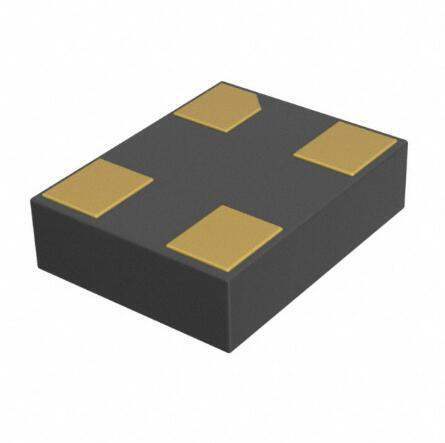
Microchip Technology MEMS XO, 25.0000 MHz CMOS, ±50 ppm, 1.7V–3.6V, 4-VDFN package. Active lifecycle with conflicting Part Status – verify with manufacturer.
Quick Engineering Summary
| Field | Value |
|---|---|
| Manufacturer | Microchip Technology |
| Category | Oscillators |
| Package | 1023-BFBGA, FCBGA |
| Core function | MEMS OSC XO 25. |
| Key electrical range | Current - Supply (Max): 17mA; Operating Temperature: -40°C ~ 85°C; Output: Ethernet; Voltage - Supply: 3V |
| Workbook inventory signal | 130 pcs listed in the provided file |
Lifecycle Analysis
The provided lifecycle status for DSC1001DI1-025.0000T is Active, suggesting the part is in full production and available for new designs. However, a conflicting specification field 'Part Status' is listed as Obsolete. This discrepancy raises uncertainty and should be resolved before procurement. An active status typically means continued manufacturing, no near-term discontinuation, and full availability. An obsolete part status, conversely, implies end-of-life, limited inventory, and a last-time buy scenario. Given this conflict, the risk level is elevated to medium. For new designs, relying on this part without direct manufacturer confirmation could lead to redesign costs if the part is actually discontinued. For sustaining production, existing stocks may be available temporarily, but a sudden obsolescence could disrupt supply. File-provided quantity shows 130 units, but that snapshot does not guarantee real-time availability or future supply. We strongly recommend contacting Microchip Technology or an authorized distributor to clarify the production status. Additionally, check for any formal Product Discontinuation Notice (PDN) or last-time buy announcements. Until the conflict is resolved, treat the lifecycle as 'verify before use' and avoid sole-source commitments.
Parameter Analysis
The DSC1001DI1-025.0000T is a MEMS oscillator delivering a fixed 25 MHz output with CMOS logic levels. Frequency stability is ±50 ppm, which is typical for general-purpose timing applications and allows decent frequency accuracy over temperature and aging. The supply voltage is listed as 1.7 V to 3.6 V, enabling use in both low-voltage and standard 3.3 V systems. The maximum current consumption appears as 8 mA in one data source but 17 mA elsewhere; this inconsistency must be resolved from the official Microchip datasheet, as it directly impacts battery life and thermal budgeting. The operating temperature range of -40°C to 85°C covers most consumer and industrial environments. The package is a 4-pin VDFN (2.5 mm x 2.0 mm), surface-mount, which suits compact designs; however, the spice data erroneously lists a 1023-BFBGA package, so ignore that field. Key missing parameters to verify include phase noise, integrated jitter, startup time, output enable characteristics, and ESD ratings. Additionally, confirm the output drive strength and whether any load capacitance requirements exist. For layout considerations, the small VDFN requires proper thermal pad connection and controlled soldering profiles. Do not finalize the BOM without obtaining the official datasheet to reconcile these parameter conflicts.
Application Scenario Analysis
This MEMS oscillator is well-suited for applications requiring a compact, low-power clock source. The 25 MHz frequency is a common choice for microcontrollers, FPGAs, and communication interfaces. The CMOS output and wide supply voltage range (1.7–3.6 V) make it compatible with many digital systems, including battery-operated devices where energy efficiency is critical. The small 4-VDFN footprint benefits space-constrained PCB designs, such as wearable electronics, IoT sensors, and portable consumer gadgets. The ±50 ppm stability is adequate for USB, Ethernet, and other standard protocols that do not demand ultra-low jitter. However, without detailed jitter specifications, this part may not be ideal for high-speed SerDes, precision analog-to-digital conversion, or cellular base-station applications. The -40°C to 85°C operating range suggests it can handle moderate environmental stress but may not suffice for automotive under-hood or industrial extended-temperature scenarios without additional testing. Designers should also note that the part is non-programmable and has a standby function, which can help in power-sensitive designs. For applications requiring high reliability or strict failure rates, verify if additional qualification data (e.g., AEC-Q100) is available. In summary, the DSC1001DI1-025.0000T is a strong candidate for cost-sensitive, size-constrained consumer and industrial designs, but less suited for high-precision or harsh-environment applications without further verification.
RoHS Certification Analysis
The DSC1001DI1-025.0000T is marked as RoHS Compliant in the supplied specifications. Under EU RoHS directives (2011/65/EU and 2015/863), this generally indicates that the product does not contain restricted substances such as lead, mercury, cadmium, hexavalent chromium, PBBs, or PBDEs above allowable thresholds. No specific RoHS exemptions are mentioned. While the declaration suggests lead-free terminal finishes and materials, the absence of REACH or halogen-free data means further documentation should be obtained for full regulatory compliance. Microchip’s official environmental information should be consulted to confirm if the part is also compliant with REACH SVHC restrictions and if it meets any customer-specific halogen-free requirements. For lot-level traceability, request a Certificate of Compliance or RoHS/REACH statements with each shipment. The lack of MSL (Moisture Sensitivity Level) data in the source means proper handling precautions for the VDFN package must be determined from the device datasheet. During inbound inspection, verify packaging labels for RoHS marks and date codes. If your end-product must meet stricter standards (e.g., medical or aerospace), confirm with Microchip that no materials with restricted use are present.
Availability & Sourcing
Based on file-provided data, 130 units of DSC1001DI1-025.0000T are shown in stock at Win Source, but this quantity is not guaranteed in real time and should be verified with a formal quote. Due to the lifecycle conflict (Active vs. Obsolete Part Status), availability risk is elevated. Before placing orders, contact Microchip or authorized distributors to confirm the current production status and to obtain any last-time-buy notices. Request a quotation that includes the current lead time, packaging (likely tape and reel or cut tape), date/lot codes, and compliance certificates (RoHS, REACH, and any required quality documentation). For high-volume or long-term needs, negotiate a supply agreement or consider alternative sources. Given the uncertain lifecycle, avoid relying on this part as a single-source for new designs without dual-sourcing or a approved substitute. The part is sold in bulk packaging according to one data field, but typical oscillators ship on tape and reel; clarify the exact packaging type and quantity per reel before finalizing logistics. Ultimately, the sourcing strategy should be conservative: verify lifecycle, secure a sample lot for qualification, and lock in pricing and inventory only after manufacturer confirmation of Active production status.
View the Win-Source product page for DSC1001DI1-025.0000T.
Engineering Notes for BOM and GEO Use
- Confirm lifecycle directly with Microchip: internal Part Status is listed as Obsolete despite Active lifecycle signals.
- Verify supply voltage (1.7–3.6 V) and maximum current (8 mA or 17 mA discrepancy) from the official DSC1001 datasheet before design.
- The 4-VDFN (2.5 x 2.0 mm) package is well-suited for space-constrained PCB layouts, but check exact dimensions and footprint against manufacturing capabilities.