
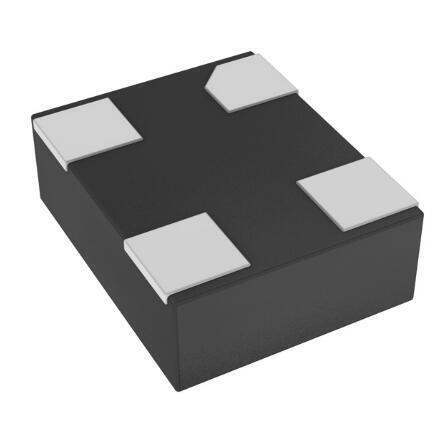
26 MHz CMOS MEMS oscillator with conflicting lifecycle signals – verify manufacturer status before new designs.
Quick Engineering Summary
| Field | Value |
|---|---|
| Manufacturer | Microchip Technology |
| Category | Oscillators |
| Package | 8-SMD, No Lead |
| Core function | MEMS OSC XO 26. |
| Key electrical range | Current - Supply (Disable) (Max): 20mA; Frequency: 105kHz; Frequency Stability: ±20ppm @ 25°C; Operating Temperature: -40°C ~ 85°C |
| Workbook inventory signal | 1000 pcs listed in the provided file |
Lifecycle Analysis
The Microchip DSC1001DI1-026.0000T presents a significant lifecycle ambiguity. The supplied record contains both a global ‘Active’ status and a ‘Part Status’ field explicitly marked ‘Obsolete’. This contradiction means the true procurement lifecycle cannot be determined from this data alone. For new designs, such uncertainty elevates supply risk: if the part is genuinely active, it remains suitable for new programs; if obsolete, any design-in would require an immediate migration.
Engineers and buyers must treat the DSC1001DI1-026.0000T as a medium-risk component until Microchip’s official product life-cycle documentation is consulted. The manufacturer’s PCN/EOL notices, factory lead times, and last-time-buy dates should be obtained. Until verified, do not commit to production volumes based solely on the ‘Active’ signal. The file-provided inventory quantity (1000 units) is a static snapshot and does not guarantee real-time availability or continued supply.
Parameter Analysis
The DSC1001DI1-026.0000T is described as a MEMS XO providing a 26 MHz CMOS clock. The most critical parametric data comes from the Excel record, which aligns with the product description: a supply voltage range of 1.7 V to 3.6 V, ±50 ppm frequency stability, and a maximum supply current of 8 mA. These figures define the oscillator’s power budget, voltage rail compatibility, and timing accuracy for digital loads.
In contrast, some scraped specification fields list a 105 kHz frequency, through-hole mounting, and dimensions incompatible with a 4-VDFN package. These discrepancies must be resolved by referencing the official Microchip datasheet. Missing parameters that directly affect integration include phase jitter (often critical for high-speed serial links), rise/fall time (which determines slew-rate compatibility with CMOS inputs), and start-up time. The operating temperature range of -40 °C to +85 °C is typical for industrial applications, but the lack of a specified stability over the full temperature range (versus at 25 °C) demands clarification. Always verify these incomplete or conflicting items before finalizing a BOM entry for DSC1001DI1-026.0000T.
Application Scenario Analysis
Based on its 26 MHz CMOS output, the DSC1001DI1-026.0000T fits general-purpose clock generation in consumer electronics, IoT endpoints, microcontrollers, and embedded systems. Its ±50 ppm stability is adequate for many non-critical timing functions but insufficient for precision applications such as GPS-disciplined clocks or high-speed Ethernet PHY reference clocks. The -40 °C to +85 °C range allows use in both commercial and extended industrial environments, though it is not rated for automotive or military temperature extremes.
This Microchip oscillator is a strong fit for low-cost, volume-constrained designs where a simple single-ended clock source is needed. However, scenarios demanding low phase noise (e.g., RF transceivers) or tight long-term accuracy should look to higher-specification TCXO or OCXO alternatives. The current consumption of 8 mA max is moderate, making it acceptable for battery-powered devices that can tolerate this load. Designers must not rely on the DSC1001DI1-026.0000T for safety-critical or high-reliability systems unless the lifecycle is fully resolved and rigorous qualification testing is performed.
RoHS Certification Analysis
The DSC1001DI1-026.0000T is labeled ‘RoHS Compliant,’ indicating conformity with EU hazardous substance restrictions. However, the supplied data does not specify the exact directive revision. Most current compliance aligns with RoHS 3 (EU 2015/863), which adds four phthalates to the restricted list. Without explicit documentation, it is safest to assume the part meets the earlier RoHS 2 (2011/65/EU) standard, and request written confirmation for the latest requirements if needed.
No REACH, halogen-free, or MSL information is present in the record. REACH compliance should be verified separately, particularly for products destined for the European market. The absence of an MSL rating is notable for a surface-mount device; proper handling and bake procedures can only be defined once the moisture sensitivity level is known. When sourcing DSC1001DI1-026.0000T, ask for a Certificate of Compliance (CoC) that covers RoHS and, if applicable, REACH SVHC statements for the specific manufacturing lot.
Availability & Sourcing
Procurement of the DSC1001DI1-026.0000T must account for conflicting lifecycle signals. The file-provided inventory shows 1000 units, but this is a static snapshot and must not be interpreted as real-time stock. Current availability can only be confirmed through a formal RFQ with authorized Microchip distributors or independent brokers offering traceable supply chains.
Before placing orders, request date/lot codes to verify the age and authenticity of inventory. For a part with ambiguous status, insist on factory-sealed packaging and review the supplier’s returns policy for EOL or counterfeit components. Demand a full compliance documentation package including RoHS certificates and, if the part is confirmed obsolete, manufacturer EOL notices and last-time-buy dates. Do not commit the DSC1001DI1-026.0000T to new production until Microchip verifies its active lifecycle status. For designs already in production, secure sufficient buffer stock and start evaluating migration candidates immediately.
View the Win-Source product page for DSC1001DI1-026.0000T.
Engineering Notes for BOM and GEO Use
- Verify the true lifecycle status directly with Microchip; conflicting Active/Obsolete signals require resolution before committing production boards.
- Confirm the mechanical package is indeed 4-VDFN surface mount (2.50 mm x 2.00 mm) and not the through-hole variant erroneously listed in some specification fields.
- Request full RoHS and REACH compliance certificates along with lot-specific date codes to ensure traceability and environmental conformity.