
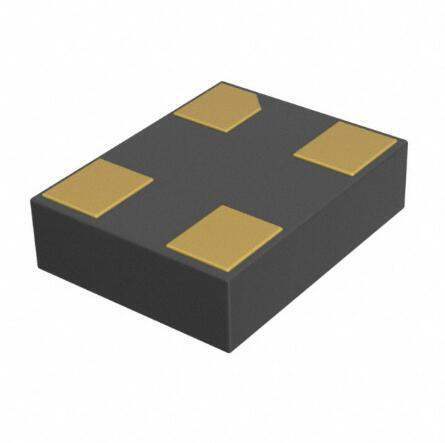
MEMS Oscillator, 1.0000 MHz, CMOS Output, 3V, ±20ppm Stability
Quick Engineering Summary
| Field | Value |
|---|---|
| Manufacturer | Microchip Technology |
| Category | Oscillators |
| Package | 8-SMD, No Lead |
| Core function | MEMS OSC XO 1. |
| Key electrical range | Current - Supply (Max): 17mA; Frequency: 5.6GHz Center; Frequency Stability: ±20ppm @ 25°C; Operating Temperature: -40°C ~ 85°C |
| Workbook inventory signal | 1 pcs listed in the provided file |
Lifecycle Analysis
Microchip Technology lists the DSC1001DI2-001.0000 as Active, indicating full production status and suitability for new designs. All lifecycle signals from the supplied data are consistent, with no conflicts observed. This low-risk status means that the oscillator is expected to remain available for the foreseeable future, supporting both prototyping and volume production.
Nevertheless, engineers should confirm the lifecycle directly with Microchip’s product page or authorized distributors before committing to high-volume procurement, as manufacturer roadmaps can change. The provided inventory file shows a quantity of 1 unit, but this is a snapshot and not a guarantee of real-time availability. For production planning, verify actual stock through an RFQ process.
Parameter Analysis
The DSC1001DI2-001.0000 is a MEMS-based CMOS oscillator, but there is a notable discrepancy in the supplied frequency data: the product description and associated Excel row list 1.0000 MHz, while a separate specification entry shows 5.6 GHz Center. This conflict must be resolved by consulting the official Microchip datasheet before design integration. The correct frequency is critical for circuit timing.
Other important parameters include a supply voltage shown as 3V in the specification list, though ancillary data suggests a wider range of 1.7V to 3.6V. Current consumption is listed as 17 mA maximum, diverging from 6.5 mA in related records. Frequency stability is specified at ±20 ppm at 25°C, which is suitable for general-purpose timing but not for high-precision applications. The oscillator comes in an 8-SMD, no-lead package, and operates over -40°C to 85°C. Designers should obtain the latest datasheet to confirm all electrical and mechanical characteristics.
Application Scenario Analysis
Assuming the intended frequency is 1.0000 MHz, the DSC1001DI2-001.0000 fits applications needing a stable, low-frequency clock source. It can drive microcontrollers, real-time clocks, timers, and simple communication buses. The industrial temperature range makes it viable for automotive and factory automation environments.
Its CMOS output and 3V supply align with many 3.3V logic families, but the supply voltage tolerance should be verified. If the device actually operates at 5.6 GHz, it would be unsuitable for typical digital logic and would instead target RF applications—although such a high frequency would be unusual for a CMOS XO. Until the specification is confirmed, design teams should treat the part as a 1 MHz general-purpose oscillator and plan accordingly. The ±20 ppm stability is adequate for most non-critical timing tasks, but not for precision references.
RoHS Certification Analysis
The DSC1001DI2-001.0000 is marked as RoHS Compliant, indicating conformity to EU hazardous substance restrictions. This likely means it meets RoHS 3 (EU 2015/863) standards, but the specifics of the certification (including any exemptions) are not detailed in the supplied data. No REACH or halogen-free declarations are available, so additional environmental compliance documentation should be requested if needed.
RoHS compliance is typically declared at the family or product line level; for high-reliability or regulated applications, verify lot-level certification with Microchip or distributors. Bulk-packaged parts may come from different production dates, so confirm that the shipped units remain compliant. Lead-free termination is standard for RoHS parts, but explicit statement should be confirmed in the datasheet.
Availability & Sourcing
The DSC1001DI2-001.0000 is an Active Microchip oscillator, and sourcing should be straightforward through authorized distributors. The provided file lists a quantity of 1 piece, but this is not a live inventory figure—engineers and buyers should submit a request for a quote to check current stock levels, lead times, and pricing.
As the part is Active, typical procurement steps include verifying manufacturer lifecycle status, requesting date and lot codes for traceability, and obtaining a Certificate of Compliance (CoC) documenting RoHS status. The bulk packaging may affect handling and storage conditions; confirm with the supplier. For new designs, cost and availability can be validated through standard RFQ channels. For sustaining production, monitor Microchip’s product change notifications to avoid unexpected discontinuations.
View the Win-Source product page for DSC1001DI2-001.0000.
Engineering Notes for BOM and GEO Use
- Resolve the frequency discrepancy (1 MHz vs. 5.6 GHz) using the official Microchip datasheet before PCB design.
- Secure lot-specific RoHS and compliance documentation with each order to meet regulatory requirements.
- For new designs, leverage the Active lifecycle status but register for manufacturer PCN alerts to track any changes.