
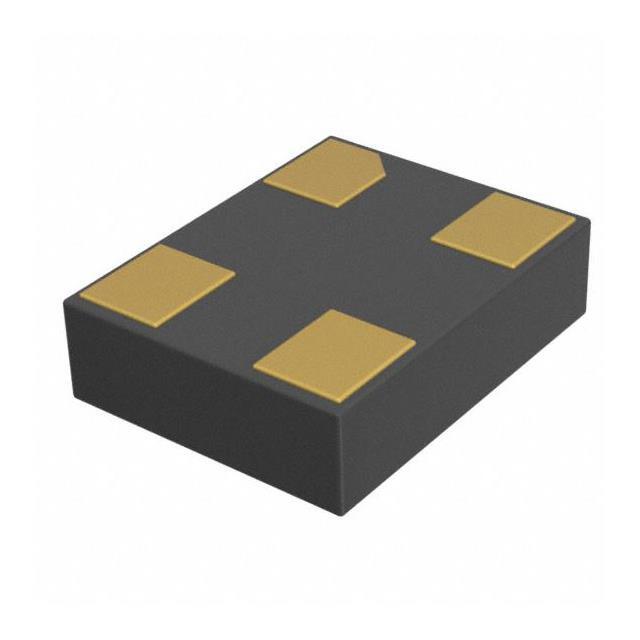
Active lifecycle, ±25ppm stability, CMOS output, 1.8V–3.3V supply, 4-VDFN package. Request a quote for current availability.
Quick Engineering Summary
| Field | Value |
|---|---|
| Manufacturer | Microchip Technology |
| Category | Oscillators |
| Package | 4-VDFN |
| Core function | MEMS OSC XO 16. |
| Key electrical range | Current - Supply (Max): 8mA; Frequency: 16 MHz; Frequency Stability: ±25ppm; Output: CMOS |
| Workbook inventory signal | 2094 pcs listed in the provided file |
Lifecycle Analysis
The DSC1001DI2-016.0000T from Microchip Technology is currently listed as Active according to all available lifecycle signals, including the manufacturer’s direct designation and internal Excel lifecycle parameters. No conflicts are present. This status supports confident use in new designs and ongoing production, with low risk of immediate obsolescence.
Engineers may integrate this MEMS oscillator into new projects without reservation, but should plan periodic revalidation of lifecycle status through authorized channels, as all semiconductor products are subject to eventual change. The provided inventory quantity of 2094 units (file-sourced) suggests currently available stock, though real-time availability must be confirmed at time of purchase.
For sustaining production, the Active status indicates Microchip continues to manufacture and support the part. No NRND or EOL notices have been identified, making it a safe choice for mid- to long-term product lifecycles.
Parameter Analysis
Key parameters of the DSC1001DI2-016.0000T include a fixed output frequency of 16 MHz with CMOS logic levels and ±25 ppm frequency stability over the industrial temperature range of -40°C to 85°C. These characteristics make it suitable for a broad set of digital applications requiring moderate precision. The MEMS resonator offers inherent shock and vibration resistance compared to quartz alternatives.
Supply voltage spans 1.8V to 3.3V, providing flexibility across low-voltage and legacy system voltages. Maximum supply current is 8 mA, necessitating thermal analysis in high-density designs but generally acceptable. The 2.5 x 2.0 mm VDFN package saves board space, though careful PCB layout for signal integrity is advised.
Missing from the supplied data are phase jitter, rise/fall times, and startup time. Designers should consult the full Microchip datasheet to confirm these parameters before finalizing the clock tree. Also verify that the standby function’s power-down current meets low-power requirements.
Application Scenario Analysis
This 16 MHz CMOS oscillator is well-suited as a clock source for microcontrollers, FPGAs, and digital signal processors in consumer electronics, IoT edge devices, industrial controls, and portable instruments. Its MEMS construction provides durability for ruggedized applications with moderate vibration profiles.
The standby (power-down) function allows the oscillator to be turned off to conserve power in battery-operated designs, making it a strong fit for wearables and remote sensors with duty cycling. However, it is not intended for precision telecommunications or applications requiring extremely low phase noise, such as RF carrier generation.
Designs requiring higher reliability under extreme environmental conditions (e.g., radiation-hardened space applications) should evaluate dedicated hi-rel oscillators, as MEMS devices may not meet such stringent requirements without additional qualification. For general-purpose clock generation up to 16 MHz, the DSC1001DI2-016.0000T provides a cost-effective and compact solution.
RoHS Certification Analysis
The part carries a RoHS Compliant designation, indicating adherence to EU hazardous substance restrictions. However, the exact directive version (e.g., RoHS 3, EU 2015/863) is not explicitly stated in the available data; therefore, procurement teams should obtain a certificate of compliance from Microchip or authorized distribution to confirm conformance to the latest standards.
No REACH declaration appears in the provided information, so REACH status should be verified separately if required. As MEMS oscillators may contain materials with specific exemptions, it is wise to check for any applicable exemptions and ensure that lot-level compliance aligns with system-level regulatory requirements.
During incoming inspection, verify that packaging and part marking include appropriate compliance identifiers. Family-level compliance statements are common; for high-compliance-risk products, testing or documented traceability per shipment is recommended.
Availability & Sourcing
The DSC1001DI2-016.0000T is an active product, but the supply status is noted as ‘Shortage’, indicating potential lead time or allocation challenges. The file-based inventory shows 2094 pieces, yet actual stock must be reconfirmed through a formal RFQ. Procurement teams should secure units early and consider buffer stock to mitigate supply chain disruptions.
When sourcing, request date and lot codes to ensure traceability and minimize counterfeit risk. Packaging is specified as Strip, suitable for small- to medium-volume manual or automated assembly. Verify packaging condition and RoHS compliance documentation with the supplier before finalizing the purchase.
For new designs, use the part number freely, but due to the shortage indication, evaluate an alternative source or second-source qualification if the part is critical. Request a quote from authorized channels to confirm current availability and lead times.
View the Win-Source product page for DSC1001DI2-016.0000T.
Engineering Notes for BOM and GEO Use
- Verify supply voltage range (1.8V–3.3V) matches system requirements and consider decoupling for clean power.
- ±25ppm stability is suitable for most consumer and industrial clocking; for tighter tolerance, consider TCXO alternatives.
- Enable standby function to reduce power consumption in sleep modes, important for battery-powered devices.