
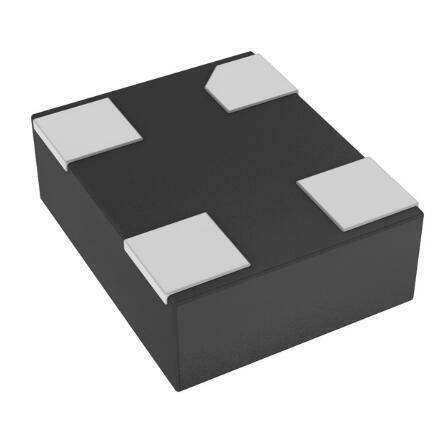
22.0000MHz CMOS SMD oscillator – obsolete part sourcing and compliance details
Quick Engineering Summary
| Field | Value |
|---|---|
| Manufacturer | Microchip Technology |
| Category | Oscillators |
| Package | 4-SMD, No Lead |
| Core function | MEMS OSC XO 22. |
| Key electrical range | Frequency: 5kHz; Frequency Stability: ±10ppm; Operating Temperature: -40°C ~ 85°C; Output: 3-State |
| Workbook inventory signal | 1 pcs listed in the provided file |
Lifecycle Analysis
The DSC1001DI2-022.0000T part status is listed as Obsolete, indicating it has been discontinued by Microchip Technology. This contradicts the solitary lifecycle field that reports 'Unknown,' creating a conflict that engineers and buyers must resolve. For procurement safety, we treat the component as Discontinued. Obsolete status means no further production is planned, making this part unsuitable for new designs. For sustaining production, remaining stock must be sourced through authorized distributors or brokers, with careful verification of authenticity and condition.
The supplied inventory file shows one unit, which is a point‑in‑time snapshot and not a real‑time availability guarantee. Given the lifecycle risk, any inventory should be considered insecure without direct manufacturer confirmation. Buyers should immediately contact Microchip or franchised partners to obtain an official product change notification (PCN) and, if applicable, last‑time‑buy dates. Without this validation, relying on the DSC1001DI2-022.0000T in ongoing production carries high supply‑chain risk.
Parameter Analysis
A critical inconsistency appears in the specifications: the product description identifies the DSC1001DI2-022.0000T as a 22.0000MHz oscillator, yet a separate specification field lists a frequency of 5kHz. This discrepancy must be resolved before evaluating fit. Assuming the description is correct, the 22.0000MHz CMOS output with ±10ppm frequency stability and a 3V supply voltage suits many clock‑generation and timing tasks. The 4‑SMD no‑lead package supports space‑constrained PCB layouts, and the operating temperature range of -40°C to 85°C covers industrial environments.
Three‑state output allows the clock to be disabled for power saving or test modes. However, essential parameters such as phase noise, jitter, start‑up time, and rise/fall time are missing from the supplied data. These directly affect signal integrity in high‑speed digital designs. Similarly, current consumption and output drive strength are not listed, which are needed for power budgeting and fan‑out calculations. Before qualifying this part for any application, obtain the official Microchip datasheet to confirm all timing, electrical, and reliability specifications.
Application Scenario Analysis
If the intended frequency is 22.0000MHz, the DSC1001DI2-022.0000T would be a typical MEMS oscillator choice for general‑purpose clocking in microcontrollers, FPGAs, communication interfaces, and consumer electronics. The CMOS output level is compatible with most digital logic families, and the stability of ±10ppm is adequate for USB, Ethernet, and many embedded processors. Industrial temperature support extends to sensor nodes, automation controllers, and outdoor IoT devices where moderate thermal drift is acceptable.
Given the obsolete lifecycle, this part is not a candidate for new product development. Even in legacy systems, the frequency ambiguity (5kHz vs 22MHz) demands datasheet confirmation before ordering. Designs requiring ultra‑low jitter, tight duty‑cycle control, or fail‑safe features may find better alternatives among active Microchip DSC family members. Engineers should treat the DSC1001DI2-022.0000T only as a stopgap for existing builds where an exact replacement is unavailable and redesign is not immediately feasible.
RoHS Certification Analysis
The DSC1001DI2-022.0000T carries a RoHS Compliant designation, indicating it meets EU restrictions on hazardous substances. The supplied data does not specify the exact directive version, but modern compliance typically follows EU 2015/863 (RoHS 3). Without a full material declaration, additional concerns such as REACH SVHC content, halogen‑free status, and MSL rating remain open. These gaps are important when components will be used in products sold in regions requiring full environmental disclosure.
RoHS compliance at the family level does not automatically guarantee every lot is free of non‑compliant materials. Lot‑level traceability and a dated certificate of compliance are advisable, especially when sourcing obsolete inventory from non‑franchised channels. Buyers should request documentation that clearly references the part number and batch identifiers. In the absence of explicit exemptions, it is prudent to assume no RoHS exemptions apply, but this assumption should be verified against the manufacturer’s official compliance statement.
Availability & Sourcing
Because the DSC1001DI2-022.0000T is listed as Obsolete, sourcing options are limited to residual inventory in the open market. The file‑provided stock shows a single unit, which should not be interpreted as guaranteed availability. Procurement teams should immediately submit a request for quote (RFQ) to check real‑time stock levels and secure dated, traceable parts. Verify packaging as Bulk (4‑SMD no‑lead) and ensure that storage conditions have been maintained for moisture sensitivity, even though MSL is not explicitly reported.
Risk mitigation includes requesting lot codes and date codes to confirm shelf life, especially for MEMS components exposed to uncontrolled environments. Insist on manufacturer‑original, RoHS‑compliant certificates, and perform incoming inspection if quantities allow. Because Microchip does not provide a recommended replacement in the supplied data, engineers should cross‑reference the DSC1001 series for active alternatives. For immediate needs, contact authorized distributors to explore last‑time‑buy availability or negotiate for small‑lot sourcing with full traceability.
View the Win-Source product page for DSC1001DI2-022.0000T.
Engineering Notes for BOM and GEO Use
- Confirm the actual output frequency: the description states 22.0000MHz, but a specification field lists 5kHz – resolve this discrepancy before design‑in.
- Part is marked Obsolete; inquire with Microchip about last‑time‑buy windows, end‑of‑life notices, and recommended migration paths.
- Request a full material declaration and lot‑specific RoHS certificate during procurement, as REACH and halogen‑free statuses are not documented in the provided data.