
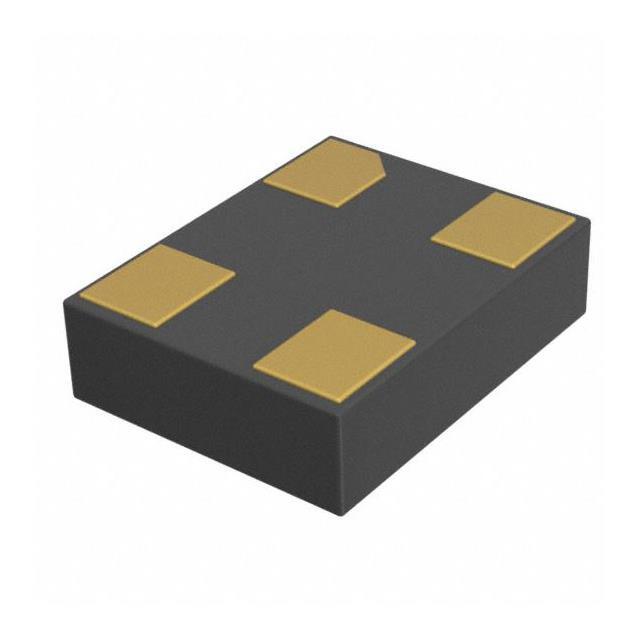
MEMS CMOS oscillator, 24 MHz, ±25 ppm, 1.8V–3.3V, industrial temp, 4-CDFN package.
Quick Engineering Summary
| Field | Value |
|---|---|
| Manufacturer | Microchip Technology |
| Category | Oscillators |
| Package | 4-VDFN |
| Core function | MEMS OSC XO 24. |
| Key electrical range | Current - Supply (Max): 8mA; Frequency: 24 MHz; Frequency Stability: ±25ppm; Output: CMOS |
| Workbook inventory signal | 3250 pcs listed in the provided file |
Lifecycle Analysis
The lifecycle status for the DSC1001DI2-024.0000T from Microchip Technology is currently unknown based on available data. Without formal lifecycle notifications, engineers cannot assume either active production or discontinuation. This status introduces procurement risk for both new design and sustaining production. For new designs, verify the lifecycle directly with Microchip or authorized distributors to avoid incorporating a part subject to imminent obsolescence. For existing production, monitor supply channels and manufacturer communications to anticipate changes.
The file-provided inventory quantity of 3250 units suggests some market availability, but this is not a real-time guarantee and does not reflect manufacturer production status. Conservative procurement practices recommend securing a lifecycle confirmation before committing to high-volume orders.
Parameter Analysis
The DSC1001DI2-024.0000T is a MEMS-based CMOS oscillator providing a 24 MHz output with ±25 ppm frequency stability over the industrial temperature range of -40°C to +85°C. The wide supply voltage range from 1.8 V to 3.3 V allows direct interface with various logic levels and provides design flexibility, while the 8 mA maximum supply current supports power-sensitive applications. The compact 2.5 mm x 2.0 mm 4-VDFN surface-mount package minimizes board space and is suitable for dense PCB layouts.
Critical parameters that demand verification from the official Microchip datasheet include phase jitter, rise and fall times, duty cycle, start-up time, and long-term aging. These directly affect signal integrity in high-speed digital systems and must be evaluated against application timing budgets. The standby function enables power conservation by reducing current draw when the oscillator is not required, a feature that should be characterized for power-down current to ensure compatibility with system power management. Thermal derating considerations may also require knowing the junction-to-ambient thermal resistance of the small 4-CDFN package, which is not provided in the supplied specifications.
Application Scenario Analysis
With its standard 24 MHz frequency, CMOS output, and industrial temperature range, the DSC1001DI2-024.0000T fits common clocking applications such as microcontrollers, FPGAs, and general embedded processors. The wide operating voltage and moderate stability suit portable and battery-operated devices, consumer electronics, and industrial controllers where board space and power efficiency are priorities. The MEMS construction typically offers better shock and vibration resistance compared to quartz crystals, making the part a candidate for mechanically harsh environments within its temperature limits.
However, this oscillator is not optimized for applications needing ultra-low phase noise or tight stability over extended temperatures beyond 85°C. For high-speed communication interfaces requiring sub-picosecond jitter or for automotive-grade temperature ranges, alternative solutions should be evaluated. The standby feature makes it attractive for power-cycling designs, but its suitability for always-on precision clocking depends on detailed jitter characterization. Engineers should validate output drive strength to ensure signal integrity over expected trace lengths and load capacitances.
RoHS Certification Analysis
The DSC1001DI2-024.0000T is listed as RoHS Compliant, indicating conformance to the European Union’s Restriction of Hazardous Substances directive. In the absence of an explicit standard reference, this typically implies compliance with EU RoHS 2011/65/EU and its amendments, including Directive 2015/863 (RoHS 3) which added four phthalate restrictions. REACH compliance is not provided in the current data and should be verified separately if required by end-market regulations.
Since RoHS status is often declared at the part family level, it is advisable to request lot-specific or production-date-based compliance certificates when ordering, especially for applications requiring full material declarations. The small package does not typically contain exemptions, but verifying the absence of lead in internal MEMS structures or terminations through the manufacturer’s material content documentation is prudent. For high-reliability sectors, additional testing reports such as halogen-free claims or MSL ratings should be obtained from Microchip to supplement basic RoHS conformity.
Availability & Sourcing
The DSC1001DI2-024.0000T is flagged with a supply and demand status of Limited, and the provided file inventory shows 3250 units. This quantity is not a real-time figure and may change rapidly; therefore, immediate quote requests are necessary to confirm current stock levels, packaging (strip), and lead times. Given the unknown lifecycle status, buyers should verify manufacturer production status and any discontinuation notices before committing to new production or long-term purchases.
Sourcing teams should request full traceability documentation including date codes, lot codes, and manufacturer certificates of conformance. Since this is a Microchip MEMS oscillator, authorized distribution channels may offer better assurance of original factory supply and support. For NRND or EOL scenarios that may emerge after verification, consider evaluating alternative standard oscillators from Microchip’s DSC series or other vendors. The wide supply voltage and standard CMOS output make second-source qualification feasible, but always cross-reference exact stability, package, and enable pin configurations.
View the Win-Source product page for DSC1001DI2-024.0000T.
Engineering Notes for BOM and GEO Use
- Confirm lifecycle status with Microchip before design-in to avoid obsolescence risk.
- Obtain full datasheet to verify jitter, rise/fall times, and startup characteristics for timing-critical designs.
- Request lot-specific RoHS and REACH certificates during procurement to ensure compliance documentation.