
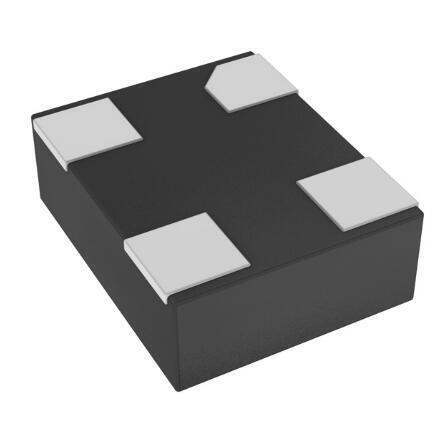
MEMS XO 24.576MHz CMOS SMD – lifecycle and specs require careful verification.
Quick Engineering Summary
| Field | Value |
|---|---|
| Manufacturer | Microchip Technology |
| Category | Oscillators |
| Package | Not available in supplied data |
| Core function | MEMS OSC XO 24. |
| Key electrical range | Frequency: 1.2GHz; Frequency Stability: ±10ppm; Operating Temperature: -40°C ~ 85°C; Voltage - Supply: 3V |
| Workbook inventory signal | 1 pcs listed in the provided file |
Lifecycle Analysis
The DSC1001DI2-024.5760 from Microchip Technology currently presents a conflicting lifecycle status. Although lifecycle databases list the part as Active, the provided specification sheet includes a Part Status field marked Obsolete. This discrepancy suggests that the device may be at risk of discontinuation, and design teams should not treat it as guaranteed for new production without direct confirmation.
For new designs, the safest approach is to verify the lifecycle directly with Microchip Technology or an authorized distributor. If the part is indeed Obsolete, alternative solutions should be evaluated immediately. Even if it remains Active for now, the presence of an Obsolete flag in some records indicates potential instability in supply.
The file-provided inventory count of one unit further hints at constrained availability, which could be a sign of end-of-life. Engineers should consider sourcing alternative oscillators with similar frequency and stability characteristics if long-term support is required.
Parameter Analysis
Key parameters for the DSC1001DI2-024.5760, based on the most consistent data, include a frequency of 24.576 MHz with CMOS output and frequency stability of ±25 ppm. The supply voltage range is specified from 1.7 V to 3.6 V, allowing integration into both low-voltage and legacy systems. The operating temperature span of -40°C to 85°C suits industrial environments, while the compact 4-VDFN package (2.50 mm x 2.00 mm) aids space-constrained designs.
The provided specification list contains anomalies, such as a 1.2 GHz frequency and a crystal base resonator, which contradict the part’s description as a MEMS oscillator. These inconsistencies likely stem from data aggregation errors. Critical missing items that must be verified against the official datasheet include phase noise, startup time, output enable/standby function details, and actual current consumption under load.
Designers should pay particular attention to frequency stability over temperature and supply voltage tolerance, as these directly impact timing margins in digital systems. Without confirmed specifications, using this part in precision applications carries risk.
Application Scenario Analysis
The DSC1001DI2-024.5760 would be suitable for generating clock signals in microcontroller-based systems, Ethernet controllers, and digital audio interfaces that require a 24.576 MHz reference. Its CMOS output and wide voltage range make it compatible with many standard logic families.
Given the parameter inconsistencies, it is not recommended for new designs where reliable performance must be guaranteed without further verification. The part may still serve in legacy or replacement applications where the system was originally qualified with this exact component, provided that the lifecycle can be confirmed and sufficient inventory is secured.
In industrial IoT or embedded computing contexts, where a small form factor and moderate stability are needed, this oscillator could be a candidate, but engineers should cross-check the actual specifications against the system requirements to avoid timing failures.
RoHS Certification Analysis
The DSC1001DI2-024.5760 is listed as RoHS Compliant, indicating that it meets the European Union’s restrictions on hazardous substances. The provided data does not specify the exact RoHS version; typically, current compliance implies adherence to RoHS 3 (EU 2015/863) unless otherwise noted.
No exemptions are documented, and REACH status is not mentioned. For high-reliability or European market shipments, it is advisable to request the manufacturer’s Certificate of Compliance for the specific production lot. RoHS compliance at the part number level does not always guarantee that every batch meets the standard, especially when production dates span regulatory transitions.
Since the part shows conflicting lifecycle data, any remaining stock may have been manufactured under older standards. Buyers should confirm that the RoHS declaration is valid for the actual date code received.
Availability & Sourcing
Sourcing the DSC1001DI2-024.5760 requires careful attention due to conflicting lifecycle signals. The file-provided quantity of one unit suggests extremely limited availability, and this number is not a real-time guarantee. Buyers should request a quote through the supply chain to verify current stock levels.
Given the Obsolete flag present in some data, immediate action is recommended: secure any existing inventory and simultaneously begin evaluating alternative parts from Microchip or other MEMS oscillator vendors. For production planning, it is critical to obtain a formal product change notification (PCN) or end-of-life (EOL) notice from the manufacturer.
When requesting a quote, be sure to ask for date code, packaging condition, and compliance documentation (RoHS, REACH). For NRND or obsolete parts, acceptance testing may be necessary to confirm functionality before use in production.
View the Win-Source product page for DSC1001DI2-024.5760.
Engineering Notes for BOM and GEO Use
- Verify lifecycle status directly with Microchip; conflicting signals (Active vs. Obsolete) require manufacturer confirmation before use.
- Cross-check frequency, base resonator type, and all electrical specs against the official DSC1001 datasheet to resolve data inconsistencies.
- Plan for potential obsolescence; limited inventory suggests sourcing challenges, so evaluate alternative 24.576 MHz MEMS oscillators.