
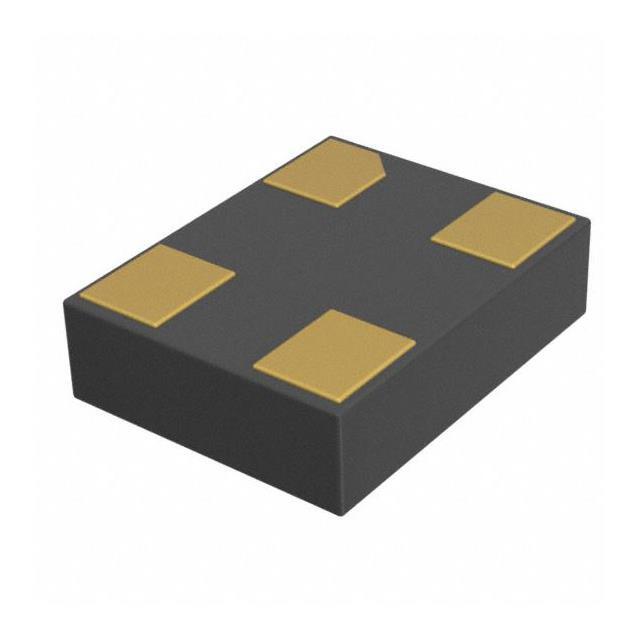
33.3333 MHz MEMS oscillator with CMOS output in a 2.5x2.0mm VDFN package, active lifecycle and RoHS compliant
Quick Engineering Summary
| Field | Value |
|---|---|
| Manufacturer | Microchip Technology |
| Category | Oscillators |
| Package | 4-VDFN |
| Core function | MEMS OSC XO 33. |
| Key electrical range | Current - Supply (Max): 10.5mA; Frequency: 33.3333 MHz; Frequency Stability: ±25ppm; Output: CMOS |
| Workbook inventory signal | 721 pcs listed in the provided file |
Lifecycle Analysis
The DSC1001DI2-033.3333T is classified as Active by Microchip Technology, indicating it is in full production and recommended for new designs. This status carries low procurement risk, with ongoing manufacturer support and no immediate discontinuation threats.
However, the supply-demand signal notes a 'Shortage' condition, which may reflect market tightness rather than lifecycle change. Engineers should verify current lead times and stock availability with authorized distributors, as the Active designation alone does not guarantee immediate supply. For products with long qualification cycles, request a formal lifecycle confirmation from Microchip to guard against silent transitions.
Parameter Analysis
Key parameters for the DSC1001DI2-033.3333T include a fixed 33.3333 MHz frequency, ±25ppm stability over -40°C to 85°C, and a CMOS output. The supply voltage range is specified as 1.8V to 3.3V, though an alternative data row indicates 1.7V to 3.6V; engineers should reconcile this against the official datasheet to ensure power-rail compatibility. Maximum supply current is 10.5mA, making it suitable for power-sensitive designs.
The MEMS resonator offers inherent shock and vibration resistance compared to quartz, but phase noise and jitter specifications are not listed. For applications requiring spectral purity (e.g., communication PLLs), request phase noise plots from the manufacturer. The surface-mount package measures 2.50mm x 2.00mm with a 0.035in seated height, supporting compact layouts. Standby function allows power-down when not needed, reducing system-level consumption. Confirm enable/disable threshold voltages from the datasheet.
Application Scenario Analysis
The DSC1001DI2-033.3333T targets general-purpose clocking in embedded systems where a 33.3333 MHz reference with moderate stability suffices. Industrial controllers, IoT gateways, and networking equipment benefit from its wide temperature range and low profile. The MEMS construction provides better reliability under mechanical stress than quartz, making it a strong fit for ruggedized edge devices.
However, without published phase noise or aging characteristics, it is less suited for RF transceivers or precision measurement instruments that demand exceptionally clean clocks. Automotive applications are not explicitly supported; no AEC-Q100 qualification appears, so verify qualification requirements before use in vehicle systems. The standby feature is advantageous for battery-operated devices, but verify power-up timing if used in duty-cycled modes.
RoHS Certification Analysis
The part is listed as RoHS Compliant, meeting EU Directive 2011/65/EU and its amendments. Typically, Microchip MEMS oscillators are lead-free and do not contain substances above threshold limits. No exemptions are indicated in the supplied data, though it is prudent to request a Certificate of Compliance (CoC) from the supplier for lot-specific verification.
Data for REACH, halogen-free, and Moisture Sensitivity Level (MSL) were not provided. Engineers requiring these declarations should obtain them from the manufacturer, as REACH compliance does not automatically confirm RoHS status and vice versa. The packaging format (Strip) may influence handling procedures, but does not affect substance compliance.
Availability & Sourcing
The DSC1001DI2-033.3333T is an Active part, but supply-demand signals indicate a shortage. The workbook shows a file-provided quantity of 721 units; this is not a real-time inventory figure and should be confirmed via quote. When sourcing, request date/lot codes, certificate of conformance, and packaging details to ensure traceability.
Given the shortage status, evaluate lead times and consider securing buffer stock if the component is sole-sourced. For volume production, engage with authorized Microchip distributors early to align deliveries with manufacturing schedules. If the shortage persists, a formal lifecycle review may be warranted, but there is no indication of EOL at this time.
View the Win-Source product page for DSC1001DI2-033.3333T.
Engineering Notes for BOM and GEO Use
- Verify supply voltage range (1.8V–3.3V per spec list, 1.7V–3.6V per alternative row) against the official datasheet to ensure board-level compatibility.
- For phase-noise-sensitive designs, request phase jitter and phase noise data from the manufacturer, as these are not supplied in the sourcing specifications.
- Given the 'Shortage' supply-demand status, secure inventory with date/lot code traceability and confirm lead times before committing to production schedules.