
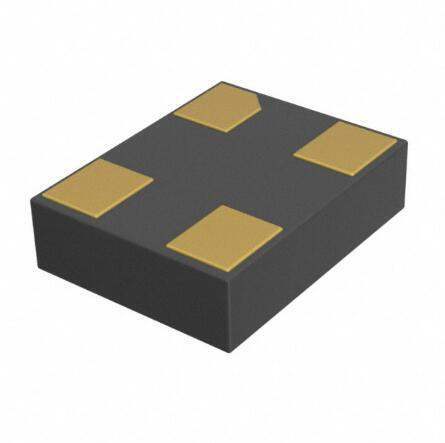
25 MHz MEMS oscillator with conflicting lifecycle data; confirm status before use.
Quick Engineering Summary
| Field | Value |
|---|---|
| Manufacturer | Microchip Technology |
| Category | Oscillators |
| Package | 24-SSOP (0.154", 3.90mm Width) Exposed Pad |
| Core function | MEMS OSC XO 25. |
| Key electrical range | Frequency: 5kHz; Frequency Stability: ±18ppm; Operating Temperature: -40°C ~ 85°C; Voltage - Supply: 3V |
| Workbook inventory signal | 1 pcs listed in the provided file |
Lifecycle Analysis
The lifecycle status of the DSC1001DI5-025.0000 presents conflicting signals that demand immediate attention. One data source lists the component as Active, while a separate field marks its Part Status as Obsolete. This contradiction introduces high procurement risk: an Active designation would imply current production and full manufacturer support, whereas an Obsolete flag suggests end‑of‑life and no further supply. Until Microchip Technology provides an official resolution, a conservative design approach must assume a high risk of unavailability for new production programs.
Engineers and buyers should treat the DSC1001DI5-025.0000 as being under investigation. Any new design‑in should be postponed until the manufacturer’s current Product Change Notification (PCN) and lifecycle code are verified directly. The supplied file‑based inventory indicates a single unit, which is not a real‑time guarantee and may reflect residual stock rather than ongoing production.
For existing designs, evaluate the part’s replacement availability and transition timeline. If the Obsolete status is confirmed, immediate qualification of a second‑source oscillator or a Microchip‑recommended migration device is essential. Because lifecycle discrepancies can stem from database delays or part‑number variant issues, revalidate against the official Microchip website and direct distributor communications before committing to procurement.
Parameter Analysis
Key parameters for DSC1001DI5-025.0000 include a nominal frequency of 25 MHz, frequency stability specified at ±18 ppm, and an operating temperature range of -40°C to 85°C. The supply voltage is listed as 3 V in the component specification, although broader ranges from 1.7 V to 3.6 V appear in some manufacturer collateral; designers must verify the exact allowable supply range from the official datasheet. Package information shows conflicting data: a 24‑SSOP exposed pad footprint versus the more typical 4‑VDFN 2.5 mm × 2.0 mm package associated with this MEMS oscillator family. This discrepancy could lead to significant layout errors if not resolved before PCB design.
For timing margin analysis, the ±18 ppm stability over the full temperature range supports most standard serial communication interfaces, but high‑speed designs with tight jitter budgets should confirm integrated phase noise and period jitter values directly from Microchip’s characterization report. The CMOS output and maximum supply current of 8 mA (per Excel data) imply moderate drive strength; verify that the oscillator can meet the load capacitance and edge‑rate requirements of the downstream IC.
The most critical missing datasheet items that require verification are: the correct package and pinout, absolute supply voltage limits, output enable/standby functionality, and start‑up time. Without these, PCB layout and power sequencing cannot be finalized. Also, note that the “Frequency” field erroneously displays 5 kHz; disregard this and use the 25.0000 MHz value from the description and manufacturer's nominal specification.
Application Scenario Analysis
The DSC1001DI5-025.0000 MEMS oscillator is a potential fit for embedded systems requiring a 25 MHz reference clock within the extended industrial temperature range. Strong‑fit scenarios include microcontroller‑based user interfaces, IoT endpoints, motor control units, and communication modules (e.g., Ethernet MAC/PHY) where a fixed‑frequency, low‑power CMOS source is sufficient. Its MEMS construction inherently offers better shock and vibration tolerance compared to quartz crystals, which benefits portable or factory‑floor equipment.
Weak‑fit scenarios are those demanding ultra‑low phase noise or tight jitter control, such as high‑performance PLLs, RF transceivers, or precision data converters. Without verified short‑term stability metrics, the part cannot be reliably recommended for these applications. The current lifecycle conflict makes the device unsuitable for any new design until status is clarified, as committing an unconfirmed part to a production BOM risks costly redesigns.
Additionally, the package ambiguity must be resolved to determine compatibility with space‑constrained wearables or portable instruments. If the true package is the 2.5 mm × 2.0 mm VDFN, it is well‑suited for miniaturized designs; if the 24‑SSOP is real, it would be an unusually large footprint for a modern MEMS oscillator and might serve as a drop‑in replacement in legacy boards. Until the package is confirmed, avoid generating symbolic footprints or layout constraints.
RoHS Certification Analysis
According to the supplied product data, DSC1001DI5-025.0000 is marked as RoHS Compliant, typically indicating conformance with EU RoHS Directive 2015/863. No REACH, halogen‑free, or China‑RoHS declarations are provided, so full material compliance documentation should be requested for each lot, especially for products destined for the European market. A static database flag does not replace lot‑level certification; the compliance status can change with manufacturing site, date code, or process modification.
Entire product families may hold RoHS certificates, but individual part numbers can have exemptions, such as lead in internal MEMS die attach or high‑melting‑point solder. Buyers should ask the distributor or Microchip directly for the part‑specific Declaration of Conformity (DoC) and any applicable exemption lists. Without this, assumptions about Pb‑free or “green” status may be unreliable during end‑customer audits.
Additionally, Moisture Sensitivity Level (MSL) and peak reflow classification are not supplied in the available data. For high‑volume SMT lines, unknown MSL can cause popcorning defects. Always obtain the packaging label data or official qualification report before setting reflow profiles. Request REACH SVHC statements to ensure no substances of very high concern are present above the 0.1% threshold, as REACH obligations are separate from RoHS.
Availability & Sourcing
File‑based inventory shows a single unit of DSC1001DI5-025.0000, but this quantity is not a real‑time reflection of stock and must be confirmed through a request for quote. Given the conflicting lifecycle signals (Active vs. Obsolete), it is essential to validate the current production status directly with Microchip or an authorized distributor before placing any purchase order. For production continuity, design teams should consider an alternate second‑source oscillator or contact Microchip for a recommended migration part if the device is indeed in obsolescence.
The part is supplied in bulk packaging, so re‑reeling or tray‑pack requirements must be clarified during ordering. Buyers should request full date and lot code traceability, along with RoHS and REACH certificates, to ensure conformity to end‑product regulations. If the part is truly obsolete, source only from suppliers that can provide a manufacturer‑sourced certificate of conformance and proven chain of custody; gray‑market components may carry counterfeiting or moisture damage risks.
To mitigate risk, avoid committing this component to new PCB layouts until official lifecycle and package documentation are reconciled. For existing production that may need last‑time buys or long‑term sustainment, engage Microchip’s end‑of‑life notification process and plan buffer stock accordingly. For all enquiries, click “Request a Quote” to receive current availability and a compliance package from the distribution partner.
View the Win-Source product page for DSC1001DI5-025.0000.
Engineering Notes for BOM and GEO Use
- Verify frequency is 25 MHz and package is a 4‑VDFN (2.5 x 2.0 mm), not a 24‑SSOP.
- Obtain official PCN and lifetime status from Microchip to resolve Active/Obsolete contradiction.
- Request lot‑specific RoHS and REACH declarations; MSL level must be confirmed before SMT.