
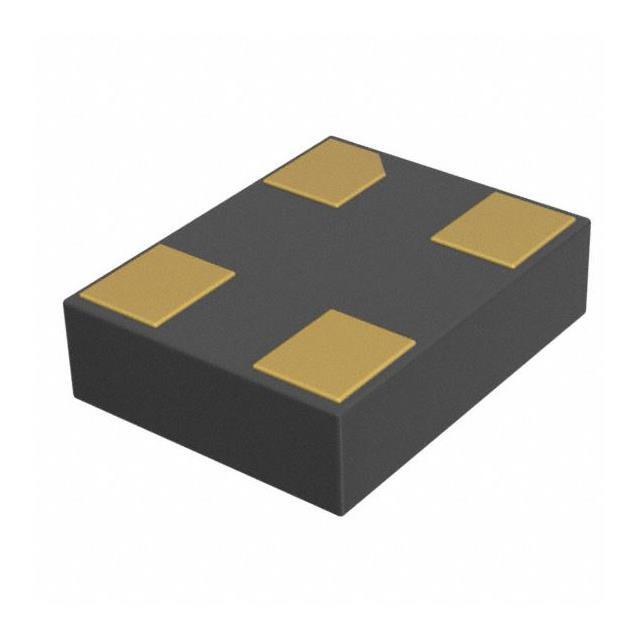
Active 49.5 MHz MEMS oscillator with CMOS output and AEC-Q100 rating. Sourcing guide for engineers.
Quick Engineering Summary
| Field | Value |
|---|---|
| Manufacturer | Microchip Technology |
| Category | Oscillators |
| Package | 4-VDFN |
| Core function | MEMS OSC XO 49. |
| Key electrical range | Current - Supply (Disable) (Max): 15μA; Current - Supply (Max): 10.5mA; Frequency: 49.5 MHz; Frequency Stability: ±25ppm |
| Workbook inventory signal | 2950 pcs listed in the provided file |
Lifecycle Analysis
The DSC1001DL2-049.5000 is currently in active production according to Microchip Technology and all available supply-chain signals. An active lifecycle status means that the part is fully supported for new designs, with ongoing manufacturing, datasheet updates, and standard lead times. No lifecycle conflicts have been identified for this oscillator, indicating a stable production outlook typical of Microchip’s MEMS timing portfolio.
Engineers can confidently specify the DSC1001DL2-049.5000 in new projects, as there are no end-of-life or not-recommended-for-new-design warnings. However, it is advisable to periodically verify lifecycle status through the manufacturer’s product page or authorized distributors, especially for high-volume or safety-critical applications. Current file-provided inventory suggests adequate stock, but real-time availability should be confirmed via quote before committing to production schedules.
Parameter Analysis
The DSC1001DL2-049.5000’s key specifications make it suitable for a wide range of timing applications. It generates a 49.5 MHz clock using a MEMS resonator, which offers inherent shock and vibration resistance compared to quartz crystals. The CMOS output provides compatibility with standard digital logic levels, while the ±25 ppm frequency stability over the full automotive temperature range (-40°C to +105°C) ensures reliable operation in harsh environments. The supply voltage range of 1.7 V to 3.6 V supports both low-power and legacy system voltages, and the maximum active supply current of 10.5 mA helps manage power budgets.
Designers should note the standby function, which reduces current consumption to 15 µA when not in use, an important feature for battery-powered devices. The 2.5 mm x 2.0 mm VDFN package with a maximum height of 0.90 mm is suitable for space-constrained PCBs. Before finalizing a design, it is critical to consult the full Microchip datasheet for parameters not listed here, such as phase noise, jitter (period or cycle-to-cycle), rise/fall times, and startup time. These factors directly impact signal integrity in high-speed serial links or precision clock trees.
Application Scenario Analysis
The DSC1001DL2-049.5000’s combination of AEC-Q100 qualification and extended temperature range makes it a strong candidate for automotive electronics, including advanced driver-assistance systems (ADAS), camera modules, infotainment, and body control modules. Its MEMS construction provides resilience to mechanical stress, which is beneficial in engine-bay or under-chassis deployments. Industrial automation, IoT gateways, and networking equipment can also leverage this oscillator where a stable reference clock is needed across wide temperature swings.
For low-cost consumer devices, the specifications may be over-engineered unless the design requires extended temperature operation or robust vibration tolerance. Applications demanding ultra-low jitter for high-speed data converters or FPGA transceivers should verify the part’s phase noise performance directly with Microchip data, as the available summaries do not include those figures. The standby mode supports power-sensitive designs, adding utility in battery-operated sensors or duty-cycled communication nodes.
RoHS Certification Analysis
The DSC1001DL2-049.5000 is designated RoHS Compliant by Microchip Technology, indicating conformance to the European Union’s Restriction of Hazardous Substances directive, commonly RoHS 3 (EU 2015/863). This classification means the device contains no more than the permitted levels of lead, mercury, cadmium, hexavalent chromium, and specific brominated flame retardants. No exemption clauses are noted in the provided data, implying full compliance without exceptions.
However, RoHS status is typically assessed at the part family level, and individual manufacturing lots may exhibit subtle differences due to process variations. Therefore, procurement teams should request up-to-date certificates of compliance for each shipment to ensure alignment with the latest regulatory requirements. For customers also needing REACH or halogen-free declarations, these should be obtained directly from Microchip or authorized distributors, as they are not covered by the basic RoHS statement.
Availability & Sourcing
Based on supplied inventory data, approximately 2950 units of the DSC1001DL2-049.5000 are indicated as file-provided stock, though real-time availability can fluctuate. This quantity is not a guaranteed real-time figure and should be treated as a snapshot. To purchase this active Microchip oscillator, buyers should request a quote through established channels, specifying desired quantity, target price, and required lead time. Since the part is active, standard factory lead times apply, but sudden demand spikes can affect delivery.
When sourcing, attention to traceability is important: confirm lot codes, date codes, and packaging integrity (strip packaging per the data). Compliance documentation, including RoHS certificates and AEC-Q100 qualification reports, should be requested upfront to avoid delays in incoming inspection. For new production designs, verify the latest lifecycle status with the manufacturer to ensure no sudden NRND or transition notifications have been issued. Direct engagement with authorized distributors or Microchip sales channels is recommended to secure authentic components and technical support.
View the Win-Source product page for DSC1001DL2-049.5000.
Engineering Notes for BOM and GEO Use
- The AEC-Q100 qualification supports use in automotive applications; request specific test reports if required for PPAP or system-level certification.
- Verify phase noise and jitter specifications directly from the Microchip datasheet, as these are critical for high-speed or precision clock applications.
- Use the standby function to minimize power consumption to 15 µA max during idle periods, extending battery life in portable designs.