
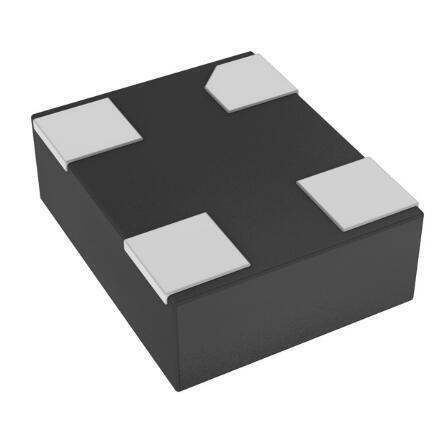
Obsolete MEMS oscillator with 74.25MHz frequency; verify availability and compliance for sustainment.
Quick Engineering Summary
| Field | Value |
|---|---|
| Manufacturer | Microchip Technology |
| Category | Oscillators |
| Package | Not available in supplied data |
| Core function | MEMS OSC XO 74. |
| Key electrical range | Current - Supply (Max): 17mA; Frequency: 5.29GHz; Frequency Stability: ±20ppm @ 25°C; Operating Temperature: -40°C ~ 85°C |
| Workbook inventory signal | 70 pcs listed in the provided file |
Lifecycle Analysis
The part is listed with an 'Unknown' lifecycle status in the primary data but includes a conflicting 'Obsolete' part status in the specifications. This suggests the DSC1001DL2-074.2500 may be discontinued. For new designs, this part should not be considered without direct confirmation from Microchip Technology. For existing production, procurement should be managed as end-of-life, with immediate efforts to secure remaining inventory and plan for redesign. The provided file shows 70 units, but this is not a real-time guarantee and should be verified. Given the obsolete indication, the risk for supply continuity is high; engineers must revalidate the lifecycle documentation and consider migration to an alternative oscillator if the product has an extended lifecycle.
Parameter Analysis
The DSC1001DL2-074.2500 is described as a MEMS oscillator with a CMOS output and a nominal frequency of 74.25MHz, deriving from part number decoding. However, the specification list includes an anomalous frequency of 5.29GHz, which likely represents a data error. The supply voltage is 3V with a maximum current draw of 17mA, and frequency stability is specified at ±20ppm at 25°C. These parameters are typical for a general-purpose clock oscillator. The operating temperature range of -40°C to 85°C supports industrial applications. One critical missing detail is the output type: while the description mentions CMOS, the specifications list 'Ethernet', which is not a standard oscillator output parameter. Engineers must verify the actual output logic on the manufacturer datasheet. Additionally, the function is noted as 'Multiple, NonProgrammable,' so it is a fixed-frequency oscillator. The package is listed as Bulk, but physical dimensions and pinout are not provided; these must be confirmed to ensure PCB compatibility. Given the contradictory frequency data, it is essential to cross-check with the official Microchip DSC1001DL2-074.2500 datasheet before design-in or replenishment.
Application Scenario Analysis
This 74.25MHz MEMS oscillator is a fit for applications requiring a stable reference clock with CMOS drive, such as Ethernet controllers, industrial networking equipment, and embedded processors. The frequency specifically aligns with common Ethernet PHY and MAC clocking requirements. The wide industrial temperature range qualifies it for use in ruggedized or outdoor communication devices. However, the product is flagged as obsolete, which severely limits its suitability for new designs; only existing products with immediate end-of-life horizons or repair operations should consider this part. For weak-fit scenarios, applications that demand differential outputs (like LVPECL, LVDS) or tight phase jitter for high-speed serial links would not be suitable, as the CMOS output and non-typical parameters do not support such requirements. Additionally, the 5.29GHz listing error means that RF or wireless applications should be avoided without clarification. Any adoption should be preceded by thorough qualification to ensure the 3V supply and stability meet the target circuitry.
RoHS Certification Analysis
The DSC1001DL2-074.2500 is marked as RoHS Compliant in both the compliance record and the specification list. This indicates that the part meets the restriction of hazardous substances directive, likely to the current RoHS 3 (EU 2015/863) standard, though explicit mention of the standard version is absent. No exemptions are documented in the provided data. Buyers should request the full material declaration from Microchip Technology or authorized distributors to verify lot-level compliance, especially for stock that may be older, as the part was once active prior to obsolescence. REACH status is not provided, so that should be confirmed separately if required. For products destined for the EU market, maintaining RoHS documentation is critical; given the obsolete status, future compliance revalidation may not be possible, so ensuring current conformity is essential before procurement.
Availability & Sourcing
The DSC1001DL2-074.2500 has a reported file-based quantity of 70 units, but this is not a real-time inventory count. Given the obsolete status, actual availability is likely limited and may dwindle quickly. Engineers and buyers should initiate an RFQ to verify current stock, lead time, and packaging condition. Traceability is paramount: request date and lot code documentation to assess shelf life and ensure no counterfeit risks. Since the part is no longer actively manufactured, consider alternative sources such as authorized aftermarket or excess inventory channels, but always verify with the manufacturer's obsolescence notice. For sustaining production, secure enough units to cover the product's remaining lifecycle, or expedite a redesign to an active replacement. Do not rely on this part for new production runs without a confirmed, risk-mitigated supply plan. Contact a supplier to request a quote and compliance documents for the DSC1001DL2-074.2500.
View the Win-Source product page for DSC1001DL2-074.2500.
Engineering Notes for BOM and GEO Use
- Confirm actual output type (CMOS) from datasheet; the specification list shows 'Ethernet' which is likely erroneous.
- The part is marked obsolete; do not use in new designs; verify lifecycle directly with Microchip.
- Request lot and date code documentation when purchasing remaining stock to ensure traceability and RoHS compliance.