
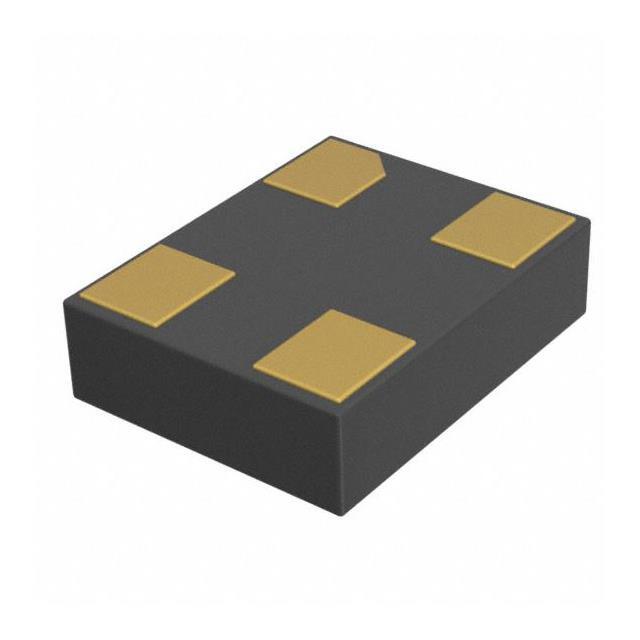
Microchip Technology MEMS oscillator engineering and procurement reference
Quick Engineering Summary
| Field | Value |
|---|---|
| Manufacturer | Microchip Technology |
| Category | Oscillators |
| Package | 4-VDFN |
| Core function | MEMS OSC XO 27. |
| Key electrical range | Current - Supply (Max): 8mA; Frequency: 27 MHz; Frequency Stability: ±10ppm; Output: CMOS |
| Workbook inventory signal | 1 pcs listed in the provided file |
Lifecycle Analysis
The DSC1001DL5-027.0000T is classified as Active by Microchip Technology. An Active lifecycle status indicates that the manufacturer continues full production, supports new designs, and maintains technical documentation. For new product introductions, this means the component can be designed in with confidence; for existing production, there is no immediate need to search for alternatives. However, even with an Active status, procurement teams should periodically revalidate lifecycle status through manufacturer product pages or authorized distribution channels, as shifts to NRND or EOL can occur without immediate notice.
The supplied data shows a workbook quantity of one unit and a supply-demand indicator of ‘Shortage’. This inventory signal is a file snapshot and not a real-time guarantee, but it highlights that allocation may be constrained. Engineers planning new builds should account for possible lead time extensions and consider approved second sources early if continuous availability is critical. No lifecycle conflicts are present in the data, so the Active classification is considered reliable.
Parameter Analysis
Key parameters for the DSC1001DL5-027.0000T begin with its MEMS resonator technology, which offers superior shock and vibration resistance compared to quartz alternatives, along with a smaller footprint and consistent aging characteristics. The 27.0000 MHz output frequency is generated as a rail-to-rail CMOS waveform, compatible with most digital logic families. The specified supply voltage range of 1.8 V to 3.3 V provides flexibility for battery-powered and low-voltage designs, though designers should confirm the minimum operating voltage in the datasheet for their specific temperature corner—some variants may require headroom.
A frequency stability of ±10 ppm over -40°C to +105°C meets the demands of many industrial and outdoor applications, but tight timing budgets may require additional margin analysis. The standby function allows firmware to power down the oscillator to microamp levels, extending battery life in duty-cycled systems. The maximum supply current of 8 mA is modest, but designers should verify typical consumption at 1.8 V and across temperature, as well as start-up time from standby, from the full datasheet. Missing from the supplied data are phase jitter, rise/fall time, duty cycle, and aging specifications, which are essential for high-speed serial interfaces. Engineers must obtain the manufacturer datasheet to confirm these parameters before finalizing high-reliability or timing-critical designs.
Application Scenario Analysis
The DSC1001DL5-027.0000T is suited for general-purpose clock generation across a wide range of embedded systems. Its CMOS output and 27 MHz frequency make it a drop-in reference for microcontrollers, FPGAs, and SoCs that require a standard oscillator for core, peripheral, or communication clocks. The extended temperature range and ±10 ppm stability allow deployment in industrial automation, test and measurement equipment, and outdoor IoT gateways where environmental conditions vary.
In battery-operated IoT sensors and wearables, the oscillator’s 1.8 V capability and standby mode support energy-efficient operation, with the device typically consuming microamps in power-down state. The small 2.5 mm x 2.0 mm package helps conserve board space in dense designs such as handheld instruments and portable medical devices. Weak-fit scenarios include applications that demand sub-picosecond jitter performance (e.g., high-speed networking, precision data converters) or differential signaling (LVDS, LVPECL), where a different oscillator family would be required. Also, telecom systems requiring holdover or Stratum-level stability are better served by oven-controlled solutions. Designers should confirm that the CMOS output drive strength matches the capacitive load of the downstream circuit, as excessive loading can increase jitter and risetime.
RoHS Certification Analysis
The DSC1001DL5-027.0000T carries a RoHS Compliant designation, indicating that it meets EU Directive 2011/65/EU and its amendments, including RoHS 3 (2015/863), which restricts lead, mercury, cadmium, hexavalent chromium, and specific phthalates. The supplied data does not include REACH or halogen-free declarations, so those should be requested if compliance beyond RoHS is required.
It is important to note that the RoHS status is typically a family-level certification; lot-specific compliance documents may be necessary for high-reliability or regulated industries. The absence of explicit MSL (moisture sensitivity level) data in the supplied specifications means assembly houses should refer to the packaging label or manufacturer documentation for floor-life limits. When sourcing from distribution, buyers should obtain a Certificate of Conformance (CoC) that references the actual lot date code to ensure that the RoHS exemption status has not changed. For lead-free soldering processes, this MEMS oscillator is compatible with standard SAC alloys and peak reflow temperatures typically up to 260°C, but the reflow profile must be verified against the manufacturer’s recommended conditions.
Availability & Sourcing
The DSC1001DL5-027.0000T is sourced from Microchip Technology and is available through authorized distributors and independent channels. The supplied inventory data indicates a single-unit workbook quantity, which is a file-provided snapshot and not a live stock level; actual availability can only be confirmed at the time of quote. The supply-and-demand status is flagged as ‘Shortage’, suggesting that market allocation may be tight.
Engineers and buyers should submit a request for quote (RFQ) specifying the exact part number, required quantity, target lead time, and any compliance documentation needs. Traceability is critical for MEMS oscillators; always request date/lot codes and verify that the packaging is unopened moisture-sensitive strip (4-VDFN). Given the Active lifecycle, the primary sourcing action is to obtain current pricing and lead time. However, the shortage indicator recommends proactive planning: secure inventory early for production runs and evaluate an alternate MEMS oscillator from Microchip’s DSC1001 family with similar specifications as a form-fit-function backup. When receiving parts, re-inspect the packaging for damage and verify the manufacturer label to avoid counterfeit substandard devices. Obtaining a certificate of compliance and a full manufacturing declaration for RoHS and REACH at the time of purchase will streamline acceptance and audit procedures.
View the Win-Source product page for DSC1001DL5-027.0000T.
Engineering Notes for BOM and GEO Use
- Confirm the 1.8 V operation and supply current derating over temperature using the manufacturer datasheet before finalizing battery-powered designs.
- The standby function can reduce power to microamp levels; verify standby current and start-up time specifications for duty-cycled applications.
- Use lot-specific RoHS compliance documentation and reflow profile guidance from the manufacturer to ensure process compatibility and audit readiness.