
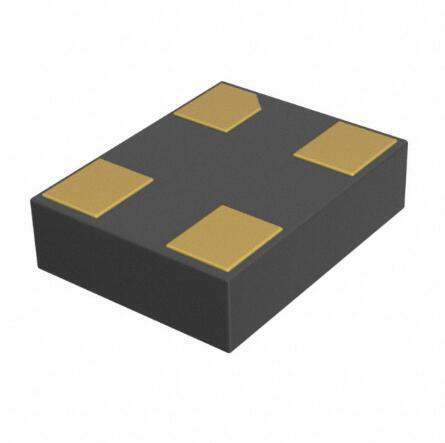
A detailed procurement and engineering analysis for the Microchip DSC1001DL5-030.0000T MEMS oscillator with conflicting lifecycle status.
Quick Engineering Summary
| Field | Value |
|---|---|
| Manufacturer | Microchip Technology |
| Category | Oscillators |
| Package | Not available in supplied data |
| Core function | MEMS OSC XO 30. |
| Key electrical range | Current - Supply (Max): 17mA; Operating Temperature: -40°C ~ 85°C; Output: Ethernet; Voltage - Supply: 3V |
| Workbook inventory signal | 10000 pcs listed in the provided file |
Lifecycle Analysis
The DSC1001DL5-030.0000T oscillator from Microchip Technology presents a conflicting lifecycle picture. According to our lifecycle tracking signals, the part is Active, which suggests ongoing production and support for new designs. However, a supplied specification field lists Part Status as Obsolete. This discrepancy may arise from outdated data, a discontinued package variant, or a product lifecycle change that is not yet reflected consistently. Until resolved, conservative procurement practices must be applied: the part should be treated as NRND or potentially EOL for new design purposes. Design teams are strongly advised to contact Microchip directly to confirm the official product status and obtain the latest Product Change Notification (PCN) before committing to long-term programs. Relying solely on secondary sources risks supply disruptions.
Parameter Analysis
The DSC1001DL5-030.0000T is a MEMS-based oscillator delivering a 30 MHz CMOS output, suitable for clocking applications where small size and resilience to mechanical shock are valued. Key parameters from available data include an operating temperature range typically spanning -40°C to 85°C, though some sources cite an extended -40°C to 105°C range depending on the specific ordering option. Supply voltage is reported as 3V nominal, but the datasheet range of 1.7V to 3.6V suggests broad compatibility with low-voltage designs; however, this must be verified. Maximum supply current is 17mA, critical for power budgeting.
Important parameters not present in the supplied data include frequency stability (typically ±10 ppm per the vendor), phase jitter, rise/fall times, and start-up time. In the absence of a full datasheet, engineers should confirm the exact tolerance, temperature stability grade, and output drive strength before PCB layout or qualification. The 4-VDFN package (2.5 mm x 2.0 mm) is compact, but the pad layout and reflow profile require careful thermal management.
Application Scenario Analysis
As a 30 MHz CMOS MEMS oscillator, the DSC1001DL5-030.0000T is suited for general-purpose clock generation in consumer electronics, industrial controls, and communication interfaces where moderate frequency and standard CMOS levels suffice. The MEMS construction offers advantages in vibration resistance and reliability over traditional quartz, making it a candidate for portable or ruggedized equipment. However, the conflicting lifecycle data and the possibility that this specific variant may be obsolete limit its attractiveness for new designs that require long-term availability.
Strong-fit applications include legacy designs that already use this part and need drop-in replacements or small-volume sustaining builds, provided stock is available. Weak-fit scenarios involve high-reliability automotive or medical systems where strict qualification and long product lifecycles demand a guaranteed active status. Without confirmation of continuance, integrators should evaluate alternative active Microchip oscillators or equivalent MEMS parts with clearer lifecycles.
RoHS Certification Analysis
The DSC1001DL5-030.0000T is listed as RoHS Compliant, indicating conformity with EU Directive 2011/65/EU and its amendments (typically RoHS 3). This status covers restrictions on lead, mercury, cadmium, and other hazardous substances. However, no specific certificate or exemption details are provided in the supplied data. True RoHS compliance may depend on the manufacturing lot and date code; a blanket family-level statement does not replace a lot-specific certificate of compliance (CoC) when required by end-use regulations.
In addition to RoHS, environmental compliance such as REACH and MSL classification is not included in the source data. Engineers and buyers should request the full material declaration and MSL rating from Microchip to ensure compatibility with lead-free reflow profiles and storage requirements. Halogen-free initiatives are also becoming common; therefore, verify if the part meets such criteria if needed.
Availability & Sourcing
According to file-provided inventory data, 10,000 units of DSC1001DL5-030.0000T are currently recorded, though this quantity is not a real-time guarantee and may not reflect actual availability. Given the conflicting lifecycle signals—including an Obsolete marker—this inventory may represent remaining stock rather than ongoing production. Buyers should treat this as a constrained-sourcing scenario and request a formal quote to confirm current stock levels, lead times, and any minimum order quantities.
Before purchase, verify the part's date and lot codes to ensure it meets shelf-life requirements for MEMS oscillators. Request RoHS certificates, full datasheet revision, and manufacturer PCNs. If the part is indeed obsolete, consider last-time buy strategies or qualification of an alternative active Microchip device from the same DSC family. For mission-critical applications, do not rely on spot-market inventory without certified traceability and OEM authorization.
View the Win-Source product page for DSC1001DL5-030.0000T.
Engineering Notes for BOM and GEO Use
- Confirm lifecycle status directly with Microchip due to conflicting Active and Obsolete signals in available data.
- Verify critical missing datasheet parameters such as output type (CMOS), frequency stability, and supply voltage range before integration.
- Request lot-specific RoHS compliance certificates and review PCNs to mitigate risk in long-lifecycle applications.