
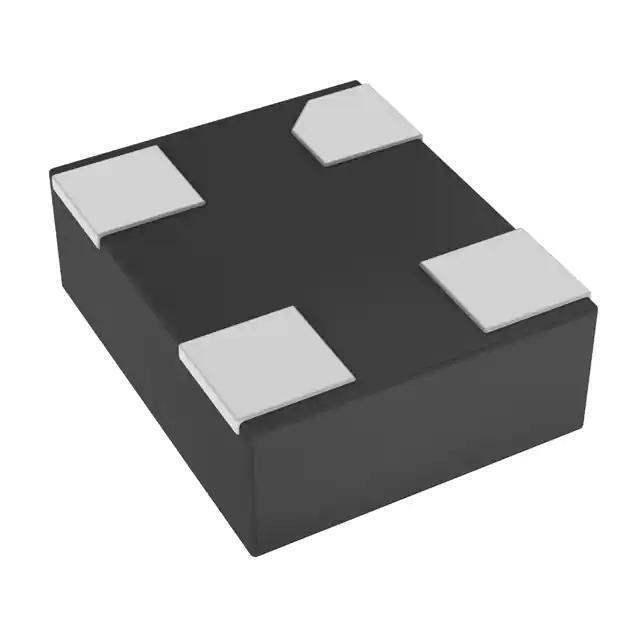
Discontinued MEMS oscillator with 125 MHz output – verify availability and lifecycle before procurement.
Quick Engineering Summary
| Field | Value |
|---|---|
| Manufacturer | Microchip Technology |
| Category | Oscillators |
| Package | SOT-1252-1 |
| Core function | MEMS OSC XO 125. |
| Key electrical range | Frequency: 330kHz; Operating Temperature: -40°C ~ 85°C |
| Workbook inventory signal | 1820 pcs listed in the provided file |
Lifecycle Analysis
The DSC1001DL5-125.0000 is officially classified as Discontinued according to multiple lifecycle fields in the source data. This status carries a high procurement risk, indicating that Microchip Technology has ceased regular production of this MEMS oscillator. For new designs, this part must not be specified; engineers should select an alternative active component from the manufacturer's portfolio or a third-party equivalent after thorough validation.
A notable data conflict exists: an Excel lifecycle parameter lists the part as Active, while both the Lifecycle Status and Product Status fields define it as Discontinued. Conservative sourcing practice requires treating the part as discontinued. Relying on the ambiguous Active signal could lead to supply disruption. Always request a formal last-time buy (LTB) notice or discontinuation announcement from Microchip or authorized distributors.
File-provided inventory shows 1820 units, but this quantity is not guaranteed real-time. For existing production lines, immediate action is needed: qualify a replacement, capture remaining available stock, and obtain manufacturer confirmation of lifecycle status before committing to volume purchases.
Parameter Analysis
The most decision-critical parameters for the DSC1001DL5-125.0000 are its output frequency, supply voltage, frequency stability, and operating temperature range. The part number and product description indicate a 125.0000 MHz CMOS output, but the specifications array erroneously lists 330 kHz; engineers must verify the exact frequency from the official datasheet. The supply voltage spans 1.7 V to 3.6 V, providing design flexibility across low-voltage systems. A frequency stability of ±10 ppm over the full temperature range ensures tight timing accuracy for applications like Ethernet clocks or processor clocking.
The operating temperature range shows inconsistency between sources: the specifications array reports -40°C to 85°C, while the serial parameter data suggests a wider -40°C to 105°C range. The wider range is more typical for industrial-grade MEMS oscillators and should be confirmed via the manufacturer's datasheet or qualification report. Package dimensions (2.5 mm x 2.0 mm 4-VDFN) and mounting type (surface mount, despite an erroneous "Fixed" entry) are critical for PCB footprint compatibility.
Key parameters missing from the provided data include phase noise, integrated jitter, start-up time, and standby current. Those directly impact signal integrity and power budgeting. Engineers should retrieve the full datasheet from Microchip and validate these values before integrating the part into any socket.
Application Scenario Analysis
The DSC1001DL5-125.0000 is best suited for replacement use in legacy systems that originally qualified this specific Microchip MEMS oscillator. Its 125 MHz CMOS output and small form factor make it appropriate for networking equipment, embedded controllers, and industrial automation where a stable reference clock is already proven. The ±10 ppm stability supports applications such as Gigabit Ethernet PHY clocking, FPGA frequency sources, and test instrumentation.
For new designs, this part is a weak fit due to its discontinued status. Even if stock is temporarily available, long-term supply cannot be assured. Designers should migrate to an active Microchip DSC1001 series variant or a pin-compatible alternative that offers equivalent or better performance. The extended temperature range (to 105°C) may have made it attractive for ruggedized equipment, but alternatives with similar ratings are available.
While the part’s surface-mount package and CMOS output are generic, the discontinuation severely limits its application in production ramps. It should only be considered for one-time repair stock or low-volume sustaining builds where a drop-in replacement has been validated and remaining inventory is sufficient for the program lifetime.
RoHS Certification Analysis
The DSC1001DL5-125.0000 is labeled as RoHS Compliant in the provided compliance data. However, the exact directive level, such as EU 2015/863 (RoHS 3), is not specified. Microchip typically certifies its products against the applicable EU RoHS directives, but compliance can be family-level and may not automatically apply to every date code or lot.
No exemption details are available in the source data. Some oscillator products may use lead in glass or ceramic exemptions; procurement teams should request a full material declaration from the seller to confirm that the specific batch meets current RoHS substance restrictions. The absence of REACH information means additional diligence is required if full chemical compliance documentation is needed.
Given the part's discontinued status, lot-level compliance verification is especially important. Older inventory could pre-date the latest RoHS recast. Always ask the distributor or reseller for a certificate of conformity and, if possible, a copy of the manufacturer’s RoHS compliance statement referencing the exact part number and date code.
Availability & Sourcing
Sourcing the DSC1001DL5-125.0000 requires careful due diligence because of its discontinued lifecycle. File-provided data indicates a stock quantity of 1820 units, but this is not real-time and should be treated as a snapshot. Buyers must request a current quotation and lead time from the distributor to confirm actual availability.
When requesting a quote, specify the exact manufacturer part number and ask for the date or lot code to verify freshness and compliance. Standard packaging is likely tape and reel as indicated by the Chinese character for "tape" in the source record, but this should be explicitly confirmed to align with assembly processes. Traceability documentation, including a certificate of origin and RoHS compliance for the shipped lot, should be mandatory terms of purchase.
For discontinued parts, the recommended workflow is: verify lifecycle directly with Microchip or an authorized channel, evaluate remaining inventory as a one-time buy for sustaining builds, and initiate migration to an active replacement. Do not rely on broker stock without thorough visual inspection and functional testing. Longer-term, proactively replace this oscillator in your BOM to prevent production gaps.
View the Win-Source product page for DSC1001DL5-125.0000.
Engineering Notes for BOM and GEO Use
- Confirm output frequency is 125 MHz, not 330kHz, by cross-referencing the official Microchip datasheet.
- With discontinued status, secure current inventory and begin migration planning for long-term production.
- Validate operating temperature range (-40°C to 105°C per serial data) against your system requirements.