
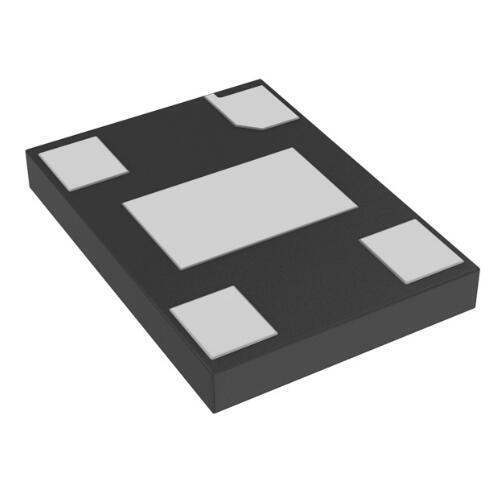
Microchip Technology – 50 MHz CMOS MEMS Oscillator in SMD Package
Quick Engineering Summary
| Field | Value |
|---|---|
| Manufacturer | Microchip Technology |
| Category | Oscillators |
| Package | 8-SMD, No Lead |
| Core function | MEMS OSC XO 50. |
| Key electrical range | Frequency Stability: ±20ppm @ 25°C; Operating Temperature: -40°C ~ 85°C; Voltage - Supply: 3.3V |
| Workbook inventory signal | 1 pcs listed in the provided file |
Lifecycle Analysis
The DSC1003AE1-050.0000T is currently listed as Active by Microchip Technology. An active lifecycle status indicates the part is in full production, supported for new designs, and generally has stable availability and lead times. For new projects, this status provides confidence that the oscillator can be designed in without immediate risk of obsolescence. However, it is always prudent to monitor manufacturer product change notices (PCNs) and verify lifecycle status directly with Microchip or authorized distributors before high‑volume commitment.
The supplied signals align, with no conflicting end‑of‑life or NRND indicators. A file‑provided inventory quantity of one unit is noted, which should not be interpreted as current market stock. Procurement teams should obtain real‑time availability through RFQ and align order volumes with validated lead times. For sustaining production, ensure that the supply base can support forecasted quantities over the product’s intended lifespan.
Parameter Analysis
The DSC1003AE1-050.0000T is specified as a 50.0000 MHz MEMS oscillator with CMOS output. Among the key parameters provided, frequency stability is quoted as ±20 ppm at 25 °C in one source, while another indicates ±50 ppm. Such a discrepancy can affect timing margins in high‑speed digital circuits, making it essential to confirm the actual stability grade from the official datasheet or product markings. Supply voltage is listed as 3.3 V in the main specifications, but additional data suggests an operating range of 1.7 V to 3.6 V, which would allow multi‑rail flexibility if confirmed.
The operating temperature range also divides between -40 °C to 85 °C and -20 °C to 70 °C. For industrial or outdoor applications, the wider range is critical for reliable startup and clock accuracy. Package description conflicts exist: “8‑SMD, No Lead” versus “4‑VDFN (7x5)”. The dimensions given (0.250″ × 1.250″) are inconsistent with a 7 × 5 mm package, so the dimensional drawing should be verified. The maximum supply current of 10.5 mA is modest, supporting low‑power designs. Before layout, confirm the correct footprint and pin‑out to avoid board spins.
Application Scenario Analysis
This 50 MHz MEMS oscillator is well‑suited for providing a stable clock to microcontrollers, FPGAs, and Ethernet PHYs in consumer electronics, IoT gateways, and industrial automation modules. The small SMD footprint and MEMS construction offer advantages in vibration‑prone environments compared to quartz crystals. Its low current drain fits battery‑powered designs that still require a precise timing reference.
Weak‑fit scenarios include telecommunications infrastructure or precision instrumentation where sub‑picosecond jitter or tight all‑temperature stability (e.g., ±10 ppm or better) is mandatory. Without confirmed phase‑noise or jitter data, the DSC1003AE1-050.0000T should not be assumed for high‑reliability aerospace or medical applications without additional qualification. Designers should also check the output drive strength and load capability against their specific chipset input requirements.
RoHS Certification Analysis
The DSC1003AE1-050.0000T is declared as RoHS Compliant. This generally indicates conformance to the EU Directive 2011/65/EU and its amendments, restricting hazardous substances such as lead, mercury, and cadmium. However, a single RoHS label may reflect either a product‑family declaration or a lot‑specific certificate. For compliance auditing, it is advisable to obtain a full material declaration and, if needed, a certificate of conformity for the actual batch received.
No REACH information is provided in the supplied data. REACH (Registration, Evaluation, Authorisation and Restriction of Chemicals) is a separate regulation, and RoHS compliance does not automatically satisfy REACH obligations. If your design must meet both standards, explicitly request REACH‑SVHC declarations from your supplier. Additionally, soldering process considerations such as MSL rating and peak reflow temperature are not furnished; these should be confirmed to ensure compatibility with your assembly process.
Availability & Sourcing
The supplied workbook file indicates a quantity of 1 unit for the DSC1003AE1-050.0000T, which must be treated as a file‑dated figure and not a live inventory count. Because the part is active, ordering through authorized Microchip distribution or a reputable broker typically yields standard lead times. Buyers should initiate a request for quote (RFQ) to obtain current pricing (though no prices are stated here), minimum order quantities, and confirmed delivery schedules.
When sourcing this oscillator, request documentation that verifies lifecycle status, original manufacturer traceability, and compliance certificates (RoHS, REACH). Date and lot codes should be traceable to prevent counterfeit or mixed‑stock issues. For high‑volume production, consider negotiating a buffer stock agreement or a last‑time‑buy clause should the lifecycle status change in the future. Always perform incoming inspection to verify physical dimensions and markings against the official datasheet.
View the Win-Source product page for DSC1003AE1-050.0000T.
Engineering Notes for BOM and GEO Use
- Cross‑check the package outline (8‑SMD vs. 4‑VDFN) and frequency stability (±20 ppm vs. ±50 ppm) with the latest Microchip datasheet.
- Confirm the operating temperature range that applies to your specific grade: -40 °C to +85 °C or -20 °C to +70 °C.
- For compliance‑critical designs, request lot‑specific RoHS, REACH, and full material declarations from the supplier.