
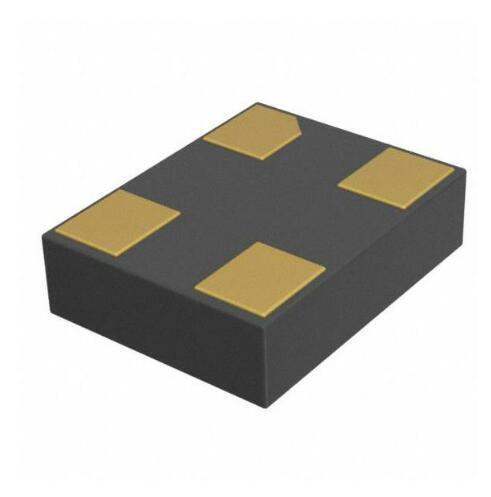
MEMS oscillator with 50MHz CMOS output; conflicting lifecycle signals require verification before new designs.
Quick Engineering Summary
| Field | Value |
|---|---|
| Manufacturer | Microchip Technology |
| Category | Oscillators |
| Package | Not available in supplied data |
| Core function | MEMS OSC XO 50. |
| Key electrical range | Current - Supply (Max): 17mA; Frequency: 5kHz; Operating Temperature: -40°C ~ 85°C; Voltage - Supply: 3V |
| Workbook inventory signal | 1000 pcs listed in the provided file |
Lifecycle Analysis
The DSC1003CI1-050.0000 from Microchip Technology carries a conflicting lifecycle profile. The provided lifecycle status is Active, which would ordinarily indicate that the part is in full production and suitable for new designs. However, the ‘Part Status’ field in the specification data lists the part as Obsolete, creating a significant inconsistency.
This discrepancy suggests that some data sources may consider the part discontinued, while others still show it as active. For new designs, this conflict elevates procurement risk and warrants a conservative approach. Engineers should not assume the part is fully active without direct confirmation from Microchip or an authorized distributor. File-provided inventory of 1000 units should be treated as a snapshot that may represent remaining stock rather than ongoing manufacturing.
To mitigate risk, verify the official Microchip product page for lifecycle notices, product change notifications (PCNs), and last-time-buy (LTB) dates. If the part is indeed obsolete, begin evaluating pin-compatible alternatives or next-generation MEMS oscillators from Microchip or other suppliers immediately.
Parameter Analysis
The DSC1003CI1-050.0000 is described as a MEMS-based XO (standard oscillator) with a CMOS output and a nominal frequency of 50.0000 MHz. However, the supplied specification table lists the frequency as 5kHz, which is almost certainly a data error. The part number and product description both indicate 50 MHz, so designers should verify this in the official Microchip datasheet before relying on the lower value.
Supply current maximum is alternatively listed as 17mA and 10.5mA across different sources. The higher value (17mA) should be used for power budget estimates until the correct value is confirmed. Supply voltage is shown as 3V, but the detailed parametric string indicates a range of 1.7V to 3.6V, which is typical for low-power MEMS oscillators. Always design to the full operating range once confirmed. The operating temperature range of -40°C to 85°C is suitable for industrial use, while the frequency stability is specified at ±50ppm in one source—critical for timing-sensitive applications.
Missing parameters that must be verified include startup time, phase jitter, aging characteristics, and output drive strength. Package dimensions conflict: one source shows a cylindrical package (0.250" Dia x 1.250" L), while another references the standard 4-VDFN (3.2x2.5mm) SMD package. This likely points to the intended SMD form factor, but a footprint check against the datasheet is essential to avoid layout errors.
Application Scenario Analysis
The DSC1003CI1-050.0000 MEMS oscillator targets applications requiring a stable 50 MHz clock source in a compact, surface-mount package. Likely strong-fit scenarios include consumer electronics, IoT devices, and industrial control systems where CMOS‑compatible clock signals are needed. The wide temperature range and low power potential (if the 1.7–3.6V range is confirmed) make it suitable for battery-powered or thermally challenging environments.
Weaker-fit scenarios involve high-reliability sectors such as aerospace, medical, or automotive unless the lifecycle conflict is resolved and the part is proven active. The uncertainty over frequency accuracy and the missing jitter/phase-noise data could disqualify it from high-speed serial communication or precision instrumentation without further validation.
For procurement teams, the part’s SMD package supports automated assembly, but the conflicting mechanical dimensions mean that a successful board integration requires confirmation of the actual 4‑VDFN footprint. Overall, this oscillator is a candidate for general‑purpose clock generation, but the design‑in process must start with a thorough datasheet review to resolve parametric and lifecycle ambiguities.
RoHS Certification Analysis
The DSC1003CI1-050.0000 is marked as RoHS Compliant in the supplied data. This designation implies that the part meets the restrictions on lead and other hazardous substances as required by the European Union's Restriction of Hazardous Substances directive. However, no explicit reference to a specific RoHS version (e.g., RoHS 3, EU 2015/863) or an accompanying certificate is provided.
While a RoHS Compliant label suggests general conformity, it is prudent to request a manufacturer’s declaration or laboratory test report to verify compliance with current RoHS standards. This is particularly important when the part is sourced through independent distribution, as family‑level certificates may not cover every production lot. Additionally, REACH compliance is not mentioned and should be assessed separately for EU market access.
Lead‑free soldering compatibility is implied by RoHS status, but the absence of a moisture sensitivity level (MSL) rating means that handling and baking procedures should be based on the datasheet or IPC/JEDEC guidelines for the package variant. For full traceability, request documentation with each shipment.
Availability & Sourcing
Sourcing the DSC1003CI1-050.0000 requires caution due to its conflicting lifecycle signals. While the file indicates a stock quantity of 1000 units, this is a static snapshot and should not be assumed to reflect real‑time availability. The part may be in limited distribution, and the obsolete status warning suggests that future replenishment could be uncertain.
To proceed, submit an RFQ through an authorized distributor or supplier such as Win‑Source. Explicitly request confirmation of the current manufacturer lifecycle status, production lot date codes, and packaging format. The packaging data is inconsistent: Bulk versus Tape‑and‑Reel are mentioned across sources, so specifying the required packing type is essential for your assembly process.
Given the medium risk level, buyers should also ask for a RoHS compliance certificate and, if necessary, a REACH statement. If the part is confirmed obsolete, secure enough inventory for your production lifetime and simultaneously initiate a replacement evaluation. Do not use this part in new designs without validated active status from Microchip Technology.
View the Win-Source product page for DSC1003CI1-050.0000.
Engineering Notes for BOM and GEO Use
- Verify the exact frequency: supplier data shows 5kHz, but part number indicates 50.0000MHz; confirm against Microchip datasheet.
- Check package dimensions: the listed 0.250" Dia x 1.250" L conflicts with the expected 4-VDFN (3.2x2.5mm) SMD package; ensure footprint compatibility.
- Confirm supply voltage range: some sources cite 3V nominal, while the datasheet likely supports 1.7V to 3.6V; validate for your rail.