
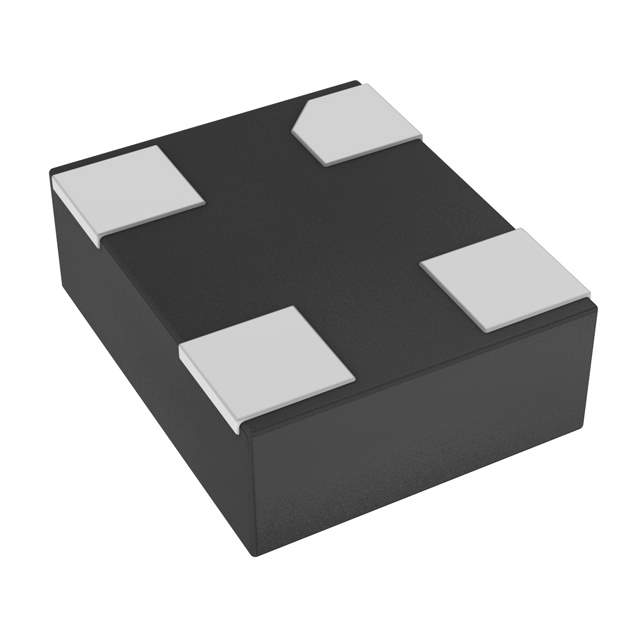
MEMS Oscillator, 26 MHz, CMOS, 4‑SMD, 3.2x2.5 mm, 1.8 V, ±50 ppm, EOL
Quick Engineering Summary
| Field | Value |
|---|---|
| Manufacturer | Microchip Technology |
| Category | Oscillators |
| Package | 4-SMD, No Lead |
| Core function | MEMS OSC XO 26. |
| Key electrical range | Current - Supply (Disable) (Maximum): 1μA; Frequency: 26MHz; Frequency Stability: ±50ppm; Maximum Supply Current: 3mA (Typ) |
| Workbook inventory signal | 1 pcs listed in the provided file |
Lifecycle Analysis
The DSC1018CE1-026.0000T from Microchip Technology is confirmed end-of-life (EOL), with an estimated EOL date of 2020. All available lifecycle signals align on this status, indicating no conflicting information. For engineers and buyers, this means the part is not recommended for new designs and should only be considered for sustaining existing production where alternatives are not yet qualified.
Because the device is no longer actively manufactured, procurement must follow a last-time-buy process if available. Even for maintenance, immediate verification against the manufacturer’s official discontinuation notice (PCN/EOL letter) is critical. The provided inventory count of 1 unit is a file snapshot and not a live inventory indicator; actual stock levels must be confirmed with the supplier. Without a guarantee of remaining factory supply, planning should include a migration path to a replacement MEMS oscillator or a quartz equivalent as a contingency.
Parameter Analysis
The DSC1018CE1-026.0000T is a MEMS-based XO delivering a 26 MHz CMOS output. Key parameters include a 1.8 V operating supply (typical) with a maximum supply current of only 3 mA (typical), and a disable current of 1 µA—important for power-sensitive designs. The ±50 ppm frequency stability over -20°C to 70°C is adequate for most commercial and many industrial applications but must be de-rated if clocking precision ADCs or high-speed interfaces.
Packaged in a standard 4-SMD no-lead footprint (3.20 x 2.50 mm, 0.90 mm height), it fits compact layouts. The provided data lacks critical timing parameters such as rise/fall time, duty cycle, start-up time, integrated phase jitter, and aging. These must be extracted from the original Microchip DSC1018 datasheet before incorporating the part into a design, especially for any remaining production qualification. Additionally, confirm that the standby function meets system power-down requirements and that the CMOS output drive strength matches your load capacitance.
Application Scenario Analysis
This 26 MHz MEMS oscillator is well-suited as a general-purpose clock source in consumer electronics, IoT edge nodes, and microcontroller-based systems where moderate stability and small size are priorities. The standby feature and low typical current consumption are advantages in battery-powered devices. The commercial temperature range (-20°C to 70°C) is sufficient for indoor or climate-controlled equipment.
However, its EOL status severely constrains new design wins. It is a weak fit for any application requiring cold-start reliability below -20°C, extended industrial temperature performance, or tight long-term stability (e.g., telecom or precision measurement). In applications demanding low jitter (such as Ethernet PHYs or high-speed serial links), the unspecified phase noise performance introduces risk; a quartz-based oscillator with documented jitter specifications would be a safer choice. For existing designs still using the DSC1018CE1-026.0000T, verify enclosure environmental conditions and consider a field-failure analysis before relying on remaining stock.
RoHS Certification Analysis
According to the source data, the DSC1018CE1-026.0000T is RoHS Compliant and is also marked as halogen-free compliant. This suggests it conforms to the substance restrictions of EU RoHS (likely 2015/863) without specific exemptions. No explicit statement regarding REACH compliance is included, but REACH registration is a separate regulatory requirement and does not substitute for RoHS.
For EOL components, the RoHS certification date should be revalidated against the lot or date code being purchased. Since manufacturing of this part ended around 2020, later lots are likely unaffected by any recent regulatory changes, but older stock might have been produced under earlier RoHS versions. Request material composition certificates or declarations when ordering to ensure compliance with current directives, especially if the end product is CE-marked or exported to the EU.
Availability & Sourcing
As an EOL part, the DSC1018CE1-026.0000T requires careful sourcing. The file indicates only 1 unit on hand, but this is not a guaranteed live inventory. For any quantity, request a quote to confirm current stock and lead times. The part is packaged on reel, which may enable volume purchasing if residual reel stock exists, but batch sizes will be limited.
Given the high threat of counterfeit open-market parts (the risk is noted as 65%), prioritize sourcing through authorized Microchip distributors or trusted partners with full traceability. Insist on date/lot code verification, re-testing documentation, and compliance certificates (RoHS, halogen-free). If the ordering opportunity is for a last-time buy, coordinate with the manufacturer to secure the required quantity in one transaction. For ongoing needs, immediately begin evaluating alternative oscillators—from Microchip’s DSC family or equivalent competitors—to avoid production gaps. The balance supply-demand status suggests moderate availability, but this should be treated as historical and not a forecast of future stock.
View the Win-Source product page for DSC1018CE1-026.0000T.
Engineering Notes for BOM and GEO Use
- EOL status requires immediate lifecycle verification and alternative sourcing for new designs.
- The ±50 ppm frequency stability suits commercial applications but may be marginal for tight-timing systems; verify jitter from the datasheet.
- Package dimensions (3.2×2.5 mm) and CMOS output simplify integration, but confirm full electrical specs like rise/fall time before qualification.