
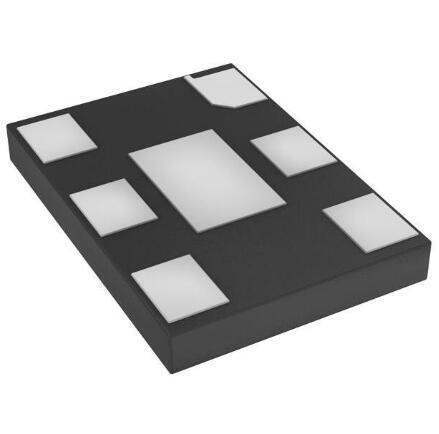
MEMS oscillator with 156.25 MHz output, but conflicting lifecycle data suggests potential obsolescence.
Quick Engineering Summary
| Field | Value |
|---|---|
| Manufacturer | Microchip Technology |
| Category | Oscillators |
| Package | 4-SMD, No Lead |
| Core function | MEMS OSC XO 156. |
| Key electrical range | Frequency: 5kHz; Frequency Stability: ±10ppm; Operating Temperature: -40°C ~ 85°C; Voltage - Supply: 3V |
| Workbook inventory signal | 825 pcs listed in the provided file |
Lifecycle Analysis
The DSC1101AI2-156.2500 from Microchip Technology shows conflicting lifecycle signals in the provided data. While the Lifecycle Status field indicates Active, the Part Status is explicitly listed as Obsolete. This discrepancy requires immediate attention: typically, an Obsolete part status means the manufacturer has discontinued production, even if some catalog systems have not fully updated. For engineers and buyers, this conflict introduces significant risk when considering the part for new designs or volume production. Without direct verification from Microchip, it is prudent to treat the DSC1101AI2-156.2500 as discontinued or at least subject to last-time-buy constraints.
For existing designs in sustaining production, procurement teams should immediately assess inventory coverage and initiate a migration plan. The file-provided workshop quantity of 825 units is not a guarantee of real-time availability and may represent remaining channel stock. Any sourcing effort must include confirmation of the official manufacturer lifecycle status, as well as validation of date and lot codes to ensure the parts are not from an out-of-date batch. Until Microchip clarifies the status, this oscillator should not be used in new projects without risk acceptance and a verified second source.
Parameter Analysis
The DSC1101AI2-156.2500 is a MEMS-based XO (standard oscillator) with a nominal output frequency of 156.2500 MHz, as indicated by both the part number and description. Note that the provided specification table lists a frequency of 5 kHz, which is a typographical error; the correct frequency is 156.25 MHz. The device utilizes a CMOS output, making it suitable for driving high-speed digital loads. Frequency stability is given as ±10 ppm in the current table, but additional records suggest ±25 ppm; engineers should verify the stability grade (likely ±25 ppm for the industrial temperature range) against the official Microchip datasheet.
Supply voltage is listed as 3 V in the summary, while the extended parameter set indicates an operating range of 2.25 V to 3.6 V. The wider range is typical for this family and must be confirmed when integrating the oscillator into a power supply scheme. The package is a 6-pin VDFN (7.0 mm x 5.0 mm) with no leads, supporting surface-mount assembly. Operating temperature spans -40°C to +85°C, meeting common industrial requirements. Missing from the provided data are critical parameters such as output enable/disable characteristics, rise/fall time, duty cycle, and current consumption at various frequencies and loads. These must be extracted from the official datasheet to validate signal integrity and power budgets before adoption.
Application Scenario Analysis
The DSC1101AI2-156.2500 targets high-frequency clock generation in applications demanding low jitter and stable reference signals. Its 156.25 MHz frequency aligns with common networking and telecom standards, including Ethernet (10G/25G/40G) and Fibre Channel, as well as FPGA reference clocks and SerDes timing. The CMOS output simplifies interfacing with a broad range of digital ICs, and the wide temperature range supports industrial and outdoor equipment.
However, the conflicting lifecycle signals severely restrict its applicability. New designs should avoid this part due to the Obsolete status; design teams must instead consider active alternatives from Microchip’s DSC1101/1121 series or competitive MEMS oscillators with guaranteed product longevity. The part may still serve in legacy system repairs or in small-scale production where remaining stock can be secured, but even there, availability risk is high. For evaluation boards or lab setups, the device can be used if samples are on hand, but any commitment to production requires a clear path to replacement.
RoHS Certification Analysis
The supplied data marks the DSC1101AI2-156.2500 as RoHS Compliant. No specific RoHS version is cited, though Microchip generally aligns with RoHS 3 (EU 2015/863). Without a certificate or detailed substance declaration, it is assumed the device meets the restriction of lead, mercury, cadmium, hexavalent chromium, PBBs, and PBDEs, as well as the four phthalates added in RoHS 3. The term 'compliant' usually applies at the family level; lot-specific variations can occur, especially for older batches or inventory sourced from non-franchised channels.
No explicit REACH, halogen-free, or MSL (moisture sensitivity level) data appears in the source information. Since the oscillator is a surface-mount VDFN package, moisture sensitivity is a relevant assembly concern; typically, such packages are MSL-1 or MSL-3, but confirmation from Microchip’s packing information is recommended. For compliance documentation during procurement, buyers should request the manufacturer’s RoHS certificate and a full material declaration to satisfy environmental regulations in their target markets.
Availability & Sourcing
Given the Part Status being Obsolete, availability of the DSC1101AI2-156.2500 is uncertain. The file-provided workshop quantity of 825 units is a snapshot that may not reflect current distributor stock. Engineers and buyers must verify real-time inventory through an RFQ to authorized sources. Standard sourcing workflow should include confirmation of factory lifecycle status, traceable date codes, and lot numbers to avoid counterfeit or outdated parts.
Because the part is likely discontinued, procurement should focus on securing enough stock for immediate repair or sustaining needs and concurrently identify a form-fit-function replacement. Authorized Microchip distributors or the manufacturer’s direct sales channel can provide last-time-buy notices or migration guidance. Packaging is noted as bulk; for production use, consider tape-and-reel options if available. Compliance documentation (RoHS certificate, MSL level) should be obtained with shipment. In all cases, treat the DSC1101AI2-156.2500 as end-of-life and plan accordingly.
View the Win-Source product page for DSC1101AI2-156.2500.
Engineering Notes for BOM and GEO Use
- Verify lifecycle directly with Microchip; conflicting Active/Obsolete signals demand clarification before any design-in or procurement commitment.
- Frequency is 156.25 MHz, not 5 kHz; cross-check datasheet for stability (typical ±25 ppm) and supply voltage range (2.25 V to 3.6 V).
- Purchase only through authorized channels with date/lot traceability, and request RoHS certification and MSL information for each lot.