
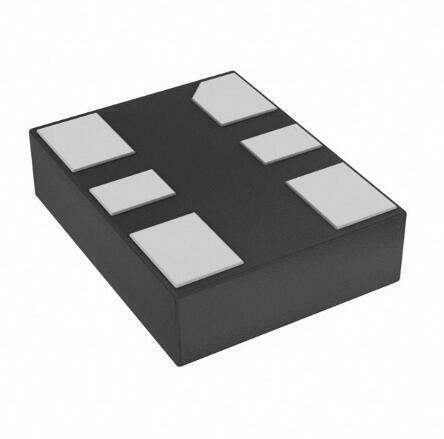
Key specs, lifecycle analysis, and procurement guidance for the DSC1102CI5-040.0000 40 MHz MEMS oscillator.
Quick Engineering Summary
| Field | Value |
|---|---|
| Manufacturer | Microchip Technology |
| Category | Oscillators |
| Package | 2920 (7351 Metric) |
| Core function | MEMS OSC XO 40. |
| Key electrical range | Frequency Stability: ±20ppm @ 25°C; Operating Temperature: -40°C ~ 85°C; Output: Ethernet; Voltage - Supply: 3.1V ~ 3.5V |
| Workbook inventory signal | 1 pcs listed in the provided file |
Lifecycle Analysis
The DSC1102CI5-040.0000 from Microchip Technology exhibits a critical lifecycle discrepancy in the provided data. The primary lifecycle signal lists the component as Active, yet a separate specification field records the Part Status as Obsolete. This conflict introduces procurement risk that must be resolved before committing the part to a new design.
For engineering teams, an Active status suggests ongoing production and full manufacturer support, suitable for both new designs and sustaining production. An Obsolete designation, however, typically means the part is no longer manufactured, with only remaining distributor stock available. Relying on an ambiguous status can lead to unexpected supply interruptions, especially during qualification or volume ramp.
It is strongly recommended to contact Microchip directly to confirm the official lifecycle posture for this exact part number. Request any relevant Product Change Notifications (PCNs) or Product Discontinuance Notices (PDNs). Until the conflict is resolved, treat the component with medium risk and avoid design-in without a validated second source or migration plan.
Parameter Analysis
The DSC1102CI5-040.0000 is a MEMS-based XO (standard oscillator) generating a 40.0000 MHz LVPECL output. Key parameters from the supplier data include a frequency stability of ±20 ppm at 25°C, an operating temperature range of -40°C to +85°C, and a supply voltage of 3.1 V to 3.5 V. These traits make it a candidate for industrial and networking applications demanding reliable timing over extended temperatures.
An important design consideration is the package footprint. The data lists a Package/Case of 2920 (7351 Metric), which corresponds to a 7.3 mm x 5.1 mm form factor. However, Microchip’s typical 6-VDFN package for similar oscillators is 3.2 mm x 2.5 mm. Engineers must verify the correct mechanical outline from the official datasheet to avoid PCB layout errors.
Missing critical specifications that must be checked before use include phase jitter (integrated RMS over specific bandwidths), rise/fall times, startup time, and output enable/disable characteristics. LVPECL outputs also require proper termination and differential signaling considerations. Max supply current is indicated as 58 mA in supplementary data, but datasheet confirmation is advised. Verify all timing and power figures under worst-case voltage and temperature to ensure design margin.
Application Scenario Analysis
The DSC1102CI5-040.0000 is tailored for applications requiring a stable, high-speed differential clock. With an LVPECL output and wide industrial temperature range, it is a strong fit for Ethernet switches, routers, optical line terminals, and networking base stations where low jitter and frequency stability are paramount.
Because LVPECL typically consumes more power than LVDS or HCSL, this oscillator is less suited for battery-operated or thermally constrained designs. The MEMS resonator provides good shock and vibration tolerance compared to quartz, which can benefit automotive and industrial automation equipment. However, the noted package ambiguity and lifecycle conflict make it a weak fit for new high-volume consumer products where supply longevity and cost are critical.
For test and measurement instrumentation or laboratory equipment with controlled environments, this oscillator can serve as a precision reference clock, provided the jitter characteristics meet the application’s signal-to-noise requirements. Engineers should also consider the need for an external termination network and AC-coupling when interfacing with other logic families.
RoHS Certification Analysis
The supplied data marks the DSC1102CI5-040.0000 as RoHS Compliant, indicating conformance to EU Directive 2011/65/EU and its amendments for restriction of hazardous substances. No specific exemptions are listed in the provided information, suggesting default compliance without reliance on material exemptions for lead, mercury, cadmium, or other restricted substances.
For full due diligence, engineers should request the manufacturer’s EU Declaration of Conformity and a materials composition report. RoHS compliance at the part-number level is typically evaluated through batch testing and supplier self-declaration. Lot-level certificates are recommended for high-reliability or export-controlled projects to ensure that the specific delivered units meet current standards.
Note that RoHS status alone does not imply REACH or halogen-free compliance. If these additional environmental requirements are relevant, separate documentation must be obtained from Microchip. No conflict minerals reporting is included in the provided data and should be requested independently if required by company policy.
Availability & Sourcing
Inventory data from the supplier’s workbook shows a single unit of DSC1102CI5-040.0000, but this is a file-level snapshot and not a real-time stock indication. Because of the conflicting lifecycle signals—Active versus Obsolete—procurement teams should approach sourcing with caution.
For active status, standard procurement channels should be able to support ongoing demand with competitive lead times. However, the Obsolete flag suggests that remaining stock may be limited and not replenished. To mitigate risk, request a quote from the distributor for current availability and lead time, while explicitly asking for date/lot codes and factory origin. Verify that the packaging (Bulk as per data) meets your assembly requirements.
Additionally, request formal lifecycle confirmation and any applicable last-time-buy notices from Microchip or authorized distribution. If the part is indeed being discontinued, accelerate qualification of an alternative oscillator and consider purchasing available inventory to cover transition builds. Always secure a written compliance certificate (RoHS, REACH if needed) with each shipment to maintain traceability.
View the Win-Source product page for DSC1102CI5-040.0000.
Engineering Notes for BOM and GEO Use
- Confirm the correct package footprint; the provided package case of 2920 metric is inconsistent with the expected 6-VDFN 3.2x2.5mm for this Microchip MEMS oscillator.
- Resolve the lifecycle conflict between the listed Active status and the Obsolete part status specification by obtaining a current PCN/PDN from Microchip.
- Validate output load conditions and termination requirements for the LVPECL interface to ensure signal integrity in your design.