
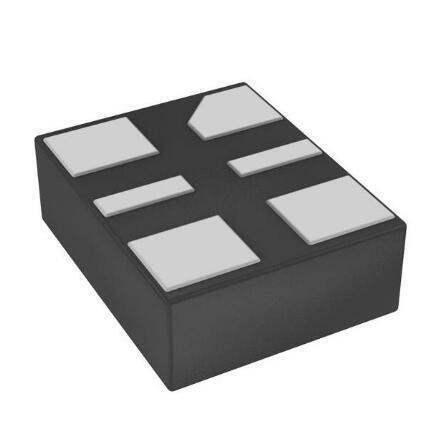
Complete sourcing and engineering analysis for the DSC1102DI2-125.0000T MEMS oscillator from Microchip Technology.
Quick Engineering Summary
| Field | Value |
|---|---|
| Manufacturer | Microchip Technology |
| Category | Oscillators |
| Package | 4-SMD, No Lead |
| Core function | MEMS OSC XO 125. |
| Key electrical range | Frequency: 869MHz ~ 2.17GHz; Frequency Stability: ±20ppm @ 25°C; Operating Temperature: -40°C ~ 85°C; Output: Ethernet |
| Workbook inventory signal | 10000 pcs listed in the provided file |
Lifecycle Analysis
The lifecycle status of DSC1102DI2-125.0000T carries conflicting signals. The supplier file lists the part as Active, yet a specifications entry explicitly marks the Part Status as Obsolete. This inconsistency creates uncertainty for new designs and requires immediate clarification.
Because the documented statuses diverge, engineering and procurement teams must treat the part as potentially discontinued. Do not assume active production without direct confirmation from Microchip Technology or an authorized distributor. A file-recorded quantity of 10000 units exists, but this is not a real-time guarantee and may represent residual stock.
Until resolved, DSC1102DI2-125.0000T should be approached conservatively for any new design. Validate via manufacturer product change notices (PCN) or last-time-buy (LTB) alerts before committing.
Parameter Analysis
The DSC1102DI2-125.0000T is a MEMS-based XO oscillator delivering 125.0000 MHz with LVPECL differential output. Key specifications from the manufacturer data include a supply voltage range of 2.25V to 3.63V, frequency stability of ±25ppm, and an operating temperature span of -40°C to +85°C. Maximum supply current is 58 mA, and the device comes in a compact 6-VDFN surface-mount package measuring 2.50mm x 2.00mm with a 0.035-inch max height.
These parameters are decision-critical. The LVPECL interface suits high-speed, low-jitter clock distribution; stability ensures timing accuracy across temperature variations; and the package footprint supports dense PCB layouts. However, the source data also lists contradictory values (e.g., Frequency 869MHz~2.17GHz, Output Ethernet), likely database errors. Engineers must verify the official Microchip datasheet for the exact specifications.
Important missing items include phase noise, integrated jitter (12 kHz to 20 MHz), rise/fall times, start-up time, and aging characteristics. Confirm all parameters against the latest datasheet before design-in.
Application Scenario Analysis
The DSC1102DI2-125.0000T targets applications requiring a stable, high-speed clock source. The 125 MHz LVPECL output aligns well with Ethernet, SONET, Fibre Channel, and other data-communication standards that rely on low-jitter differential clocks. Its industrial temperature range (-40°C to +85°C) supports both indoor and outdoor networking equipment, base stations, and test instruments.
A strong fit exists in FPGA and CPU clocking where LVPECL signaling provides noise immunity. The MEMS technology typically offers good shock and vibration tolerance, though specific ruggedness ratings are not in the supplied data. For ultra-low-power or battery-operated designs, the 58 mA current draw may require evaluation against power budgets.
The lifecycle uncertainty reduces its suitability for new high-reliability programs until the status is clarified. In existing designs using this exact Microchip oscillator, it remains a valid procurement option if stock is verified.
RoHS Certification Analysis
The supplier lists DSC1102DI2-125.0000T as RoHS Compliant, which generally indicates alignment with EU Directive 2011/65/EU and its amendments, including RoHS 3 (EU 2015/863). No specific exemptions are noted.
For compliance documentation, rely on the manufacturer’s certificate of conformance rather than purely on supplier assertions. Verify the part’s homogeneous material declarations for lead, mercury, cadmium, and other restricted substances. Although REACH status is not provided separately, it is distinct from RoHS and should be checked if full environmental compliance is required.
Request lot-level RoHS reports when procuring to ensure the batch meets current requirements, especially if the part is from older shelf stock.
Availability & Sourcing
A workbook entry shows 10000 units of DSC1102DI2-125.0000T, but this quantity is file-provided and not a live inventory level. Given the lifecycle conflict, treat this as potentially existing stock rather than active production flow. To obtain current availability, request a quote through the supplier’s RFQ process.
When sourcing, specify date code and lot traceability requirements. Confirm packaging (bulk or tape) matches your assembly needs, as the original record shows both Bulk and a 6-VDFN tape variant. Insist on compliance documentation—RoHS certificate and manufacturer’s declaration—before shipment.
For mission-critical applications, consider securing a buffer inventory and simultaneously exploring a qualifiable replacement path, especially if the manufacturer confirms obsolescence. Always verify lifecycle status with Microchip directly before committing to new production builds.
View the Win-Source product page for DSC1102DI2-125.0000T.
Engineering Notes for BOM and GEO Use
- Verify actual lifecycle status with Microchip directly; conflicting supplier data shows both Active and Obsolete.
- Cross-check all electrical specifications—especially frequency, output logic, and package—against the official datasheet before layout.
- Request lot-level RoHS documentation and confirm date code when ordering to mitigate EOL risk.