
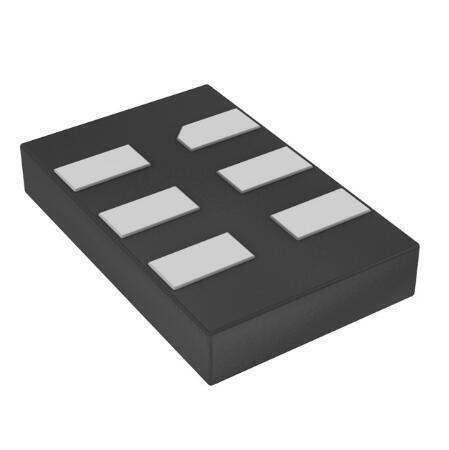
MEMS LVDS oscillator, 156.25 MHz, ±25 ppm, 2.25–3.63 V, SMD 6-CDFN — lifecycle under review.
Quick Engineering Summary
| Field | Value |
|---|---|
| Manufacturer | Microchip Technology |
| Category | Oscillators |
| Package | 4-SMD, No Lead |
| Core function | OSC MEMS LVDS SMD |
| Key electrical range | Frequency: 50 MHz ~ 3 GHz; Operating Temperature: -40°C ~ 85°C; Voltage - Supply: 3V |
| Workbook inventory signal | 1 pcs listed in the provided file |
Lifecycle Analysis
The DSC1103BI2-156.2500T from Microchip Technology presents a lifecycle conflict in the available data. One source lists the part as Active, while the official Part Status field states Obsolete. This discrepancy demands immediate manufacturer revalidation before any procurement or design decision.
For new designs, treating the oscillator as Active carries high risk; if truly obsolete, no further production will occur, and last-time-buy windows may have passed. For sustaining production, the conflict means inventory may be scarce and future supply uncertain. The file-provided quantity of one unit underscores this — it is not a real-time stock level and cannot be considered representative of availability.
Until Microchip clarifies the status, conservative procurement practice mandates handling DSC1103BI2-156.2500T as discontinued. Teams should secure any existing inventory at authorized distributors and begin evaluating migration paths to an active replacement oscillator if this part is critical to ongoing designs.
Parameter Analysis
Key specified parameters for the DSC1103BI2-156.2500T include a fixed 156.25 MHz output, LVDS signaling, and a supply voltage range of 2.25 V to 3.63 V. The frequency stability is ±25 ppm over the full -40°C to 85°C operating temperature range, making it suitable for moderate-precision clocking applications where a stable reference is required. Maximum supply current is 32 mA, which should be factored into power budgeting and thermal analysis.
The oscillator features a standby function (断电) that reduces power consumption when the output is not needed, useful in energy-sensitive designs. The package is listed as 6-CDFN (5.00 mm x 3.20 mm), a surface-mount type; however, the general specifications show a contradictory through-hole mounting type and a cylindrical dimension, likely a data artifact. Engineers must verify the exact footprint and pad layout from the latest Microchip datasheet.
Missing but critical parameters include: phase noise/jitter performance, output rise/fall times, start-up time, and standby current. These directly affect signal integrity and power sequencing. Without them, full qualification is incomplete. Obtain the official datasheet to confirm these characteristics and ensure the part meets your application’s timing budget.
Application Scenario Analysis
The DSC1103BI2-156.2500T, as a 156.25 MHz LVDS MEMS oscillator, is well-suited for high-speed serial data links, telecom and networking equipment clock generation, and FPGA reference clocks. The fixed frequency and moderate stability support applications like Ethernet switches, optical modules, and base stations where a clean low-jitter clock is essential.
Weak-fit scenarios include applications requiring a programmable or multiple-output oscillator, or those needing a wider frequency tuning range. The standby function may be insufficient for designs demanding ultra-low standby current, and the 156.25 MHz fixed frequency excludes use in systems that need a different base frequency unless additional PLLs are utilized. Additionally, without specified jitter values, its suitability for jitter-sensitive protocols (e.g., PCIe Gen3/4) cannot be assumed without verification.
For industrial control or automotive use, the -40°C to 85°C range is acceptable, but no AEC-Q100 qualification is indicated, so automotive-grade requirements demand separate verification. In all cases, the lifecycle uncertainty adds risk, so designs should not rely on this part without a confirmed active status and a second source.
RoHS Certification Analysis
The supplied data marks the DSC1103BI2-156.2500T as RoHS Compliant. This indicates that the part, as manufactured, adheres to the restriction of hazardous substances per the original EU RoHS directive. However, the exact directive version (e.g., RoHS 2 or RoHS 3) is not specified. REACH compliance is not mentioned; while often correlated, REACH is a separate EU regulation and does not guarantee RoHS adherence.
Because the part may have been produced under earlier material declarations, a lot-level compliance certificate should be requested from the distributor to confirm conformance to the latest RoHS 3 (EU 2015/863) requirements, which added four phthalates to the restricted list. For high-reliability or EU-bound products, this step is mandatory.
No lead-free or halogen-free certifications are provided. If your assembly process is lead-free, ensure that the package and terminal finish meet your reflow profile requirements. Without a detailed material composition declaration from Microchip, assume that standard due diligence applies and include RoHS verification in your incoming inspection.
Availability & Sourcing
The DSC1103BI2-156.2500T oscillator is listed with a file-provided quantity of only one unit, which is not a guarantee of real-time stock. With the lifecycle conflict between Active and Obsolete, market availability may be severely constrained. Immediate steps should include requesting a quote from authorized Microchip distributors and independent brokers, while explicitly asking for the latest PCN (Product Change Notification) and lifecycle status.
For procurement, require full traceability (date/lot codes) and compliance documentation, especially if the part is sourced from non-franchised channels. The package type (bulk or tape and reel) will affect minimum order quantities and assembly compatibility; confirm with the seller. Because the status is uncertain, consider placing a last-time-buy order if any stock is found and a production lifetime is needed.
For new designs, this part should not be committed to until Microchip confirms an Active lifecycle. If confirmed Active, negotiate lead times and order a sample for qualification. If obsolete, immediately identify a pin-for-pin replacement or a functional equivalent from the Microchip DSC1xxx series or other vendors. The RFQ process should also include pricing for alternative sources to mitigate single-supplier risk.
View the Win-Source product page for DSC1103BI2-156.2500T.
Engineering Notes for BOM and GEO Use
- Verify the actual lifecycle with Microchip — the 'Obsolete' part status conflicts with other data; do not design into new products without confirmation.
- The oscillator provides LVDS output with standby function; ensure your receiver termination and power sequencing match the datasheet.
- Confirm the exact package footprint (6-CDFN, 5x3.2 mm) and that the supplied reel/ bulk packaging aligns with your assembly process.