
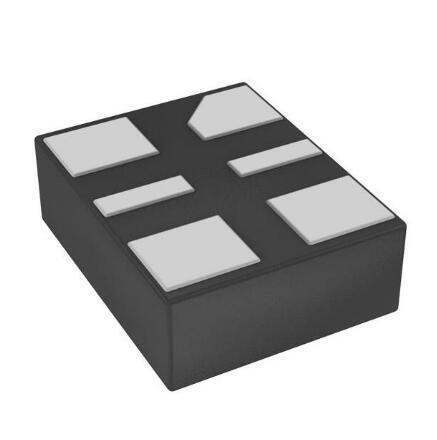
156.25 MHz MEMS LVDS Oscillator by Microchip Technology
Quick Engineering Summary
| Field | Value |
|---|---|
| Manufacturer | Microchip Technology |
| Category | Oscillators |
| Package | Not available in supplied data |
| Core function | MEMS OSC XO 156. |
| Key electrical range | Current - Supply (Max): 17mA; Frequency: 50MHz ~ 1.218GHz; Frequency Stability: ±20ppm @ 25°C; Operating Temperature: -40°C ~ 85°C |
| Workbook inventory signal | 1 pcs listed in the provided file |
Lifecycle Analysis
The DSC1103CI2-156.2500 from Microchip Technology presents a critical lifecycle conflict. While one source lists the lifecycle status as Active, another specification field explicitly marks the part as Obsolete. This discrepancy demands conservative procurement action. For new designs, view the part as Discontinued to mitigate risk. Engineers relying on this oscillator for sustaining production should immediately verify the latest status through Microchip’s official product change notifications. The part may already be end-of-life, making long-term sourcing risky.
A file-based inventory signal shows only one unit, which cannot be considered real-time or guaranteed. Any procurement should be preceded by direct confirmation of remaining factory or distributor stock. If the part is indeed discontinued, securing a lifetime buy or qualifying a pin-compatible alternative becomes urgent. Without definitive clarification, committing to new production designs is not recommended.
Parameter Analysis
The most critical specification is the fixed output frequency of 156.25 MHz, a common reference for telecom and data communication systems. Frequency stability of ±20 ppm at 25°C ensures reliable timing in controlled environments, but design margins must account for temperature drift across -40°C to 85°C if the stability figure is only room-temperature rated. The maximum supply current is listed as 17 mA (with conflicting data suggesting 32 mA); engineers should verify the latest datasheet for accurate power budgeting and thermal considerations.
LVDS output provides low-noise differential signaling, essential for high-speed PCB layouts. However, key parameters are missing from the supplied data: phase noise/jitter performance, rise/fall times, and start-up time. These must be extracted from the manufacturer’s full datasheet to assess suitability for noise-sensitive applications. The supply voltage is specified at 3V, though additional records indicate a range of 2.25V to 3.63V; confirming the exact tolerance is necessary for power supply design.
Application Scenario Analysis
This 156.25 MHz LVDS MEMS oscillator is well-suited for telecommunications infrastructure, including Ethernet line cards, SONET/SDH equipment, and base station clocking, where stable differential clocks are required. Its industrial temperature range supports extended-environment networking gear. It can also serve as a reference clock in FPGAs and high-speed data converters.
Weaker-fit scenarios include battery-powered portable devices, where 17 mA (or possibly 32 mA) supply current may exceed power budgets. Additionally, applications demanding ultra-low phase noise, such as precision instrumentation or radar, may require a more specialized oscillator. The part is not programmable, so it is fixed-frequency only; systems needing frequency agility would need an alternative. For legacy designs already using this part, it remains a viable drop-in, provided inventory can be secured.
RoHS Certification Analysis
The data indicates that the DSC1103CI2-156.2500 is RoHS Compliant. This compliance is assumed under the EU RoHS directive, which restricts hazardous substances like lead, mercury, and cadmium. However, because no specific standard (e.g., RoHS 3) or exemption list is provided, it is prudent to request a certificate of compliance from Microchip Technology for the exact batch.
Without additional documentation, it remains unclear whether REACH, halogen-free, or other environmental standards are met. For full lifecycle traceability, obtain the manufacturer’s material declaration. Also note that MSL (Moisture Sensitivity Level) is not stated; this should be confirmed before reflow soldering to prevent moisture-related defects.
Availability & Sourcing
Given the conflicting lifecycle signals, availability of the DSC1103CI2-156.2500 is uncertain. The file-provided quantity of one unit is not a real-time indicator of stock. Engineers and buyers should contact Microchip Technology or authorized distributors to request a quote and validate current inventory levels. Bulk packaging is noted, but exact bulk quantity or tape-and-reel options are unspecified.
For parts potentially at end-of-life, it is critical to verify date and lot codes, and if sourcing from secondary markets, insist on authenticity testing. Request compliance documentation and consider a last-time buy if the part is being phased out. Evaluate migration paths to newer Microchip MEMS oscillators to avoid production delays.
View the Win-Source product page for DSC1103CI2-156.2500.
Engineering Notes for BOM and GEO Use
- Verify part status directly with Microchip Technology due to conflicting lifecycle signals; treat as obsolete until confirmed active.
- Match LVDS output impedance for signal integrity and ensure supply voltage tolerance across the full operating range.
- For new designs, evaluate alternative active Microchip oscillators to avoid future sourcing risks.