
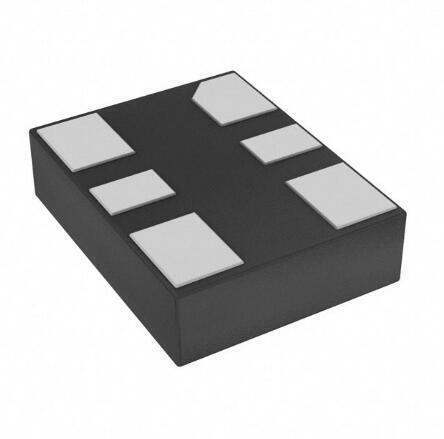
Microchip MEMS oscillator; 125 MHz LVDS, industrial temperature range.
Quick Engineering Summary
| Field | Value |
|---|---|
| Manufacturer | Microchip Technology |
| Category | Oscillators |
| Package | 4-SMD, No Lead |
| Core function | MEMS OSC XO 125. |
| Key electrical range | Frequency: 5kHz; Frequency Stability: ±20ppm @ 25°C; Operating Temperature: -40°C ~ 85°C |
| Workbook inventory signal | 110 pcs listed in the provided file |
Lifecycle Analysis
The DSC1103CI5-125.0000 oscillator is in Active lifecycle status per Microchip Technology. This status indicates the part is in full production and recommended for new designs without near-term discontinuation risk. Engineers can integrate this device into new projects with confidence, provided they verify the manufacturer’s latest product notification for any changes.
The file-based inventory signal shows a quantity of 110 units; however, this is not a real-time availability guarantee. For production planning, procurement teams should request current stock levels and lead times directly from authorized distribution. Sustaining production builds should include periodic lifecycle revalidation to catch any shift to NRND or EOL.
Parameter Analysis
The DSC1103CI5-125.0000 is described as a 125 MHz LVDS MEMS oscillator, but the provided specifications contain conflicts that must be resolved by consulting the official datasheet. Frequency is listed as 5 kHz in one source while the description and secondary data show 125 MHz. Stability is shown as ±10 ppm (typical) and ±20 ppm, so the design margin should be based on the worst-case value until confirmed.
Key electrical parameters include a supply voltage range of 2.25 V to 3.63 V and a maximum current consumption of 32 mA, both critical for power budgeting. The operating temperature range of -40 °C to +85 °C makes the device suitable for industrial environments. The output is LVDS, requiring proper differential termination and layout. Package details are ambiguous: one source indicates 4-SMD, No Lead, while another points to a 6-VDFN (3.2 mm × 2.5 mm) with a height of 0.035 inches. Before PCB layout, engineers should verify the exact package, pinout, and land pattern from Microchip’s documentation. Missing datasheet values such as phase jitter, rise/fall times, and start-up time should be obtained to complete the qualification.
Application Scenario Analysis
The DSC1103CI5-125.0000’s LVDS output at 125 MHz makes it a strong candidate for high-speed differential clocking in networking equipment, including Ethernet switches, routers, and fiber channel interfaces. Its industrial temperature range supports deployment in base stations, outdoor networking gear, and factory automation controllers where ambient conditions can fluctuate.
The fixed 125 MHz frequency is well-suited for FPGA and ASIC reference clocks that require a clean, low-jitter source. However, it is a poor fit for applications needing variable or lower frequencies, such as legacy serial interfaces or low-power microcontroller clocking. The MEMS technology provides robust vibration and shock resistance compared to quartz, but engineers should confirm the phase noise performance meets the specific BER requirements of their high-speed serial links. Without detailed jitter specs, feasibility for ultra-low-jitter applications cannot be guaranteed and must be validated against the manufacturer’s characterization data.
RoHS Certification Analysis
The DSC1103CI5-125.0000 is marked as RoHS Compliant, indicating that Microchip Technology has designed this oscillator to meet the European Union’s Restriction of Hazardous Substances directive. Typically, this covers substances like lead, mercury, cadmium, and others as defined in EU 2015/863 (RoHS 3). The provided data does not list specific exemptions, so it is assumed that the part is fully compliant without the need for concentration-based exemptions.
While REACH status is not included, RoHS compliance does not automatically confirm REACH. Procurement should request a full material declaration or certificate of compliance from the manufacturer or distributor for high-volume orders. Lot-level traceability is recommended because compliance status can change with process or material alterations. End customers in regulated industries should archive these documents for audit readiness.
Availability & Sourcing
With an Active lifecycle status, the DSC1103CI5-125.0000 is broadly available through standard distribution channels. The provided file indicates 110 units, but actual inventory may differ; buyers should request a quote for real-time stock and lead times. Common packaging options include bulk and tape/reel, though the source data is inconsistent—confirm the preferred format when ordering.
For production procurement, validate the exact manufacturer part number and request date and lot code information to ensure traceability. Active parts generally carry standard lead times, but the ongoing semiconductor market dynamics can affect availability. Secure a spot in the allocation queue by placing an early order with authorized Microchip distributors. Always include RoHS compliance documentation as a line-item requirement in the purchase order.
View the Win-Source product page for DSC1103CI5-125.0000.
Engineering Notes for BOM and GEO Use
- Cross-check frequency and stability specifications against the official Microchip datasheet; conflicting values exist between 5 kHz/125 MHz and ±10 ppm/±20 ppm.
- Verify package dimensions and pinout: the device may use a 6-VDFN (3.2 × 2.5 mm) footprint, not the 4-SMD listed in some sources.
- When integrating, ensure LVDS termination matches the 100-ohm differential characteristic impedance and decouple the 2.25–3.63 V supply per the maximum 32 mA current draw.