
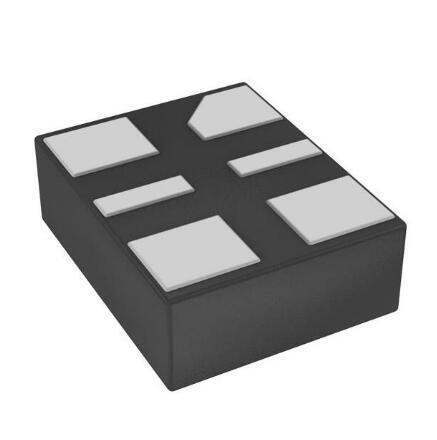
A procurement-focused analysis of the Microchip DSC1104CI2-100.0000T, highlighting lifecycle conflicts, key parameters, and availability considerations.
Quick Engineering Summary
| Field | Value |
|---|---|
| Manufacturer | Microchip Technology |
| Category | Oscillators |
| Package | 8-SMD, No Lead |
| Core function | MEMS OSC XO 100. |
| Key electrical range | Frequency: 5.78GHz Center; Frequency Stability: ±20ppm @ 25°C; Operating Temperature: -40°C ~ 85°C; Voltage - Supply: 3V |
| Workbook inventory signal | 964 pcs listed in the provided file |
Lifecycle Analysis
The DSC1104CI2-100.0000T appears under an Active lifecycle classification in one data field, yet a separate Part Status field lists it as Obsolete. This inconsistency demands careful interpretation. For new designs, an active designation would normally mean the part is safe to specify, but the obsolete flag introduces medium risk. Engineers must treat the lifecycle as unconfirmed and seek direct clarification from Microchip Technology before incorporating this oscillator into a bill of materials.
If the obsolete status is accurate, the part should not be used in new projects, and existing production should begin evaluating pin-compatible MEMS oscillators or alternative HCSL clock sources. Sustaining programs may still procure remaining stock, though availability will dwindle. A file-provided inventory count of 964 units appears in the data, but this is a static snapshot and not a guarantee of real-time supply.
Given the conflicting signals, the safest procurement approach is to request a current PCN (Product Change Notification) and lifecycle documentation from the factory or an authorized distributor. Without that confirmation, any design decision carries unnecessary exposure.
Parameter Analysis
The most critical parameter for this oscillator is the output frequency, which the product description correctly lists as 100 MHz, while an erroneous specification entry shows 5.78 GHz. Buyers and engineers should rely on the description and the manufacturer’s datasheet, verifying that the actual device delivers a 100 MHz HCSL output. Frequency stability is specified as ±20 ppm at 25°C, a typical value for MEMS oscillators, but complete temperature stability over the full -40°C to +85°C range must be confirmed from the datasheet.
The supply voltage is noted as 3 V in one field and 2.25–3.6 V in the HTML row data; the latter range is more realistic for modern LVCMOS or HCSL oscillators. Current consumption data is absent from the structured specs but appears in the HTML row as 42 mA maximum, which is plausible and should be cross-checked. Packaging details conflict: the package/case is given as 8-SMD, No Lead, while dimension data shows a cylindrical 6.35 x 31.75 mm body, and the HTML row indicates a 6-VDFN (3.2 x 2.5 mm). The VDFN form factor aligns with typical Microchip MEMS oscillator packaging and is the most reliable for PCB layout.
Missing parameters that must be verified from the official datasheet include phase jitter (rms over 12 kHz–20 MHz), rise/fall times, output enable/disable function, and start-up time.
Application Scenario Analysis
The DSC1104CI2-100.0000T’s 100 MHz HCSL output makes it a strong fit for PCI Express (PCIe) Gen1/2/3 reference clock generation, where HCSL signaling and 100 MHz frequency are standard requirements. Its MEMS construction provides inherent shock and vibration resistance, suiting industrial networking equipment, storage area networks, and telecom line cards. The -40°C to +85°C operating temperature range supports extended industrial environments.
In applications where HCSL is preferred for its low skew and differential signaling, this oscillator can serve FPGA and ASIC clocking, provided the frequency tolerance and jitter meet system budgets. However, the part is less suitable for scenarios demanding ultra-low phase noise or non-HCSL logic families without level translation.
Weak-fit scenarios include battery-powered portable devices that require lower current consumption than the cited 42 mA maximum, or designs that need a precise GPS-disciplined reference, as the stability is only ±20 ppm. Additionally, any system that must be RoHS 3 certified should confirm compliance explicitly, given the lack of detailed certification data in the source.
RoHS Certification Analysis
The source data labels the DSC1104CI2-100.0000T as RoHS Compliant, implying it meets the EU’s Restriction of Hazardous Substances directive. No specific exemption is listed, and no REACH, halogen-free, or MSL information is provided. For most procurement, a simple RoHS compliant declaration suffices, but high-reliability or EU-market products should obtain a full material declaration or certificate of compliance that references RoHS 3 (EU 2015/863) to ensure all substance restrictions are met.
Because RoHS status can vary by date code and production lot, especially for a part with lifecycle ambiguity, every shipment should be accompanied by documentation specific to that lot. The absence of REACH data does not itself signal non-compliance, but it is a separate regulatory requirement that some end customers may mandate. Similarly, moisture sensitivity level (MSL) is not mentioned, which is important for surface-mount devices in humid environments—consult the datasheet or request a baking recommendation from the distributor.
Availability & Sourcing
Sourcing the DSC1104CI2-100.0000T requires caution due to the conflicting lifecycle signals. The file-provided quantity of 964 units suggests some inventory exists in the channel, but real-time availability is not guaranteed. Procurement teams should request a formal quote to confirm current stock levels, date codes, and packaging (tape-and-reel or bulk) before placing orders.
If the Obsolete status is correct, this part may be in final sell-down, and alternatives should be evaluated in parallel. For sustaining production, secure buffer stock after verifying authenticity and traceability. For new designs, avoid commitment until Microchip confirms active production. In all cases, ask for full compliance documentation (RoHS, REACH, and any applicable conflict minerals reporting) and request a visual or functional sample to verify package footprint, as the datasheet conflicts with the 8-SMD, No Lead designation.
The RFQ should specify the part number exactly, including the T suffix, and ask for shipment with certificates of conformance and origin. Distributors may recommend the DSC1104CI2-100.0000 as a non-obsolete base part number, but the trailing T typically indicates tape-and-reel packaging, which should be confirmed along with lead finish and MSL.
View the Win-Source product page for DSC1104CI2-100.0000T.
Engineering Notes for BOM and GEO Use
- Confirm actual part status directly with Microchip; conflicting Active and Obsolete flags require resolution before design-in.
- Verify the output frequency—100 MHz per description vs. the 5.78 GHz incorrect listing in spec data—and match to your application’s clock tree.
- Plan for alternative HCSL MEMS oscillators if this part proves discontinued, particularly for PCIe and networking designs.