
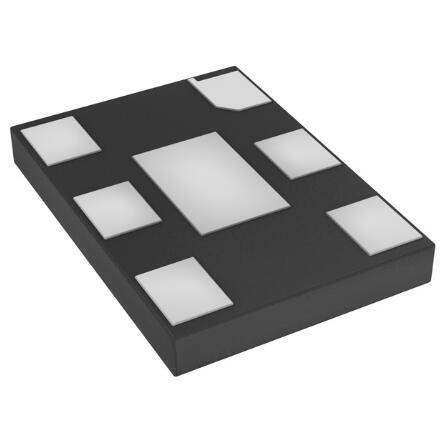
Microchip MEMS oscillator with conflicting lifecycle indicators; verify before procurement.
Quick Engineering Summary
| Field | Value |
|---|---|
| Manufacturer | Microchip Technology |
| Category | Oscillators |
| Package | Wide 2010 (5025 Metric) , 1020 |
| Core function | MEMS OSC XO 75. |
| Key electrical range | Frequency: 1.85 GHz ~ 3 GHz; Operating Temperature: -40°C ~ 85°C; Output: Ethernet; Voltage - Supply: 3V |
| Workbook inventory signal | 1 pcs listed in the provided file |
Lifecycle Analysis
The DSC1121AE2-075.0000T presents a direct conflict in its lifecycle data. The manufacturer’s lifecycle status and the Excel-based lifecycle param both indicate Active, suggesting ongoing production. However, the Part Status field in the specifications explicitly states Obsolete. This contradiction creates a high sourcing risk.
For engineers, an Obsolete status means that new design-ins are not advisable and supply may be limited to remaining stock. The Active signals could reflect residual availability or a data error. Without a clear resolution, the safest course is to treat the part as of unknown lifecycle status and to verify directly with Microchip.
For any procurement, request a written confirmation of current production status. If the part is indeed obsolete, immediately identify alternative sources or second-source equivalents. For active production, require a last-time-buy notice or roadmap commitment. The inventory snapshot showing one unit in file is not a reliable indicator of market availability.
Parameter Analysis
The DSC1121AE2-075.0000T is a MEMS-based fixed-frequency oscillator. Based on the Excel data and the part number convention, the key parameters are a 75 MHz nominal frequency, CMOS output, and a supply voltage range of 2.25V to 3.6V. Frequency stability is ±25ppm, and the operating temperature is given as -20°C to 70°C in the Excel row, though the specifications list -40°C to 85°C; this discrepancy must be resolved against the official datasheet.
These parameters drive critical design decisions. The 75 MHz frequency must match the clock requirements of the target IC. The CMOS output swing depends on supply voltage, so the 2.25V–3.6V range must align with the receiving logic levels. Stability of ±25ppm is adequate for many microcontroller and FPGA applications but may be insufficient for precision timing. The 6-VDFN 7x5mm package occupies limited board space and requires proper thermal relief for reflow soldering.
Several important specifications are missing from the provided data: output duty cycle, rise/fall times, start-up time, and phase jitter. These affect signal integrity and timing margins in high-speed designs. Additionally, the supplied frequency range of 1.85 GHz to 3 GHz appears to be a data error for a different part. Engineers must obtain the official DSC1121AE2 datasheet from Microchip to verify all parameters before finalizing the design.
Application Scenario Analysis
The DSC1121AE2-075.0000T is best suited as a general-purpose clock source in digital systems. Strong-fit scenarios include providing a 75 MHz reference for Ethernet PHYs, USB controllers, and common microcontroller or FPGA designs that accept a CMOS square-wave input. The ±25ppm stability supports typical commercial and industrial temperature applications.
Weak-fit scenarios emerge when jitter performance matters. No phase jitter or phase noise data is available, so applications like high-speed serial links (SERDES), RF PLL references, or precision test equipment may not achieve the required signal purity. Also, if the true operating temperature range is -20°C to 70°C, the part is unsuitable for extended industrial or automotive environments that demand -40°C to +85°C operation.
Procurement teams should note that the 35mA maximum supply current at 3.3V translates to about 115mW dissipation, which is manageable in most designs but must be budgeted in power-sensitive products. The 6-VDFN package is surface-mountable and compatible with standard reflow profiles, but a moisture sensitivity level (MSL) should be confirmed to avoid popcorning during assembly.
RoHS Certification Analysis
The DSC1121AE2-075.0000T is marked as RoHS Compliant in the supplied compliance data and specifications. This indicates that the part meets the substance restrictions of the EU RoHS directive, typically including lead, mercury, cadmium, and other hazardous materials.
However, the specific RoHS version is not mentioned. Without an explicit reference to RoHS 3 (EU 2015/863), compliance to the original EU RoHS or RoHS 2 may be assumed, but the four additional phthalates restricted under RoHS 3 may not be covered. Buyers serving markets that require RoHS 3 compliance should request a Certificate of Compliance (CoC) or a full material declaration from Microchip.
No exemptions are listed, which suggests the part does not rely on RoHS exemptions, but this cannot be guaranteed without manufacturer documentation. For military, medical, or aerospace applications, a complete REACH/SVHC statement may also be necessary. The absence of an MSL rating means the moisture sensitivity level must be obtained to determine proper baking and floor-life handling during assembly.
Availability & Sourcing
The provided workbook shows a stock quantity of 1 unit for DSC1121AE2-075.0000T. This is a file-based snapshot and not a real-time inventory guarantee. The conflicting lifecycle signals (Active vs. Obsolete) make sourcing unpredictable. If the part is truly obsolete, available stock may be very limited and subject to rapid depletion.
All buyers should request a formal quote that includes date and lot codes to verify the freshness and authenticity of any offered stock. Packaging details from the Excel row indicate tape and reel supply, but this should be confirmed with the distributor. Minimum order quantities and any volume restrictions must be clarified, especially with low single-unit availability.
Given the high risk, treat this part as a potential last-time-buy candidate. Secure enough inventory to cover forecasted production needs, and simultaneously evaluate a pin-compatible alternative with an active lifecycle status. Direct engagement with Microchip or its authorized channel partners is essential to confirm ongoing production or an official discontinuation notice. Until that confirmation, do not rely on this part for new production releases.
View the Win-Source product page for DSC1121AE2-075.0000T.
Engineering Notes for BOM and GEO Use
- Cross-check the Part Status conflict (Obsolete vs. Active) directly with Microchip before using DSC1121AE2-075.0000T in new designs.
- Confirm actual frequency (75 MHz per description, not the 1.85–3 GHz range shown in some specs) and rated temperature range from the official datasheet.
- Request current lead time and lot traceability; the single-unit inventory snapshot and lifecycle uncertainty demand conservative sourcing.