
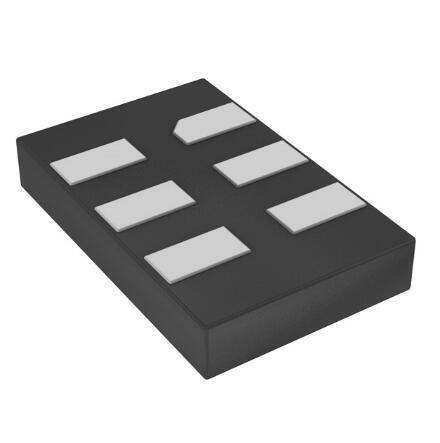
Practical procurement and engineering analysis for the DSC1121BI2-125.0037T MEMS XO.
Quick Engineering Summary
| Field | Value |
|---|---|
| Manufacturer | Microchip Technology |
| Category | Oscillators |
| Package | 8-SMD, No Lead |
| Core function | MEMS OSC XO 125. |
| Key electrical range | Frequency: 4.12GHz (Cutoff); Operating Temperature: -40°C ~ 85°C; Output: 0.5 V ~ 4.5 V; Voltage - Supply: 3V |
| Workbook inventory signal | 6402 pcs listed in the provided file |
Lifecycle Analysis
The DSC1121BI2-125.0037T from Microchip Technology presents a confusing procurement picture. Although the primary lifecycle signal indicates Active, an alternate part status field lists this device as Obsolete. Such a contradiction usually points to an error in a distributor’s database or a transitional period where the manufacturer has not yet issued a formal PDN (Product Discontinuance Notice). For design engineers, this means high risk: an Obsolete designation could halt production if confirmed, while an Active status would permit normal new design activity.
Until clarity is obtained directly from Microchip, the part should be treated as Unknown in lifecycle. In new designs, it is wise to select a pin-compatible alternative with a confirmed Active status. For sustaining production, immediate engagement with sourcing teams to secure inventory and evaluate last-time-buy possibilities is advised. The file-provided quantity of 6,402 units should be seen as a snapshot and not a guarantee of market availability.
Any commitment to the DSC1121BI2-125.0037T in a bill of materials must be accompanied by written manufacturer lifecycle confirmation. Without this, there is exposure to sudden supply interruption and obsolescence.
Parameter Analysis
The DSC1121BI2-125.0037T is characterized as a MEMS-based XO (standard) oscillator with a 125.0037 MHz frequency and CMOS output. Its supply voltage range of 2.25 V to 3.6 V, alongside a maximum supply current of 35 mA, allows integration into low-power 3.3 V or 2.5 V systems. Frequency stability is specified at ±25 ppm over -40°C to 85°C, which suits many industrial and telecom applications where tight frequency control is not mandatory but reliability under temperature variation is required.
Package dimensions of 5.00 mm x 3.20 mm (6-CDFN) make it compatible with automated SMT assembly, though real-estate constraints in dense designs must be assessed against the actual datasheet land pattern. Critical missing parameters in the available data include phase noise performance, period jitter, start-up time, and aging characteristics. For high-speed serial interfaces or FPGA transceivers, the lack of jitter specifications is a verification priority.
Additionally, the description lists CMOS output, but no details on rise/fall times or output enable functionality are provided. Engineers must cross-reference the official Microchip datasheet for DSC1121 series to confirm these values and ensure the oscillator meets signal integrity requirements. Without such verification, unexpected timing violations could arise in production.
Application Scenario Analysis
The DSC1121BI2-125.0037T is well-suited for providing a clean 125 MHz reference clock in networking switches, routers, and baseband processing units. Its CMOS output and wide operating temperature range make it a candidate for industrial embedded controllers, FPGA development boards, and test equipment where a single-ended clock is acceptable. The MEMS construction typically offers shock and vibration resistance superior to quartz, which can benefit ruggedized applications.
However, its suitability weakens in systems demanding differential signaling (e.g., LVDS, LVPECL) or ultra-low jitter for high-speed SerDes. The ±25 ppm stability may not satisfy timing constraints in telecommunications boundary clocks requiring sub-10 ppm holdover accuracy. Moreover, if the suspected obsolescence is true, even well-matched applications face long-term sustainability issues.
Engineers evaluating this part for new designs should therefore compare it against currently active Microchip DSC1121 variants or alternative MEMS oscillators from other vendors that offer confirmed lifecycle, similar footprint, and documented jitter performance. The part’s datasheet must be thoroughly reviewed to ensure the output voltage levels and drive capability are compatible with the target IC’s clock input requirements.
RoHS Certification Analysis
According to the supplied data, the DSC1121BI2-125.0037T is declared RoHS Compliant. This generally implies conformity with the EU RoHS Directive, which restricts hazardous substances such as lead, mercury, and cadmium. No specific exemptions are noted, and the part is presumably lead-free. However, the available information does not specify the exact RoHS recast version (e.g., RoHS 3 (EU 2015/863)), nor does it address REACH compliance or halogen-free status.
For engineers and buyers, a blanket RoHS Compliant statement is insufficient for formal compliance documentation. Each production lot should be accompanied by a Certificate of Conformance (CoC) that confirms RoHS adherence at the batch level. If the component is sourced from non-franchised channels, the risk of receiving non-compliant or counterfeit parts increases, making lot-level testing or supplier audit essential.
Additionally, if the device is used in products sold into the EU, the buyer must be prepared to demonstrate due diligence under the Waste Framework Directive by retaining full material declarations. Any missing compliance data should trigger a request for a full Material Declaration Data Sheet (MDDS) from Microchip or the distributor prior to acceptance.
Availability & Sourcing
Sourcing the DSC1121BI2-125.0037T requires careful navigation due to its uncertain lifecycle status. A file-provided quantity of 6,402 units exists in supplier records, but this is not real-time inventory and cannot be considered a reliable available-to-sell figure. Engineers and procurement teams should request a formal quote from Microchip authorized distributors to obtain current lead times, exact available stock, and packaging details.
Given the conflict between Active and Obsolete signals, any RFQ must include a direct question on the part’s manufacturing status. If the device is indeed Obsolete, a last-time-buy order may be necessary, and alternative components should be qualified immediately. For production use, insist on traceability information, including date/lot codes, to guard against mixed-date-code reels or reclaimed components.
When engaging with the supplier, also request compliance documentation: RoHS CoC, REACH statements, and country-of-origin certificates. For long-term procurement, evaluate Microchip’s DSC1121 family for drop-in replacements that share the 5x3.2 mm 6-pin package and CMOS output. Without full lifecycle verification, the DSC1121BI2-125.0037T should be considered only for prototype builds or low-risk service repairs, not volume production.
View the Win-Source product page for DSC1121BI2-125.0037T.
Engineering Notes for BOM and GEO Use
- Verify lifecycle directly with Microchip; conflicting ‘Active’ and ‘Obsolete’ flags create significant new-design risk.
- Confirm critical datasheet parameters such as phase jitter, startup time, and output drive strength before PCB layout.
- Request full RoHS and REACH compliance certificates for every lot when sourcing from non-franchised distributors.