
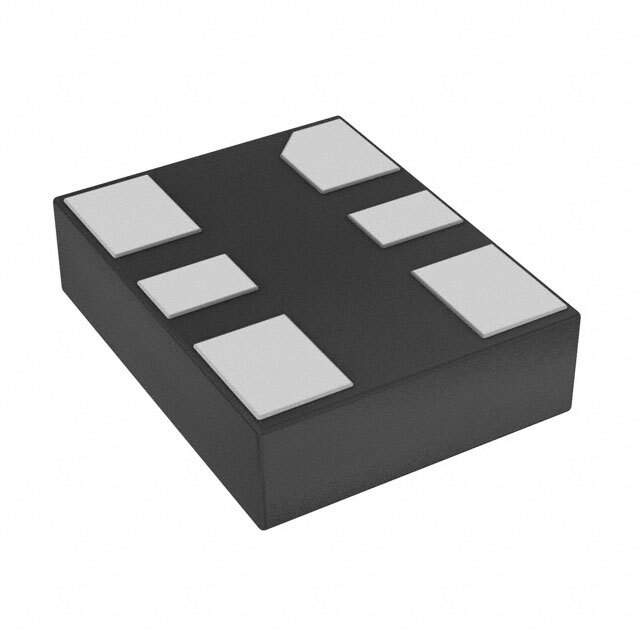
Active MEMS oscillator for new designs and sustaining production.
Quick Engineering Summary
| Field | Value |
|---|---|
| Manufacturer | Microchip Technology |
| Category | Oscillators |
| Package | Tube |
| Core function | MEMS OSC XO 133. |
| Key electrical range | Current - Supply (Disable) (Max): 22mA; Current - Supply (Max): 35mA; Frequency: 133.3333 MHz; Frequency Stability: ±50ppm |
| Workbook inventory signal | 1 pcs listed in the provided file |
Lifecycle Analysis
The DSC1121CE1-133.3333 MEMS oscillator from Microchip Technology is currently listed as Active, indicating it is in full production and supported for new designs. All supplied lifecycle signals align, with no conflicting NRND or EOL notices. For new design starts, this part is low risk; however, it is prudent to confirm with Microchip or authorized distributors that no changes are pending. File-provided inventory shows a limited quantity, but this is a snapshot and not a guarantee of real-time stock. For sustaining production, maintaining communication with Microchip for end-of-life planning is advisable. The Active status and the part's established use in timing applications suggest stable availability, but procurement should include lifecycle revalidation as part of periodic BOM reviews.
Parameter Analysis
The DSC1121CE1-133.3333 provides a fixed 133.3333 MHz CMOS output, making it a straightforward clock source for digital systems. Key parameters to evaluate for design fit include the supply voltage range of 2.25 V to 3.6 V, which suits 2.5 V or 3.3 V rails with margin. Frequency stability is specified at ±50 ppm over the full operating temperature range of -20°C to +70°C, which supports most commercial applications but may not satisfy tight timing budgets in extended temperature environments. Supply current is a maximum of 35 mA during operation and 22 mA with the output disabled, aiding power budgeting. The 3.2 mm x 2.5 mm 6-pin SMD package with a 0.9 mm height facilitates compact designs. Parameters not provided in the available data—such as phase jitter, rise/fall time, and start-up time—should be verified against the official Microchip datasheet to ensure compatibility with downstream components. Additionally, the enable/disable function should be characterized for logic thresholds and glitch behavior during power-up.
Application Scenario Analysis
The DSC1121CE1-133.3333 is well-suited for general-purpose clock generation in commercial-grade digital systems. Typical use cases include providing a reference clock for microcontrollers, FPGAs, Ethernet PHYs, or PCIe interfaces that accept a 133.3333 MHz input. Its CMOS output simplifies interfacing with standard logic inputs. The part is a strong fit for consumer electronics, networking equipment, and computing peripherals operating within a 0°C to 70°C ambient range. Applications requiring tight jitter performance, such as high-speed SerDes or RF synthesizers, may need additional phase noise analysis, as jitter specifications are not provided in the limited data set. Similarly, industrial or automotive applications demanding an extended temperature range (-40°C to +85°C or wider) would weaken the fit, since the specified operating range is -20°C to +70°C. For such cases, designers should either confirm extended-temperature variants or select an oscillator with wider guaranteed specifications.
RoHS Certification Analysis
The DSC1121CE1-133.3333 is marked as RoHS Compliant, meaning it meets the European Union's Restriction of Hazardous Substances (RoHS) Directive, typically RoHS 2 or 3 (EU 2015/863). The REACH status is listed as unaffected, indicating no specific substances of concern, but this does not replace RoHS certification. Compliance is typically declared at the family or manufacturing lot level; therefore, procurement should request the manufacturer’s Certificate of Compliance for each shipment. The part carries an MSL Level 3 rating with a 168-hour floor life, indicating moisture sensitivity. Standard JEDEC handling must be observed: parts should be stored in dry conditions and may require baking before reflow if exposed beyond the floor life. No exemptions are noted, so full RoHS compliance is assumed. For high-reliability applications, verifying lead-free plating and halogen-free status with the manufacturer is recommended.
Availability & Sourcing
The Microchip DSC1121CE1-133.3333 is an Active product, so sourcing through authorized distributors is generally straightforward. File-provided data indicates a workbook quantity of 1, but this is not a live inventory level; always request a current quote to confirm availability. Standard packaging is Tube, with a standard package quantity of 110 units. Given the 60 percent fake threat rating in the open market, it is critical to purchase from authorized Microchip channels to avoid counterfeit parts. When requesting a quote, ensure traceability details such as date and lot codes are included, and request the manufacturer’s compliance documentation (RoHS, REACH, MSL). For new designs, verify the lifecycle status directly with Microchip and consider securing a small buffer stock if the part is sole-sourced. Because the part is Active, the RFQ process should focus on obtaining lead times and confirming that the order aligns with the latest Microchip product change notifications.
View the Win-Source product page for DSC1121CE1-133.3333.
Engineering Notes for BOM and GEO Use
- Verify MSL Level 3 handling requirements; parts may need baking if floor life exceeded.
- Confirm phase jitter and start-up time from official datasheet for timing-critical designs.
- Source only from authorized distributors to mitigate 60% counterfeit risk.