
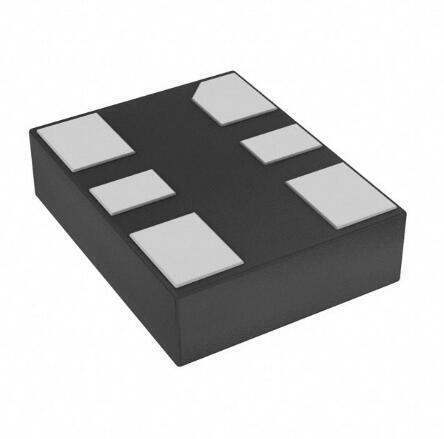
EOL risk MEMS CMOS oscillator — verify parameters and availability before procurement.
Quick Engineering Summary
| Field | Value |
|---|---|
| Manufacturer | Microchip Technology |
| Category | Oscillators |
| Package | Not available in supplied data |
| Core function | MEMS CMOS OSC |
| Key electrical range | Frequency: 5.37GHz Center; Frequency Stability: ±20ppm @ 25°C; Operating Temperature: -40°C ~ 85°C; Voltage - Supply: 3.3V |
| Workbook inventory signal | 36 pcs listed in the provided file |
Lifecycle Analysis
Microchip’s DSC1121CM1-100.0000 MEMS CMOS oscillator carries conflicting lifecycle signals across different data sources. The manufacturer’s product page and internal lifecycle parameter list the part as Active, which would normally indicate full production and support for new designs. However, a major distributor’s part status field explicitly marks this device as Obsolete. This inconsistency demands immediate caution.
For engineers initiating new designs, the safest interpretation is to treat the DSC1121CM1-100.0000 as not recommended for new projects (NRND) or commercially end-of-life. Relying on a single Active tag while an established supply-chain record shows Obsolete could lead to production gaps and redesign costs down the line. We recommend direct verification with Microchip’s official product life-cycle documentation or through an authorized channel before committing to any bill of materials.
A quantity of 36 units appears in the attached inventory file, but this is not a guaranteed real-time stock level. Even if units are available today, last-time-buy conditions may apply, and no further wafer starts should be assumed. Fast-track a lifecycle confirmation and, if necessary, initiate a second-source evaluation for your oscillator requirements.
Parameter Analysis
The DSC1121CM1-100.0000 is described as a MEMS CMOS oscillator, and the part number strongly suggests a nominal output frequency of 100.0000 MHz. However, the data bundle contains a confusing entry: one field lists the frequency as “5.37 GHz Center,” which is inconsistent with both the part number and the typical use of MEMS-based oscillators. Engineers must verify the correct frequency from the official Microchip datasheet or through measurement, as this discrepancy impacts everything from PLL configuration to EMI filtering.
Additional technical parameters that demand attention include frequency stability, supply voltage, and operating temperature range. The available data cites a stability of ±20 ppm at 25°C, a single 3.3 V supply, and an operating range of -40°C to 85°C, while another source suggests stability as wide as ±50 ppm and an extended temperature span of -55°C to 125°C. The output logic is CMOS, and the package is a 6-VDFN surface-mount device with small 3.2 mm × 2.5 mm dimensions. Until verified, design margin calculations, decoupling requirements, and thermal profiles should account for the worst-case parameters across all data points: assume ±50 ppm stability, a supply range of 2.25 V to 3.6 V, and the wider temperature range. Confirm the actual current consumption, as the maximum 35 mA rating may influence power budget decisions.
Application Scenario Analysis
Assuming a 100 MHz output as indicated by the part number, the Microchip DSC1121CM1-100.0000 targets clock generation in digital systems such as Ethernet switches, FPGA-based designs, and embedded processors that require a stable, single-ended CMOS reference. The MEMS resonator technology offers inherent shock and vibration resistance, making it suitable for industrial automation and telecommunications infrastructure where environmental stress is common.
If the 5.37 GHz frequency were correct, the application landscape would shift to high-speed serial interfaces or specialty RF links, but that scenario is extremely unlikely for a MEMS oscillator in this form factor. The specified wide operating temperature and inherent MEMS robustness also allow use in outdoor or vehicle-mounted electronics, provided the design can handle the potentially wider tolerance revealed in the datasheet. In any case, the small 6-VDFN package is best suited for space-constrained boards, but careful PCB layout is required to preserve signal integrity and minimize ground bounce.
Do not commit this part to a design until the frequency is confirmed and the lifecycle risk is addressed. For legacy sustaining builds, the DSC1121CM1-100.0000 may still serve as a drop-in where it is already qualified, but conduct a thorough equivalency review if you are considering it for a line-down scenario.
RoHS Certification Analysis
The DSC1121CM1-100.0000 is marked RoHS Compliant by the supplier, indicating that it adheres to European Union hazardous substance restrictions. However, the precise RoHS directive version—such as 2011/65/EU or the amending 2015/863 (often called RoHS 3)—is not quoted. Many distributors apply a family-level compliance statement, which may not reflect changes in exemptions or material sets across different production lots.
Because no REACH, halogen-free, or MSL data accompanies this record, the burden falls on the buyer to request up-to-date certificates for the specific date codes received. For high-reliability or export-sensitive applications, you should also verify that the device does not contain any Substances of Very High Concern (SVHCs) beyond those already restricted by RoHS. Without explicit MSL classification, assume that the 6‑VDFN package requires moisture‑sensitive handling and bake the parts if they have been stored in uncontrolled conditions. Request the full material declaration from Microchip or your authorized distributor before signing off on compliance documentation.
Availability & Sourcing
Because the DSC1121CM1-100.0000 carries potential end‑of‑life signals, procurement must be approached with a risk-mitigation plan. The file indicates 36 pieces in inventory, but this figure is not a live stock count and does not imply ongoing availability. Contact your sourcing channel immediately to confirm whether the lot is traceable, its date code, and original packaging condition (bulk format is listed). Secure the quantity you need directly or through an RFQ process, and negotiate a non‑cancellable, non‑returnable (NCNR) or last‑time‑buy agreement if the part is indeed being discontinued.
Ask for historical lot documentation to verify that the items are genuine and have been stored in accordance with the manufacturer’s moisture sensitivity and ESD requirements. Given the conflicting lifecycle data, cross‑check the part’s status directly with Microchip’s authorized network and obtain a formal PCN or EOL notice if one exists. Should the DSC1121CM1-100.0000 prove to be obsolete, begin an immediate migration to a suggested replacement—if none is available from Microchip, you may need to evaluate an alternative MEMS oscillator with similar stability and package dimensions. For any quote, include a request for RoHS and REACH compliance certificates tied to the offered date code.
View the Win-Source product page for DSC1121CM1-100.0000.
Engineering Notes for BOM and GEO Use
- Verify actual output frequency: part number indicates 100 MHz but one data source shows 5.37 GHz; confirm with official Microchip datasheet.
- Lifecycle status is ambiguous—Microchip lists Active, but channel data shows Obsolete; avoid new designs until clarified.
- Request lot‑specific RoHS and REACH certificates, as compliance may vary across manufacturing dates.